Discover the Holiday Family Village of Guidel, in Morbihan. Pictures of the estate, children’s playgrounds (slide, swing), children playing at the petanque, including a boy with a sailor’s beret, a washed-up boat, a man smoking a pipe, from inside an apartment, young boys playing with cubes. These images alternate with the interview with Pierre DUMAS, State Secretary for Tourism and Social Advancement. He hopes that with the social evolution soon "all families in France will be able to take a holiday" and affirms that "the objective of those responsible for tourism must be tourism for all". He talks about the advantages of the holiday village formula.
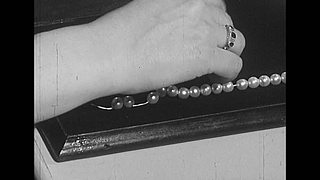
The Paris Chamber of Commerce and Industry has a highly protected service for controlling and authenticating diamonds, precious stones and fine pearls. Images of experts at work...
The President of the Republic Charles de Gaulle talks about the ongoing discussions between European partners on the agricultural issue, six years after the signing of the Treaty of Rome.
In Paris, a souvenir merchant talks about the tastes of tourists when it comes to buying souvenirs according to nationality, saying that the Eiffel Tower brings back the "palm" of sales. And he recognizes that even if some objects are not of the best taste, they still sell.
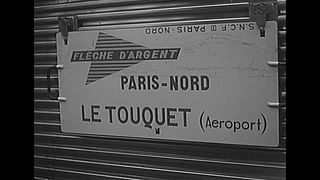
Report on the establishment of a rail and air link between London and Paris allowed by Le Touquet airport, pending the next opening of the tunnel under the Channel. Reportage on comment with factual images on the laison Paris-London.
The VVF (Villages Vacances Familles) of Capbreton welcomes pensioners of the building, mostly Parisians. They live there better than at the hotel, without changing their habits, for a small amount. Images of the estate, pensioners taking a hot drink and playing with the petanque.
Atmosphere at the Gare de Lyon, a day of big departures for the summer holidays. A SNCF employee guides the departing passengers. Some seem lost, others lose their composure...
Interview of journalist François de La Grange with French Prime Minister Georges Pompidou justifying his order to requisition striking workers in the mines to avoid gas and electricity restrictions for all French, a decrease in heating in factories, offices and hospitals. "The right to strike is recognized by the government, but the requisition was not specifically directed against the miners: the strike was directed against the whole country, the requisition took a collective character... Coal stocks are non-existent: this threatens the country’s economy. The gas may be rationed. There will be repercussions on hospitals, clinics, schools, etc... This can go as far as lowering the standard of living of the French. Minors do not have to take on such a responsibility.
Milk has a new packaging: berlingot. The Adour Basin Dairy Cooperative sends 20,000 litres of milk every day in one-litre or half-litre berlingot for the Basque Country and Béarn. This new packaging known as "berlingot" for milk is used for laying flat for storing products.
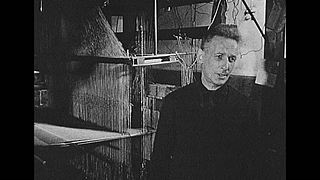
Monsieur Atelan, canut, retraces the history of the silk workshops at the Croix Rousse in Lyon. Initially located in the working-class districts of Saint-Paul and Saint-Georges, the textile industry then migrated to the hill of Croix Rousse after the invention of Jacquard looms that required very high ceiling places.
On the occasion of his wishes for the year 1963, General de Gaulle calls for progress as a national ambition, starting with demographic progress believing that modern France could have one hundred million inhabitants, among the unborn babies but also the returnees from Algeria who would decide to settle in mainland France.
The Atomic Energy Commission has chosen the site of Pierrelatte to install its isotope separation plant. In four years, the typical village has transformed into a modern city to soon welcome 20,000 inhabitants.
Filmed in the Hermès Museum, Robert DUMAS, CEO of Hermès, talks about the fashion of the "lady bag" which at the beginning of the 20th century revolutionized the craft of leather craftsman by forcing them to use the technique of the "saddle stitch", of which Hermès was the pioneer. It presents examples of "saddle" sewn objects and exhibits their characteristics: a handbag, a desk note pad, a briefcase. In illustration: images of a workshop with leather craftsmen
Filmed in the Hermès museum, Robert DUMAS, CEO of Hermès, talks about the "modern saddle" whose characteristics he describes by showing a saddle: "The saddle is an elegant object.. we have the constant concern to give the saddle a graceful silhouette... The elegance that characterizes the riders must also be reflected by the saddle". He also talks about the saddle quilting revolution with the introduction of latex that replaces traditional wool. In illustration: Images of riders riding on horseback and a craftsman stuffing a saddle of wool.
Filmed in the Hermès museum, Robert DUMAS, CEO of Hermès, talks about the harness trade that has practically disappeared and the saddler trade that still exists in the countryside. He recalls that the Hermès company manufactured luxury harnesses in Paris until about 1956 and that Hermès also became saddler in 1880.


 The INA Galaxy