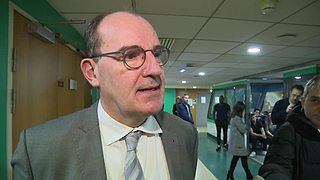
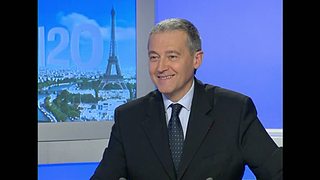
In anticipation of the 2023 Rugby World Cup and the 2024 Olympic Games, RATP has just launched an unprecedented recruitment campaign. Interview with RATP’s Chief Executive Officer, Jean Castex, on the company’s attractiveness in terms of salary, working conditions and career prospects, and with Arnaud Aymé, transport specialist, on recruitment difficulties for the professions of technicians and engineers.
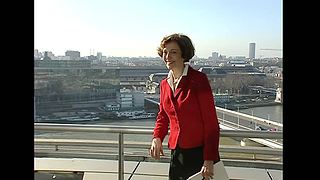
In 2015, Elisabeth Borne, Chief Executive Officer of RATP (2015-2017), presented her strategy for the next ten years to her teams. It asserts its three priorities: passenger service, innovation and the development of renewable energies for bus fleets.
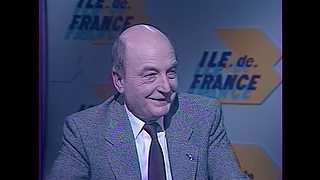
The journalist Jean Noël Mirande receives the CEO of RATP Pierre Mongin (2006-2014), to discuss the development of public transport in Ile de France following the successful commissioning of the T3 tramway.
RATP’s Chief Executive Officer, Anne Marie Idrac (2002-2004), presents the company’s main orientations to the Board of Directors: "The best service for users at the best cost for the community". She is interviewed about the financing of the company’s budget.
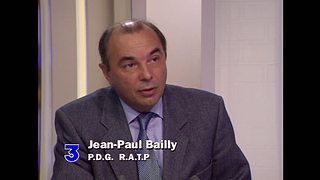
The CEO of RATP, Jean Paul Bailly (1994-1999), was interviewed by the journalist Anne Guillé following the violence that took place on the Bobigny-Saint Denis tram line. He mentioned the need to strengthen the security of RATP agents and passengers through a prevention and protection policy.
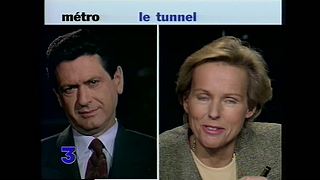
Journalist Christine Ockrent interviewed the CEO of RATP, Christian Blanc (1989-1992), about the social conflict currently taking place against his project concerning the adjustment of schedules according to peak hours at the end of the day and on the individualized rating of agents. Despite the suspension of the project, the strike continues, Christian Blanc emphasizes: "A public service must ensure its missions."
Subject on the new transport ticket, RATP changing from yellow to green in this spring period... For Dominique Blanchecotte, director of metro line 1, it is above all a symbol of deep change that is currently occurring in the company: "Getting closer to its passengers... a company with a more human face."
The CEO of RATP, Paul Reverdy (1986-1989) is the guest of regional news. He is questioned by the journalist Jean Pierre Enkiri about the technological challenges at RATP for the year 2000. According to Mr. Reverdy, there are two main orientations: automation and electronic payment systems.
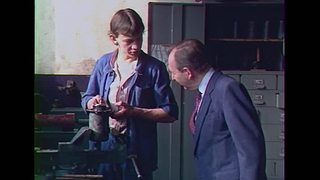
Portrait and meeting with Claude Quin, CEO of the RATP (1984-1989), visiting the depot in Nanterre. We see him discussing with employee mechanics, then around a table with the union representatives: "I believe that details are what is decisive." About his communist affiliation, he explains accepting the constraints of the position, being neither a union delegate nor a political party representative but representing "the whole company", ensuring above all its development. The interview of a mechanic completes the subject.
On the occasion of a report on the 25th anniversary of the RATP, look back in archive images at its creation in 1948 resulting from the merger of the Compagnie du chemin de fer métropolitain de Paris, which operated the metropolitan network, and the Société des transports en commun de la région parisienne, who operated the surface bus and tramway networks.
On the occasion of a report on the 25 years of RATP, meeting with Roger (Lyé), the oldest receiver of the company with 47 years of career. He remembers amusing an altercation with a traveler in 1949, then he mentions the working conditions then "very difficult".
Interview with the president of RATP, Roger Belin (1964-1979), in his office, about the reason for the sharp rise in RATP fares which have not increased for seven years, and then about the progress of work to modernize and extend the regional express network and the metro. Various images of trains.


 The INA Galaxy