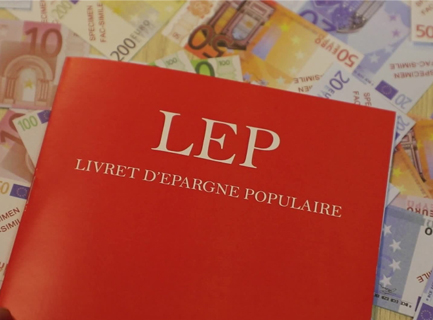
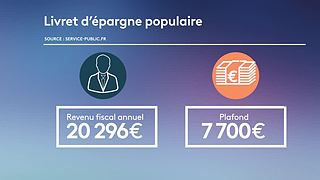
From 1 August, the rate of pay for the Livret d'Épargne Populaire (LEP) will increase from 5% to 4%, a decrease that concerns the 11 million French people who hold one. Although the LEP remains the booklet with the best interest rate, its access is reserved for low-income earners and it is capped at 10000 euros. In comparison, the Livret A keeps a rate of 3%, while life insurance offers lower returns but without a ceiling. Stock market investments, although more profitable in the long term, present an increased risk. Savings testimonials and interview with Laurence Honiezna, wealth manager.
Report on the rise in popularity of the Livret d'Epargne Populaire (L.E.P.) among the most modest French people due to a remuneration rate of 6.1%, hence the fact that more than one million clients have opened one for three months. French interviews with Maya ATIG, Director General of the French Banking Federation, who explains that the public authorities encourage banks to propose to their clients to open a popular savings account and Maxime CHIPOY, president of Moneyvox, who explains that only half of the French eligible for LEP have opened one. Comment on the alternation between illustration images and interviews.
The State increases the rate of the Livret d'Epargne Populaire (L.E.P.) accessible only to modest incomes, the rate goes from 1% to 2.2%. Comment on images of illustrations and graphics alternating with a vox pop of citizens who sometimes rejoice or deplore a "purely electoral" action. This interesting and secure savings product is not yet used by everyone who is entitled to it.
It is the 15th anniversary of the Livret d'Epargne Populaire (L.E.P) that benefits from the decrease in the Livret A. Since its creation in 1982, the conditions and advantages have evolved. Comment on illustrations images alternating with interviews of users and bank advisors.
To boost consumption and investment and encourage small savers to withdraw their savings, the government has decided to lower interest rates on savings books and to reform the popular savings book. Microtrottoir with small savers and explanations on the repercussions of this measure with Michèle Debonneuil, Director of Economic and Financial Studies at INDOSUEZ: this category is affected by unemployment, has the concern of its retirement and maybe this one point drop in interest rates is not up to the concern they have elsewhere on unemployment and pensions.
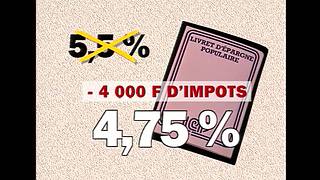
Guest of the newspaper, the Prime Minister, Alain Juppé, explains the measures taken by his government notably intended to revive the economy and support consumption and investment and answers questions from Bruno Masure and Arlette Chabot on the reasons for the reduction in the interest rate of the Livret A: lower the loan rates granted to HLM offices. On the other hand, the interest rate of the Livret populaire falls less, its rate is at 4.75%, the reform of the new Livret populaire increases its ceiling to 40,000 ceiling and will henceforth concern 40 million French people, that is to say the 2/3 of the French taxed at less than 4000 francs.
The government announces a decrease in interest rates on savings products due to lower inflation. Explanations from the Minister of Economy and Finance Pierre Bérégovoy: "For 1 year, prices have fallen by a little more than 1%. We are lowering the rate on savings account books by only 0.50% because the government wants popular savings to be well-remunerated.
In this period of austerity and lower interest rates on savings products related to the decline in inflation, while traveling in Loire Atlantique, Prime Minister Pierre Mauroy defends his economic policy and promotes the popular savings account, which will not be impacted by the decline in interest rates, a true instrument of social justice, always current priority of the government. 16 million French people can claim it, only two million have subscribed to one, for now.
Explanations on how to open a popular savings account, a new savings product offered by savings banks and banks at the instigation of the government, this tax-exempt booklet is reserved for the most modest with low incomes and subject to a tax of less than 1000 francs and capped at 10,000 francs. Explanations from a savings bank manager
In Reims, in a savings bank, the new Livret d'Epargne Populaire or LEP or Livret rose attracts the interest of small savers. This booklet, very advantageous, is indexed to inflation and has the advantage of being tax-exempt, it is however reserved for the most modest households and issued on a means-tested basis. With interviews of a user and Jean Claude Atame (deputy director Caisse d'Epargne de Reims) on the enthusiasm of users.
After the decision in the Council of Ministers to introduce a new savings account indexed to price increases and available from early May 1982, explanations by the Minister of Budget Laurent Fabius on the operation of this new savings account, the pink booklet, capped at 10,000 francs, remunerated at interest rates, at least equivalent to the amount of inflation for modest households.


 The INA Galaxy