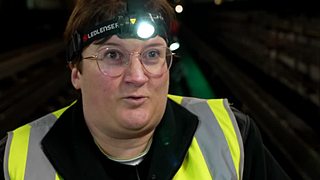
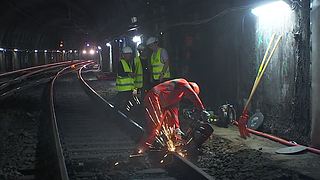
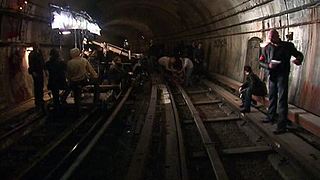
The report presents Caroline, who works the night in the Paris metro. For several years, she has intervened when the trains are at a standstill to maintain and repair the tracks with her team. This rhythm offers him varied tasks, but involves a shifted life: daytime sleep, irregular meals, and less contact with those around him. Despite these constraints, she assumes this professional choice exercised by a minority of women.
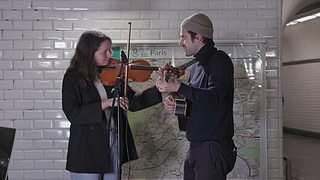
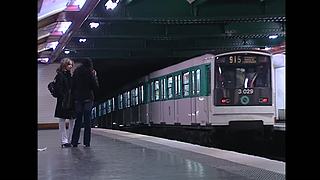
The report follows Jon and Juliette, a couple of musicians who play in the corridors of the metro and plan to launch their career under the name Thames. They are trying to capture the attention of travelers in a network where millions of people pass through every day. The film accompanies them during the audition organized by RATP, which selects only 300 artists among thousands of candidates to obtain the label Musiciens du métro.
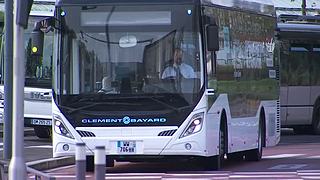
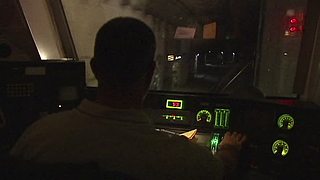
This report looks at the recruitment of staff at RATP, which is opening thousands of positions to cope with retirements and support the expansion of the network, particularly in the context of the Grand Paris. It highlights two essential professions: security agents and metro drivers, illustrated by fields scenes and testimonies. Employees such as Lithison, a security officer, and Adil, patrol leader at the GPSR, explain their missions and the increasing recruitment needs to ensure the safety and operation of the network.
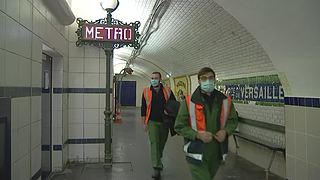
This report focuses on the underground work of the Paris metro teams, following a night patrol of RATP maintenance agents who inspect and maintain the infrastructure in the darkness of the tunnels. The images show their silent intervention, away from prying eyes, to ensure the security and reliability of the network. Civil engineering inspectors testify to the technicality and requirements of this essential but invisible work for travelers.
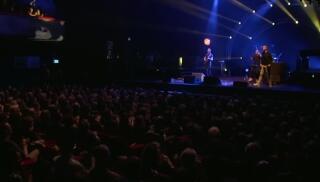
Report. Meeting with the rapper Pihpoh, a metro musician, who after selection, was able to play on the stage of the Olympia in the company of other artists during an evening organized by the RATP for the 20 years of operation "Musicians of the Metro". Comment on factual images alternating with the interviews of PIHPOH and rapper Oxmo PUCCINO. [Source: France 3 prompter] To be featured at the Olympia, a mythical scene... It’s a dream for any artist... A rapper who sings in the Parisian metro, participated last night with other young artists and big names of the song at a birthday party: "Musicians of the metro"... 20 years already... Eric CORNET with Clément JEANNIN and Jean-Stéphane MAURICE
This report focuses on the daily life of the RER A, a major axis that crosses Paris and its region from east to west and carries millions of travelers every day. During peak hours, the slightest outage can cause delays and tensions. The document alternates fields scenes, passenger testimonies and interventions by RATP staff to show the vagaries of traffic, the pressure on the control centre and the stress felt by drivers. The regulation manager Jean Alain Ango explains that a simple incident is enough to disorganize the entire line, while the driver Régis Peterfalpi shares his experience of service in difficult conditions.
This report explores the behind-the-scenes of the Paris metro, from its underground installations to the nocturnal activity of the agents who maintain tracks, rails and trains. It also shows the areas dedicated to driver training, usually invisible to the public. An important part of the subject is devoted to the shooting of the film "A bout portée" by Fred Cavayé in the network, where speakers and officials from the RATP explain the organization and constraints of a cinema set up in the middle of the metro.
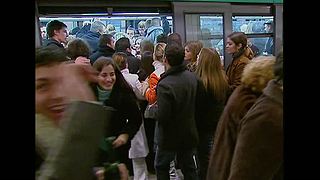
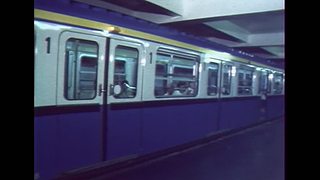
Report. For the second year in a row, some lines of the Parisian metro were free during the New Year’s Eve night. The point on the atmosphere that prevailed in the corridors of the metro. The report alternates factual images with interviews with Eric MAZIN, in charge of line 1, Alain DAVID, driver and some partygoers.
The RATP project to make the first class disappear provokes controversy. In this report, the RATP puts forward the arguments and reasons for the single class.
A representative of the RATP, from the platform of the Pont-Neuf metro station, explains the means implemented to modernize the Paris metro, including improving user comfort: waste paper bins, new platform seats made of non-flammable materials, new lighting, station colours, etc.
With the arrival of automatic machines in the corridors of the metro, the profession of punching will disappear and users will have to buy their tickets themselves at the automatic cash registers and validate their own transport ticket. Interview of punching machines close to early retirement before leaving their work to automated machines.
Inauguration (in fanfare) of the first section of the future RER line A between Boissy-Saint-Léger (Val-de-Marne) and Nation in Paris. Pierre WEILL, Director General of RATP, indicates on a map the next sections to come. Then a young bilingual secretary, Paola, in her old suburban train (steam locomotive!) who takes her to her Parisian office, evokes her expectation of this new modern line of transport that will greatly facilitate her life: "Huge docks, full of color, and then even music."


 The INA Galaxy