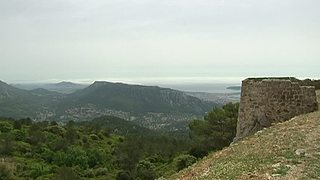
At the slightest heat wave, we talk a lot about a heat wave, but the term is sometimes overused, so what is really a heat wave? Explanations, and factual images of the consequences of the heat wave in the region.
Presentation of the operation of the heatwave plan. When night temperatures do not fall below 20°for three days, we call it a heatwave. The year 2003 remains the most striking episode. The heatwave plan breaks down into 4 levels: level 1 is systematically activated on June 1st, level 2 follows the yellow vigilance of Météo France, the level corresponds to the heatwave alert and the prefects can trigger preventive actions, level 4 corresponds to the red alert, when the heat affects drinking water, electricity networks and leads to an increase in hospital activity and funeral services. Comments on infographics. http://lci.tf1.fr/jt-20h/videos/2015/la-minute-pour-comprendre-comment-la-canicule-est-elle-decretee-8627941.html The minute to understand: how is the heatwave declared? Alerted by previous episodes of hot weather, the health authorities have implemented a heatwave plan consisting of four alert levels. From level 3, the heatwave alert is triggered, which allows the prefects to implement prevention actions. When drinking water is threatened and deaths from extreme heat increase significantly, the maximum alert level is activated.
Report on a mite that feeds on bee blood. Interviews with Yves LECONTE and Fanny MONDET, research engineers at INRA, on its operation and the means to neutralize it.
Report on the occasion of the Nature Festival at the Normandy-Maine Regional Natural Park, in which guides teach with pedagogy everything you need to know to visitors about the very rich fauna and flora of this protected natural area. Reportage on comment with factual images and interview of Morvan Debroize, animator at the Normandy-Maine Park.
The bluefin tuna fishing season is preparing in the port of Sète, in Hérault. Martial Lubrano, 32, is the youngest fishing boss of the place and is about to carry out this operation at the helm of the oldest tuna boat, the "Juanico", built in 1969. This fishery, governed by European quotas, lasts only one month and leads fishermen off the Balearic Islands.
Report on the Marais de Saône, which hides treasures and is considered the natural water castle of Besançon. The festival of nature makes it possible to discover unexpected places. Visit the trails arranged with guided tours. The factual images alternate with interviews with Annie MANCHOT, volunteer of the Bird Protection League and Quentin LE TALLEC, host of the LPO.
Meeting on Mont Caume in the Var, with scientists from the Conservatory of Natural Spaces. The latter are working to build shelters for bats, endangered animals. We witness here the development of a shelter and interviews with Benjamin Dutreige, project manager at the Conservatory of Natural Spaces - Rhône-Alpes and Muriel Gervais, Project manager at the Conservatory of Natural Spaces - PACA.
Family or discovery class, many activities are offered to holidaymakers of Lake Der: bike ride, fishing, swimming, sailing or water sports. The regulars of the campsite are happy to find the barbecues and friends. A class of young people from Lorraine was introduced to sailing aboard optimists.
Report on the announcement of the decision by Brussels to authorise the import and marketing in Europe of 19 new GMOs intended, for some, for human consumption. Details of these products and possible recourse of the countries concerned and the reaction of environmentalists. Comments on illustration images and interview of Noël MAMERE, MP environmentalist.
Reportage devoted to the quality of reproductions identical to the frescoes decorating the replica of the cave CHAUVET in Vallon-Pont-d'Arc (Ardèche). Comments on factual images alternating with the interview of Marie HAMELIN, heritage restorer, and Gilles TOSELLO, plastic artist.
Report devoted to the visit of the replica of the cave CHAUVET which opened its doors this morning to the public in Vallon-Pont-d'Arc, in Ardèche. Evocation of the success encountered by cave works decorating this cave. Comments on factual images alternating with the interview of visitors.
A group of tourists crosses the Bay of Somme with a guide. The opportunity to discover the pig’s ear (edible plant), the fauna (birds, animals living in the sand), views of the bay, and to return by the little train of the Bay that crosses the salt meadows where graze the sheep, with the testimony of the guide Sébastien ROCHE, of a tourist.
He was what we call a whistle-blower. Indeed, it was in 2002 that Robert BELLÉ, a researcher at the biological station of Roscoff, and his team demonstrated that Round up and other herbicides based on glyphosate are potentially carcinogenic. These products induce even low-dose genetic instability that can cause mutations at the time of cell division. Results confirmed since by other researchers around the world and now corroborated by epidemiological studies that the World Health Organization has just taken into account by classifying herbicides as probable carcinogens. 13 years during which the Round up continued to be used in fieldss, gardens and roadsides, even though some users have, thanks to the warnings of scientists, applied the precautionary principle. The researcher fears that cancer will multiply in the coming years because this insidious disease sometimes takes 20 to 30 years to develop. The researcher Roscovite knows what he is talking about, he whose results were discredited and attacked. While the requests for a ban on the Round up are multiplying, Robert BELLÉ hopes that this time the agrochemical lobby will not have the last word.
Reportage in Ardèche devoted to the reproduction of the cave CHAUVET. Commentary on factual images and archival images alternating with interviews with Pascal TERRASSE, speleologist, head of the cave project, Jean CLOTTES, prehistorian, and Alain DALIS, plastic artist.
After four months of consultation, Michel Cadot, prefect of the PACA region, presented a project for the installation of floating wind turbines in the Gulf of Lion. Three areas, 15 to 20 km from the shore, were retained off Leucate, Gruissan and the Gulf of Fos. The Mediterranean is in competition with the Atlantic coast and the English Channel, three projects will ultimately be selected and known at the end of 2015.
The Notre-Dame de Paris Cathedral is a UNESCO World Heritage Site. A time-lapse view, by day and until sunset, shows the rear of the cathedral on the Ile de la Cité, in front of which flows the Seine, where a fly boat and a barge pass by in the fast lane.
Report dedicated to the exceptional high tides in Mont-Saint-Michel, attracting a large number of spectators. The work carried out on the site has made it possible to fight silting and allows it to become an island again several times a year. Comment on factual images, digital, interspersed by a micro-sidewalk. [Source: France 2 prompter] And there is a place that is already usually one of the most touristic in France, but today it was THE site of this great tide. They came from all over France to live the event at MONT SAINT-MICHEL... Report and testimonies with Pacôme LE MAT and Karine HANNEDOUCHE
Report in the Scampia district in the north of Naples. Previously held by the local mafia, the Camorra, which had organized a gigantic drug trade there, the area is now completely abandoned. The unemployment rate is 70% and the economy is at a standstill.
On the island of Guiuan, in the Philippines, threatened by rising waters as a result of global warming, fish are becoming scarcer near the coast, due to the warming of the sea temperature, and rising waters have changed the lives of villagers. Testimonies.


 The INA Galaxy