Deforestation is a major cause of biodiversity loss and global warming. The development of agricultural land in tropical areas is the first direct cause. More than 170 million hectares of forest are at risk of disappearing by 2030
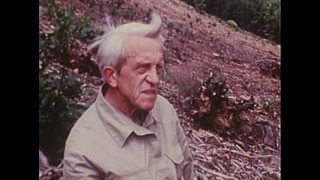
Report on the reforestation project set up in the district of Adwa in the Tigray region of Ethiopia by Kurt Pfister, president of the Green Ethiopia Foundation, in partnership with the government, and in which the people of the region actively participate. In 50 years, the country has lost 80% of its forest cover. A commentary on images of the hills where trees grow and on the work of the earth alternates with interviews of Kurt PFISTER, president of the Foundation "Green Ethiopia", and of Bruane GILRUFAM, foreman of the nursery of Adwa.
Reportage in Madasgascar, where 80% of the forests have been lost to agriculture, in order to feed the 20 million inhabitants. A reforestation programme has just been launched to combat soil erosion and the decline in agricultural yield caused by deforestation. Comments on Malagasy landscapes and satellite photo of the island testifying to the phenomenon of deforestation, alternating with interviews of Flavien REBARA, WWF, and Jean Michel REMANAITSE, management committee of the village of Bekiria.
The discussion at the Copenhagen Summit focused on the problem of deforestation, which is responsible for 20% of greenhouse gases. José Endundo, Minister of the Environment of the Democratic Republic of Congo, called for a North-South shared responsibility for tropical forest management. In the Congo Basin, the world’s second largest lung with Brazil, 15% of the territory has been classified as a protected area and the phenomenon of deforestation has been stopped. Comments on images of the Summit and archive images of the Congo Basin alternate with interviews with Ophée LOKOSSOU, member of the delegation of Benin, who asks the help of advanced countries to protect forests, Jean-Louis BORLOO, Minister of Ecology and José ENDUNDO, declaring that "misery and illiteracy are the enemies of the forest".
Report in Iceland where desert areas are reforested thanks to the massive planting of young trees imported from Finland. Comments on Icelandic landscapes, forests, sprouts of young trees cultivated under greenhouse, alternating with interviews of Throstur EYSTEINSSON, Icelandic forest service and Maxime BERNIER, tree planter.
Report in Brazil in the Amazon, the world’s first forest, where a "sustainable development" label was created. It is awarded to operators who meet certain standards. Interview with Joao CRUZ, forest engineer and Paul WESTBROOK, director of the "Precious Woods" sawmill, who is committed to sustainable forest management, which, while being profitable, makes it possible to provide income to the communities of the region and preserve the forest.
Report on the deforestation of the Amazon rainforest. Small coal producers still deforest their plots in order to survive, but most of the damage is done by large agricultural and livestock companies as well as companies that trade in precious wood species.
The fires that pollute Indonesia’s sky and atmosphere are for the most part due to intensive exploitation of forests by dealers and the practice of slash and burn cultivation. In Borneo, the Tropenbes Foundation reserve collected orangutans saved from the burning forest. Commentary on plans of orangutans and burnt landscapes alternating with interviews with Anne RUSSON, professor of animal psychology and Martinus De KAM, director of forest research.
Report on the fires in the Amazon forest, caused by the gold seekers but also by the landowners who are trying to expand their farms by sending landless peasants to clear and burn the forest. Plans of the Amazon forest and the transamazonian road, burnt trees along a road. Interview with JB SERAPHICO, director of the transamazonian, who admits his powerlessness in the face of fires, wild clearing and the condition of the transamazonian road.
Interview with Dr Henri ULRICH, writer opposed to the plan of deforestation in the Vosges, planning to replace the existing species with foreign and profitable species, which according to him will transform the forest into "fieldss of trunks" for making pulp. Conclusion of a forester declaring that "if in time we had done as today we would have no trees".
A report devoted to the intensive exploitation of the forest in the Cher, especially the oak, which has become a good financial investment. Mayors and villagers oppose the cutting of these trees. Interview with the mayor of Arpheuilles who issued a warning. He believes that the logging law should be amended to reduce the percentage of oak felling and to apply sanctions for "forest skimmers".
Report in Brittany devoted to the need to protect forests and woodlands, essential to human life. Interview with Mr JULIENNE, Chief Engineer of Rural Engineering, who discusses the quantitative and qualitative problems facing forests.