The European Union has voted to ban the use of three main neonicotinoid pesticides. In Picardy, this decision worries beet growers. Guillaume GANDON, a farmer, talks about his use of neonicotinoid-coated seeds. Interview with Emmanuel PIGEON, director of the Hauts-de-France beet unions.
In 1999, in Wittelsheim, a well in the Stocamine potash mines was converted into a storage site. Toxic waste known as "ultimate waste" containing mercury and asbestos is buried underground. Following a fire in 2002, the site was closed. 40,000 tonnes of ultimate waste are still buried in galleries of potash mines hundreds of metres deep. In 2009, the court condemned the plant manager for non-compliance with the regulations. The prefet, which considered that containment is possible, causes concern among residents. The report is illustrated by archives from September 2002, May 2011 and March 2017.
Hyper-lapse from the front of a train. We are moving very fast on rails, across the Docklands, in London, England. The urban landscape swiftly passes on either side of the tracks.
Day to night in time-lapse, from a view of the Tower Bridge with the Shard in the background, on the banks of the Thames, in London. Gradually, as the sun disappears, the lights of the city light up.
Aerial view of the business district of La Défense, in the Hauts de Seine, with the Grande Arche, the CNIT (Centre des nouvelles industries et technologies) and large office towers, filmed by drone in winter, at sunrise.
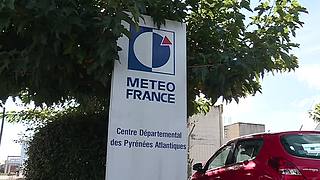
The Pau-Uzein Météo France station will close its doors in a few days. It was open since 1921. From now on, we will need to contact Biarritz to get the forecasts. Interviews with Didier Sigonneau and Philippe Valat, forecasters for 35 years and 36 years, and Bruno Giraud, chief pilot instructor of the Civil Security, they deplore this closure and fear a degradation of the service.
Report in New Delhi, where the world’s first solar train is being tested. Interview with Gopal KRISHAN GUPTA, chief engineer of the solar train project,


 The INA Galaxy