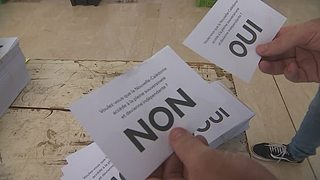
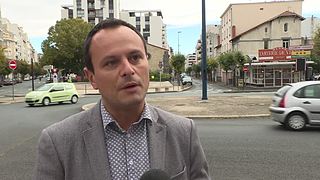
For the third time, New Caledonia will vote for or against independence. On a market in Nouméa, meeting with inhabitants of the island who explain their choice of vote and the reasons that motivate it. Participation is expected to be low, the separatists are calling for a boycott of the election due to the period of mourning due to the victims of Covid. Comment on factual images alternating with a sidewalk.
The last referendum on the independence of New Caledonia will be organized on December 12, on the scheduled date despite the request for postponement made by the separatists due to the mourning related to the deaths caused by the Covid epidemic. Meeting with supporters and activists in Bourail, Koné and Mont Doré who present their arguments. The comment alternates factual images and interviews with Levay Roy, farmer, activist "Les voix du non"; by Sonia Backes, president-Caledonian Republicans Southern Province of New Caledonia; a set in the situation of Bastien Augey; by Jérémie Inghame, activist UC-FLNKS; of Roberto Miko, member of the tribe of Azareu, activist FLNKS.
Poignant testimony of Bernard Denis, Mayor MoDem of the village of 500 inhabitants of Saint-Côme-du-Mont (Manche), who was the target of aggressors at his own night home (tagged walls, vehicles and new house under construction burned down) In the run-up to the presidential elections, the reason could be the support of the elected to the outgoing president Emmanuel Macron.
On the occasion of the last debate between the five contenders for the primary of the Republicans, Michel BARNIER sets out his proposals to reduce the weight of taxation and taxes "that burden businesses".
Interview with Eric Giuily, former technical advisor at the Ministry of the Interior, about the philosophy of the 1982 decentralization law which he was in charge of alongside Gaston Defferre then Minister of the Interior. The next decentralization law should be voted in the National Assembly on December 6, it is the 3Ds law for "Decentralization, Differentiation, Deconcentration and Simplification"!
Michel BARNIER, candidate in the primary of the Republicans, evokes his difference with President Emmanuel Macron and emits criticisms: he asserts his loyalty to his political family LR, and evokes the lack of "respect" of Emmanuel Macron towards the French by referring to his sentence on "those who are nothing".
[Source France 3 Regions]: A day of Léonore Moncon'Huy, the ecologist mayor of Poitiers, at the Cop 26 in Glasgow, Scotland, where she went by train to represent national and international communities.
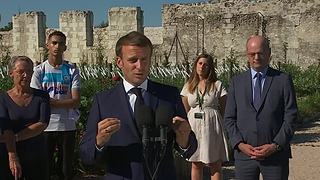
Le président de la République Emmanuel Macron s'est rendu à Chambord, dans le Loir et Cher, pour présenter son plan "jeunes pour l'emploi" après la crise sanitaire du Covid. Des jeunes qui ont bénéficié de programmes de formation témoignent de cette expérience en présence du chef de l'Etat.
Clermont Ferrand will enter the club of French cities (200) where the speed is limited to 30 km/h on 1 December. The municipal opposition, favorable to the measure, requests however its postponement for the time to implement alternatives of soft mobility such as secure cycle paths, the development of electric 2-wheelers and monoroues, the deployment of autonomous shuttles. She also calls for measures to reduce car traffic by diverting it from the city center. Interview with Julien Bony
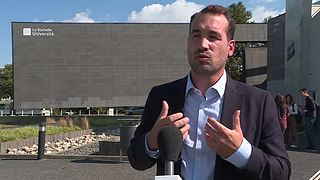
The municipal council of La Rochelle has just approved a 50% increase in the housing tax for second homes, to encourage some owners to put their properties back on the rental market, as explained by Thibaut GUIRAUD, deputy mayor of La Rochelle in charge of finance.
[Source France 3 Regions]: Several times abandoned in the past, is the project for a metro in Bordeaux still relevant? Michael BAUBONNE, the vice president of an association that defends this project is the guest of the "3 questions to" section. According to him, the budget of the entire metro line would be 2 billion euros.
Interviewed, Valérie Hayer, MEP LERM, takes stock, which she considers positive, of the action of the President of the Republic Emmanuel Macron, on Europe.
[Source: France 3 Régions]: A petition has just been launched on change.org to support Souleymane Cissé, who arrived in France at the age of 15, followed by Child Welfare as an unaccompanied minor until his 18th birthday, last November, and educated at the Lycée Georges-Brière in Reims. His request for regularization with the prefectural services of the Marne was not granted and he recently received a new Obligation to leave the French territory (OQTF). This Sunday, July 4, he was taken to the Toulouse Cornebarrieu Administrative Detention Center for his drive out of the territory, 'after having burned a red light by bike in Reims', says the collective at the initiative of this approach, who asks the prefect to get Souleymane out of detention, to allow him to celebrate his future success at the baccalaureate and to authorize him to continue his journey of integration in France. '
Report in Roubaix on the billionaire LVMH group’s Bernard ARNAULT, visiting with his family for the inauguration of a new campus of EDHEC that will bear the name of his father, Jean Arnault. They are welcomed by the First Lady, Brigitte MACRON, who was the former teacher of French for the children of the Arnault family present here.
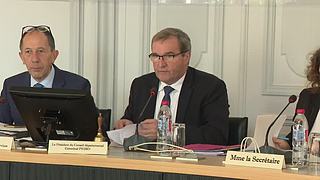
Florence Dabin is elected new president, Divers Droite, of the departmental council of Maine et Loire. 42-year-old Insitutrice, she is the first woman to head this department. Images of the council and interviews with Florence Dabin and Philippe Chalopin, first vice-president of the departmental council of Maine et Loire.
Panorama of the missions entrusted to the department and its executive body the departmental council. The example of the departmental council of the Dordogne, whose president Germinal Peiro is seen, serves as a guide to this report. Among these missions, a social resource such as the management of the RSA or social assistance for children, disabled people, or elderly people, an education resource with the responsibility for middle schools, canteens. Other responsibilities entrusted to the departments: planning and transport with road management and departmental roads. Finally, the department is in charge of cultural and sports activities and allows the creation of media libraries, museums or the promotion of regional languages. This competence is shared with the municipalities and regions.
Patricia Andriot, former Vice-President of the Champagne-Ardenne region is today a member of the National Agency for Territorial Cohesion; she specialized in rurality. In the Champagne-Ardenne region, rural areas represent 94% of the territory and 51% of the inhabitants live in these areas. The region must ensure a balance between urbanization and opening up of rural areas. The regional scheme for rural development and territorial equality (SRADDET) defines the main priorities adapted to the territory and sets the objectives for transition and sustainable development, for example in terms of sustainable development or the type of agriculture towards which one should move. This scheme must therefore reconcile land use planning and the environment.
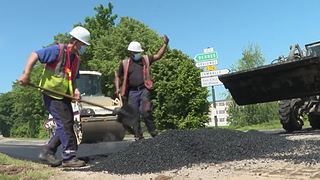
Road maintenance is an important part of the budget for the department. This is what the example chosen for this report shows, which takes us to the Côtes-d'Armor. This department must maintain 4,600 kilometers of roads. It is the Road Service that takes care of this mission. 360 people work there including 230 assigned to the maintenance of roads, green outbuildings and curbs. Broons' whip explains the challenges of road maintenance. This road leads to an artisanal area and has been degraded by the passage of many heavy trucks. It is therefore necessary to consolidate the road before putting a layer of asphalt. Sometimes it is necessary to apply a surface coating to prevent the road from deteriorating too quickly.
[Source France 3 Regions]: Lutte Ouvrière presents candidates almost everywhere in France, for Louise Fève, head of the list in the Grand-Est, the health crisis has demonstrated the merits of a left-of-the-left program. ITW Louise Fève, head of the list (Workers' Struggle) in the Grand-Est: during the pandemic, who faced with responsibility the situation, it is the world of work, nurses, doctors, cashiers, workers ... everyone from the work that continued to produce, to transport, treat, the government is not capable of organizing a response to resolve a crisis.


 The INA Galaxy