Presentation of the principles and benefits of osteopathy, treating the causes rather than the effects, on the occasion of an open day at the A.T. Still academy in Marseille. This discipline, taught for fifteen years in France, places the practitioner as a kind of "mechanic of the human body". A practitioner, Jean Peyriere, explains what osteopathy can treat or cure.
Presentation of an osteopathy school in Marseille, the A.T. Still academy, whose five-year course is open to doctors and physiotherapists. Jacques Lesage, a physiotherapist and student at this school, explains how the learning of this discipline complemented his knowledge and enriched his practice. Although taught, this practice remains illegal in France. Jacques Barbaza, medical doctor considers that osteopathy comes to join the unofficial medicines that are complementary to allopathy.
"The AIDS epidemic is causing a real psychosis in the United States comparable to that of leprosy, we no longer count the various facts due to the fear of contagion..." announces an AFP dispatch. On the set of "Today Life", Dr.André SIBOULET, Institut Alfred Fournier, gives an update on the symptoms of AIDS observed mainly in homosexuals, its modes of transmission and formally confirms the existence of the syndrome.
Pierre Bourget, en duplex des entretiens de Bichat, fait le point sur les risques de cancer du sein pour les femmes qui prennent la pilule contraceptive. Elle pourrait être, dans certains cas, un facteur aggravant d'un cancer du sein préexistant. Il est donc nécessaire pour les femmes qui prennent la pilule d'être suivies.
Françoise DOLTO is interviewed on the stage of Apostrophes by Bernard PIVOT about her book "Séxualité féminine". The text dates back to 1960 and describes the phenomenology of sexual behaviour. Which was very new for the time. That would be why Jacques LACAN had found him "cheeky".
Presentation of a new center of male contraception, supervised by the ARDECOM (Association pour la Recherche et le Développement de la Contraception Masculine). A doctor sees a patient who wants to start taking the male pill. The young man sees in this approach no attack on his manhood.
Demonstration in Paris of physically disabled people at the call of the Association of the Paralysed of France (APF) to demand the right to transport. Images of protesters in wheelchairs marching from the Palais Royal to the Opera.
In Gradignan, the premises of a French homeopathy laboratory have just been inaugurated, a sign of public interest in this therapy. The report proposes a visit to the premises of the Boiron laboratories, with explanations on the principles of homeopathic treatments using the example of angina. This medicine treats the individual in its entirety and not the disease. The Gradignan laboratory employs 39 people and serves 9 departments. Industrial preparations are stored there and prescriptions are made there which cannot be made at the parent company in Lyon for reasons of time. It also provides distribution to 380 pharmacies in the Bordeaux region, one of the regions where homeopathy is best represented in France. Interview with Doctor Jean BOIRON, CEO of the laboratories: "There is a steady increase in homeopathy, in the interest that the sick bring to this gentle non-iatrogenic therapy, with an increasing demand, as well as of the medical profession as a whole and the scientific community. It is a scientific therapy. See the book "L'Homéopathie: Médecine de l'expérience" by Denis Demarque. Indeed, all homeopathy is based on experimentation, since the testing of drug substances in healthy humans." The expansion that this company has undergone for 50 years is based on a rigorous quality policy, on scientific and chemical research, because what has slowed the development of this therapeutic, it is his action in infinitesimal doses that is contested. This laboratory has helped to demonstrate its scientific value.
Presentation of "Neptune", the ultra-sophisticated radiotherapy device used at the Tenon hospital in Paris for the treatment of cancer. Professor Alain Laugier, director of the tumour centre at Tenon Hospital, recounts the history of radiation therapy, explaining that this method began in 1896.
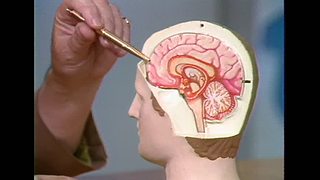
A team of Swedish surgeons has performed the first human adrenal cell transplant on the brain of a patient with Parkinson’s disease. On set, medical journalist Pierre Bourget explains the principle of surgical intervention using a head model. Interview at the Pitié-Salpêtrière Hospital with Professor of Neurology Jean-Claude Gautier on the prospects for such an operation.
Report on a medical feat performed at the CHU of Caen, where a young patient of 103 years was installed a pacemaker allowing him to resume a normal life and full of sports activities. Commentary report with factual images.
Following a report on the subject, a recorded interview with Professor Gérard SAIMOT, Claude-Bernard Hospital, about the cancer of male homosexuals (Kaposi’s sarcoma) that appeared in France. This disease is detected by a simple clinical examination and by biological examinations, there is no perfectly effective therapeutic, the study of cases should allow to know the causes "why homosexuals", and better prevention. It is not proven that "poppers" have a direct role in the development of this disease, but in doubt it is necessary to abstain.
Pollution in shipyards affects many trades. Workers who handle lead paints list their symptoms: cough, burning eyes, lung problems. One of them said to have been affected by lead poisoning, he was treated but however this pathology was never recognized as an occupational disease.
Testimony of a couple on their choice to donate sperm. For the husband: "there is no doubt, the real father is the one who will raise the child". His wife points out "when you have children, you understand the problem of people who can’t have children".
In northern France, lead smelter workers have developed diseases related to lead poisoning. The toxic effects affect their children in particular: "40 children (out of 400 workers) are recognised as disabled from 80 to 100%".
In Montpellier, an artificial pancreas was implanted last September for the first time in the world in the body of a young diabetic woman. Survey of the team of the Metabolic and Endocrine Diseases Department, with the explanations of Dr.Jean-Louis SELAM.


 The INA Galaxy