For years, the parents of Noam, intoxicated with infant milk produced by Lactalis, have been waiting for the end of the investigation of the judicial file. Their 5-year-old son is still suffering the consequences of his salmonella poisoning, among the sequelae of strong unexplained fevers, as evidenced by his mother.
The company Lactalis has withdrawn from sale three batches of infant milk contaminated with salmonella. The parents of an intoxicated baby give their testimony. Despite their efforts, they are unable to reach the company for information. They ask the Lactalis group to take its responsibilities: "it’s serious, this must not happen again... it’s unacceptable!"
Created in 1900, the Picot laboratories have fed generations of well-behaved and chubby babies over a century. In 2003, this infant food specialist launches a new powdered milk, sold in pharmacies. It’s a success: more than 8 percent of market share in 2 years. But since Friday, the company has been experiencing a difficult period: salmonella have been found in the stools of about twenty infants. Almost all of them consumed Picot milk, withdrawn from sales, since. Alerted by the Directorate-General for Health, the Picot laboratories requested an expertise of the incriminated milk. Subjected to more than 40 tests before commercialization and manufactured in sterile laboratories, the product has so far revealed nothing abnormal. In pharmacies, the batches were kept at the back of the shop, awaiting the final test results. The priority is to reassure parents. More than 120,000 boxes of milk are affected by this precautionary measure. A toll-free number is available to customers, 0800 034 521.
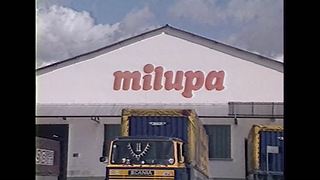
The Milupa factory in Colmar is closed for disinfection following health scandals affecting two infant formula manufactured on the site. Cases of salmonellosis contamination had been discovered in infants in Great Britain. Two other cases were reported in France by the health authorities. Even if the evidence has not yet been gathered during the last controls, the suspicion is sufficient to take health precautions, says Michel BURTIN, departmental director of consumption.
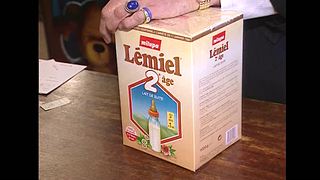
The Milupa factory had to withdraw from the market a batch of Lemiel milk powder, after the discovery of three cases of salmonella. A pharmacist specifies the identity of the batch. The company Milupa of Colmar is for the second time concerned by cases of salmonella poisoning. Recently, boxes of Milumil baby formula, sold in Great Britain, had been withdrawn from trade after the discovery of cases of salmonella contamination. Now these two products have common manufacturing origins. A toll-free number has been made available to consumers.
The British Ministry of Health ordered the withdrawal of French infant milk from the Milumil brand after the discovery of salmonella. This decision follows the poisoning of 10 babies for a few months in different regions of the UK. Chris BARTLETT, Minister of Health, explains that this is a precautionary measure, the origin of contamination being still under study. Controls will be carried out over the entire milk production line on French sites. Dr. Dennis SEGAL, general manager of Milupa, states that no trace of salmonella was detected in the Colmar plant. The special envoy in London, Etienne LEENHARDT, specifies that the incriminated milk cans are not sold in France, but that the factory manufactures other infant products marketed in France.
The Milupa factory in Colmar manufactures many infant products, including Aptamil 2 powdered milk, withdrawn from sale by the Luxembourg Ministry of Health after four babies were poisoned with salmonella. The brand has withdrawn two infant milks from sale in Belgium. Checks are carried out regularly throughout the manufacturing line. Dominique VIDON, professor of microbiology at the University Louis Pasteur, explains that samples are taken discontinuously according to a mathematical calculation. The results provide statistical guarantees but do not attest to 100% bacteriological cleanliness of the product. The incriminated milk corresponds to a specific batch that is not marketed in France.


 The INA Galaxy