A team of cardio-vascular surgery by Dr Jean-Paul COUETIL performed a first surgery: a bi-pulmonary transplant from a lung divided in two. Commentary on images of a meeting of the medical team, various plans of the Broussais hospital, on x-rays, infographics alternating with the explanations of Jean-Paul COUETIL, Broussais hospital.
In the Maritime Alps, one in 100 women carries the AIDS virus. This is double that of Paris, which has the highest rate of HIV. In 70% of cases women are contaminated by intravenous drug use. If advised to terminate their pregnancy, they remain free to keep their child or not The commentary on images of the hospital center of Nice, alternates with the interview of Professor Jean-Yves GILLET, chief gynecologist-obstetric at the CHU of Nice, and the reaction of two mothers about the screening.
Back to the discovery of the Taxotère, an antitumoral molecule extracted from the leaves of the Yew, within the research center of the CNRS of Gif on Yvette. Daniel GUENARD, research director CNRS and Françoise GUERITTE, research director INSERM, review the properties of this plant and the stages of development of this treatment.
After 20 years of tennis, Yannick NOAH, who has just released a record, now uses singing and dance as a therapy to exteriorize, feel good and be happy.
During the program devoted to retirement homes, a woman in the audience gives a testimony: "I had a sister who went to a medium-stay house and well, every night we would come by and give them drugs, we would give them to sleep, so as not to be annoyed at night...". Interviewed, Dr.Louis PLOTON, psychogeriatrician, replied: "The drug can compensate for the absence of personnel (...), the temptation is strong, so that everyone can sleep, to make the annoyance sleep".
More and more women are undergoing hormonal treatments to alleviate the side effects of menopause. Meeting with one of them, Gilberte, 60, interviewed at home with her grandson, about her physical state during menopause ("Hot flashes, state of fatigue, heavy legs, and with in memory the difficult period that had lived my mother...") and interview with Henri ROZENBAUM (gynecologist Ambroise Paré Hospital, Clamart) who said he was in favour of hormonal treatment and explained the benefits.
On the occasion of the Sixth World AIDS Day, an update on the situation of drug addicts: nearly one in two in France is HIV-positive, while there are only two needle exchange programmes in the country. Report on the "Drug Addiction and AIDS" mission of Médecins du Monde whose bus allows the distribution of sterile needles and condoms.
Members of the Act up association have today come into force on the premises of the Lycée Montaigne to make pupils aware of the problem of AIDS. They distributed condoms to high school students. The commentary on images of the operation alternates with the testimony of high school students and the interviews of Cleews VELLAY, president of Act-up, on the meaning of the demonstration, and of Bernard FOURNIER, principal of the Lycée Montaigne, who is reluctant to install a condom distributor in the courtyard of his establishment.
Difficulties in choosing to give birth at home in the countryside in the Nancy region.Testimonies of two midwives about their responsibilities and a pregnant woman followed at home in the countryside by a midwife.
Paulette GUILLAUME recounts her experience of imminent death in Algeria in 1946 following an electrocution. A very pleasant experience that made her see life and death differently. The first medical thesis on the subject, carried out in 1983 by two doctors from Grenoble, including Elisabeth EYSSERIC-SCHNETZLER, marked the beginning of an abundant literature. The latter says that if a single explanation is still not scientifically recognized, the phenomenon is now well known.
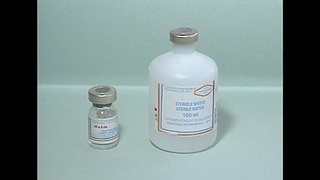
In La Réunion, the South African vaccine was preferred by the health authorities over the French vaccine, which was considered less effective against nodular dermatosis in the cattle population; the farmers will remain free to vaccinate or not. Interview with Albert PICARD, breeder.
In Réunion, two vaccines will be tested on the cattle herd against lumpy skin disease. Interview with Hélène GUIGNARD-BARTEAU, director of the veterinary service.
The outbreak of lumpy skin disease that affected cattle on the island of Réunion impacted meat consumption. The consequences of this epidemic are being felt, a South African vaccine that has been effective for fifty years on the African continent will be tested in La Réunion. Interview with Angelo LAURET, President of the Chamber of Agriculture, visiting the Plaine des Cafres. says to be confident and invites the breeders not to shirk.
The outbreak of lumpy skin disease affecting cattle on the island of Réunion continues and is the subject of a vaccination test campaign in the Plaine des Cafres. The consequences are felt on livestock and farmers' incomes. Interview with Marcel D'EURVEILLES, breeder.
First medical at the Edouard Herriot hospital in Lyon: a 10-month-old infant has benefited from the transplantation of part of his father’s liver, alive. Interviews with his father and Dr Olivier BOILLOT, surgeon of the hepatic transplant unit, complete the topic.
The International Congress of the Society of Transplantation in Paris came to an end, where specialists talked a lot about the animal organ transplants that will soon multiply. Interview (vo trad off) by Fritz BACH, Professor of Immunology Boston and Vienna, on the revolution that the transplantation of pig organs could bring on humans. Testimonies of two patients, in dialysis for years, and who do not seem afraid to receive one day, a pig kidney. For Henri KREIS, head of Necker’s Transplant Service: "Until we change the brain, we have not changed the human being".
A medical team at the Robert Debré Hospital in Paris managed to treat a child with acute leukemia from the blood transplant taken from his younger sister’s umbilical cord. This first opens therapeutic perspectives for cancerous diseases that until now were completely incurable. Commentary on illustration images, alternating with the interview of Marie-Thérèse Halvet, mother of little Guillaume, who benefited from this "first", and Pr Etienne Vilmer, of the hospital Robert Debré.
On the occasion of the France Japan Symposium on toilets at the Institut Pasteur in Paris, report on prejudices around toilets in these two countries. The Japanese are very attentive to their toilets and shocked by some French practices. Kobei YAMAMOTO, general secretary of the French Association of Toilets, declares about the "ladies pee": "At us it is inconceivable to pay to relieve oneself". Moreover in Japan, one never sits on a toilet, question of hygiene, while in France the cleanliness of public places remains a myth... Isabelle MONROZIER, author of the book "Where are the toilets?" Recalls that three out of ten motorists stopping at washrooms on highway areas do not flush. She thinks that we "behave in the toilets as when we were children on the potty and that it was Mom who passed behind to clean everything"... On the other hand, the Japanese envy us the sanisette, the most visited monument of the capital!
Since the beginning of the year, the outbreak of lumpy skin disease has affected about ten percent of the cattle herd on Réunion Island. The contamination would be slowing down. Farmers want compensation. Interview with Hélène GUIGANRD-BARTEAU, Director of the Veterinary Service.
The outbreak of lumpy skin disease affecting cattle on the island of La Réunion continues. A vaccination campaign for the herd is underway. An expert from Metropolitan France participated in a meeting to share his conclusions Interview with Dr. Jean-Marie GOURREAU, virologist and epidemiologist, who thinks that the disease will soon stop but does not state with certainty on the origin of this disease.


 The INA Galaxy