The actor Alex METAYER explains to Michel FIELD how he went from anxious insomniac to an acceptance of this phenomenon. He thinks that there is a form of conditioning on what sleep is and as soon as one is "out of the norm" one is pointed at, from childhood. He believes that in many cases "it is much more an idea of sleep, I am not in the norm, than a sickly state".
Public health problem, asthma, which affects 3.5 million French, has its World Day, but also now its "school", especially in Marseille, to welcome the sick and teach them to live with this constraint. Commentary on factual images and testimony of Yann ELSENSOHN and Paule BARO (patients).
In the race for well-being, the clown is now used as a therapeutic means to tame his emotions, fight against depression and unlock certain blockages. For Claude BERTOUMIEUX, teacher of clowntherapy: "The nose of the clown is the mask that delivers us from all the other masks. Alternating a clown therapy session with the testimony of Monique RUELLE, participant, and interviews of two speakers.
For the second year, the Neuro-Science Society, which brings together 2,300 scientists and clinicians across France, organised 'Brain Week'. Among the meetings and events, the scientists mentioned the stroke which represents 100,000 new cases per year that sometimes lead to hemiplegia, aphasia. This accident must be carried out urgently to avoid a lack of irrigation of the brain. In addition, rehabilitation is essential. Report to the emergency department of the Lariboisière hospital in Paris and in the rehabilitation department of the Fernand Widal hospital. Testimonies of two patients, Valérie, then Farida, recently vicitimes of stroke, and interviews with Professor Marie-Germaine BOUSSER who explains the difference between a healthy artery and an abnormal artery, and Dr Alain YELNIK, Head of the Rehabilitation and Functional Rehabilitation Department at the Fernand Widal Hospital.
A five-month investigation enabled the gendarmes of Mayenne to dismantle a drug trafficking specialized in the theft of anesthetic gas cylinders, in the hospitals of the region. This gas was destined to be sold at techno parties. This discovery shows the appearance of new dangerous practices in some rave parties. Dr Patrick FAYOLLE, head of the anesthesia department at the Laval hospital, describes the very harmful effects of this gas if it is inhaled pure. It may result in the death of the user.
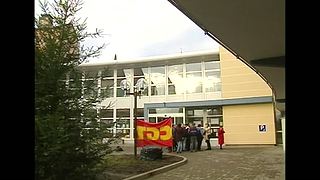
While public hospitals are still mobilized to obtain more resources, the strike, led by the staff of the hospital in Mutzig, Alsace, is linked to a completely different problem. Some of the employees have been mobilized for 10 days to demand the departure of the director of the establishment, who is accused of bullying, harassment and vexations of all kinds. Jeanne-Françoise EBERHARDT, hospital service agent, Françoise GENG, national secretary CGT hospitals, Muriel ORGEL-KLEIN, former nursing assistant, Dr BINDEL, temporary doctor and André COURTES, chairman of the board of directors of the Mutzig hospital.
The team of Professor Jean-Michel DUBERNARD succeeded in a world first medical at the Louis Herriot hospital in Lyon by grafting both hands and twoarm to a 33-year-old man who had been amputated after an artisanal rocket explosion. A particularly meticulous operation that required the simultaneous intervention of 18 surgeons. The patient, a painter and father of two, had been waiting for his new hands for four years. The operation lasted seventeen hours Jean-Michel DUBERNARD, head of the urology and transplantation department: "This is a very thorough procedure in terms of surgery, but surgery is only one aspect of the whole process. Immuno-suppression and prevention of rejection are the key to this type of transplantation. ' Archive of Clint HALLAM transplanted by hand 16 months ago which regained sensitivity and manages to write. This medical feat has a counter-part, a very heavy anti-rejection treatment with a long-term risk of serious illness. Isn’t the cure worse than the evil? That is why the ethics committee asked the Lyon team to limit transplants to amputees with both hands, a handicap so heavy that it justifies taking risks. Professor Michel MERLE, head of the surgery department of the main CHU of Nancy: "It remains an exceptional surgery. We must not trivialize this surgery, a heavy act, which is heavy by the daily treatment, heavy by the complications of the immunosuppressive treatment. The patient needs to be made aware of this, as there is a risk of altering his or her life expectancy. ' On an experimental basis, Professor DUBERNARD’s team is expected to perform five transplants with both hands in the next two years. The patient is doing well, but it is only in two or three years that we will be able to judge whether or not this type of operation is appropriate.
Nurses and school doctors will be able to deliver the morning-after pill to schoolgirls. This announcement was made a few days ago by the Minister of Education, Ségolène ROYAL, to respond to the distress of many adolescent girls. Will this measure reduce the number of early pregnancies? Report at the Boucher high school in Perthes, Abbeville, in the Somme, which has been delivering the morning after pill since last September. Excerpt from an interview between a high school student and the hospital nurse; interviews with a senior student, who explains why she carried out her pregnancy to term, the principal, Bernard LEFEVRE; Brgitte PIERRE, school nurse; From a junior student.
The writer Eric Emmanuel SCHMITT explains that he has been an insomniac since the age of eight, following the death of his grandfather in his sleep. His parents had an unfortunate sentence: "your grandfather fell asleep forever". He does not accept sleep at night, he only accepts it for writing: he has micro-sleep when he writes and therefore has a "work bed" in his office. It has several beds: a bed to sleep and make love, a bed of work and a bed of insomnia.
Michel Chassang, a family doctor, discusses the difficulties of working as a liberal general practitioner. He complained, among other things, about the economic pressure on doctors. He denounces the Aubry plan to restrict social security spending.
Three virus strains were observed this year for the February development of the influenza vaccine, which is available in pharmacies from today. This year, an antiviral drug will be marketed at the same time as the vaccine. Interview with Hervé CHALUMEAU, Pasteur-Mérieux industrialisation director and Doctor Bruno LINA.
In Belgium, a patient who underwent a double surgery on coronaries two weeks ago left the hospital 48 hours after the procedure. This shortened convalescence is due to a first surgical: it was operated without opening the thorax, using a robot with voice control. In Blankenberge, Guy de NEVE, 51, cycled 20 km 15 days after the procedure. Usually, the recovery lasts more than two months. Guy DE NEVE: "I feel beautiful, that’s all, I feel very good." He’s ready to go back to work. Reduced convalescence, no scars, thanks to the little robot Zeus. On September 4, in Alost, Guy’s operation was entirely filmed. Two small holes in the chest for the robot arms and instruments, one for the voice-controlled camera. The surgeon handles the robot and sees the operation on his screen. Hugo VANERMEN, surgeon: "The surgeon’s hands will tremble a little, the mechanical arms of the robot do not tremble at all. It gives a precision to the millimeter." The technique is very recent. The first tests took place in February in Strasbourg on the heart of an animal. The robot could make its way into the operating rooms. Interview with Professor Jacques MARESCAUX (25/02/1999) President of the Association for Research on Cancer of the Gastrointestinal Tract: "Sometimes you need remote help from a more expert surgeon for part of the operation: in addition to the advice, it will be possible to operate remotely for 10 minutes or 15 minutes." A computer-assisted operation, some see further imagining the patient at one place and the surgeon at the other end of the world.
Boris Cyrulnik, a neuropsychiatrist, is filmed at his home, in his home in Seyne sur Mer, in the Var. He explains why he likes the place, comments on the decoration and presents the office where he works and writes his books, without a computer, with paper and pen.
Boris Cyrulnik, neuropsychiatrist, whose latest book is entitled "A wonderful misfortune", is questioned by Catherine Ceylac. He explains that to be a psychotherapist is to be a "psychopompeur", that is to say to draw his knowledge from what his "authentic" patients tell him, the most intelligent and exciting, unlike what he calls "cultural clones".
Resurgence of gonorrhea, a sexually transmitted disease. Cases are increasing in the Paris area. Less and less protected sexual relations would be the cause. Interviewed, Doctor Michel JANIER, dermatologist-venerologist at the Saint Louis hospital in Paris explains: "Gonococcia is not a serious illness in itself because it is very easy to treat, what is serious is its increase...".
Report devoted to the new goals of the National Cancer League. Interview with its president, Henri PUJOL, who explains that the next objective is to put the patient at the heart of the healing process by involving and informing him more. It is also necessary to educate the public, especially women, to be screened regularly in order to detect cancers as soon as possible, which improves the chances of recovery.
The retirement home Le Castel, of Sainte Sévère sur Indre is understaffed. The number of residents to increase but not the number of staff. We’re missing some of the medics. Interviewed, a person from the management explains "If we do not have enough staff, we will see what? (...) , do we want to see reindeer in our establishments, establishments of the dying type...".
At the Centre Hospitalier Régional Universitaire de Limoges, the medical profession provides psychological assistance to women with breast cancer. A patient testifies after a mastectomy and heavy follow-up care: "It was a shock ... Overnight, being mutilated is not easy ... We need to get past the surgery and heavy treatments, chemotherapy and radiotherapy. '
Researchers at the Becquerel Centre in Rouen have highlighted the ability of a molecule to make cancer cells receptive to therapies. This discovery could open up prospects in the treatment of leukaemia. Animal testing could begin soon. For 20 years researchers have been working on the subject, today the laboratory of the Becquerel center is the only one in France to know how to cut this molecule. The next step is to show that this part of the molecule is able to penetrate the bone marrow and if accumulate in sufficient quantity.


 The INA Galaxy