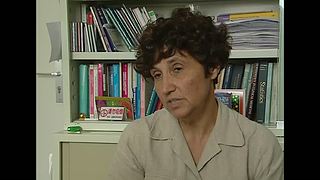
Update on medical research to treat heart attacks. Example with a patient treated at the CHU de Montpellier, zoom on scientific advances at the Centre de recherche de biochimie macromoléculaire de Montpellier, and finally, mention of the French ban on working on the human embryo, which considerably impedes research. Commentary on images shot at the CHU and in a Montpellier laboratory, and on infographics, alternating with the testimony of a patient with heart failure and the interviews of Christophe PIOT, cardiologist at the CHU de Montpellier and Michel PUCEAT, CNRS Montpellier.
To combat stress, there are several methods of relaxation, yoga, gentle gymnastics, but there is also laughter. There are "laugh clubs" of which the first one was born in India, in 1995. Since then, the phenomenon has developed and there are 6 laughing clubs in France, one of which is in Paris in the 10th arrondissement. Alternating testimonies of two members, Rémy Bricka and Iris with the interviews of Jocelyne Lemoan and Brigitte Asselineau, psychotherapists and animators of the Club de Rire, Roséa de Romémont, psychotherapist for whom this practice lacks a dimension. To combat stress, there are several methods of relaxation, yoga, gentle gymnastics, but there is also laughter. The first "club du rire" was born in India in 1995. Since then, the phenomenon has developed and there are 6 clubs in France, including the Parisian club.
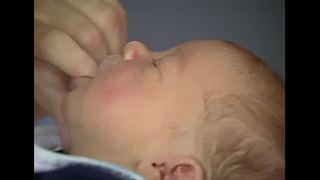
Focus on bronchiolitis, a respiratory disease that affects many babies every year during this season. Commentary on factual images in a physiotherapy practice, testimony of the father and mother of treated infants, and interview with Jean-Pierre LEMAÎTRE (physiotherapist).
Ivan LEVAI lost his taste in a restaurant. He explains that he first lost his sense of smell. Professor Pierre BONFILS explains the mechanisms of taste very related to smell. The taste results from an oral part and from the perception of odors by retro-olfaction, in other words by the perception of odors by smell.
The midwifery competition disappeared in 2001 to be part of the medical competition. Students choose their career and specialty based on their ranking in the general competition at the end of their first year of medicine. The director of the school and students of the University of Caen give their opinion on the matter. The expansion of recruitment raises the question of motivation and vocation, especially of poorly rated students who would integrate midwifery training out of spite. On the contrary, some students think that the integration of the competition in the first year of medicine is an opportunity, a recognition of the profession and can help to create vocations, especially among men. The journalist asked a few students in a class of three boys and 20 girls about the increase in the number of male midwives.
The European Telesurgery Institute has opened in Strasbourg and will allow for remote surgical operations. Comment on images of a telesurgery operation alternating with the interview of He"rvé MAISONNEUVE, medical director and Jacques MARESCAUX, director of the European Institute of Telesurgery.
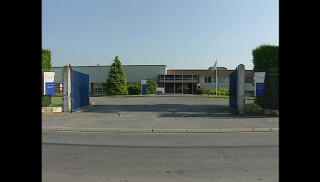
Doliprane is one of the 3 best-selling drugs in France. 2 boxes per year and per French. Lisieux is the manufacturing site of the famous little yellow and blue box in the Aventis Pharma factory.Guided tour of the company that produces 300,000 pills per hour.
Beginning of an unlimited strike by the guards and on-call for the application of the "security rest" of the residents of the hospitals of France. In illustration, the typical day of one of them in Nice, Geoffrey VANBIERVLIET, intern in 3rd year. Alternation of comments on images of his activity at the Hospital de l'Archet and his interview. He explains: "We are tired, we would like it to end, but it will only end at 6:30 pm...on an average week, it will give 60 hours, not counting the guards". Further on, he continues: "The amputation of the salary linked to the guards would reduce, we all think, our purchasing power...".
After a recent American study, point on the risks, supposed or proven, of hormonal treatments for postmenopausal women in terms of breast cancer development. Comment on factual images, and interview with Dr Christian JAMIN (gynecologist-endocrinologist), Professor David KHAYAT (head of the medical oncology department at Pitié Salpêtrière), and Catherine HILL (Department of Biostatistics and Epidemiology, Gustave Roussy Institute in Villejuif).
Report during the Solidays festival where the younger generations were asked about AIDS and the need to protect themselves. Alternance of the commentary on factual images, of a micro-sidewalk and interviews of Benoît FELIX, regional information center prevention Sida, and Hugo FILLADEAU, prevention Solidarity Sida.
Osteopathy has just been recognized but the sessions will still not be reimbursed by the social security. To practice osteopathy legally, it is no longer necessary to be a doctor. All that is needed now is an official diploma, recognized by the state. Patrick Clerc patient explains the benefits of osteopathy that replaces all possible medications. Images of a school where future practitioners learn to work with doctors alternate with images of a session. Bruno JOSSE, osteopath, stresses that a recognized training is a safety for patients.
The biologist Axel KAHN explains that there is a "difference between the natural biological mechanisms of sexual determination and sexuality, which is the way in which, with his psychic life, we live and express our sexuality". We can explain the stages of sexual determination, on the other hand how it is lived by a particular psychism, it does not take from the fields of biology, according to him.
In Lyon, 300 specialists took part in a world congress on stroke. Explanations of the new treatments available, including thrombolysis by intravenous injection, which helps to dissolve clots. Interview with Paul TROUILLAS, head of the neurovascular emergency unit in Lyon, who talks about people at risk, particularly those with cholesterol, hypertension, diabetes and smokers. images from the Palais des congrès and archive images of a supported patient.
Report at the maternity ward of Les Lilas, the clinic that advocates for gentle childbirth. To have a place, women must register from the first months of pregnancy. Interview with Emmanuelle, a future mother, Roland LECLERC, physiotherapist and Gérard STROUK, obstetrician-gynecologist.
In France, psychology is booming, with nearly 15 million people consulting a professional every year. The "shrink" is everywhere, in newspapers, on the radio, but also on TV and even on the Internet... Everywhere, and sometimes too much, according to some professionals... Micro-sidewalk, and interview with Jean-Louis SERVAN-SCHREIBER (director of "Psychologies Magazine") and Claude HALMOS (psychoanalyst).
Whooping cough theft: a method from before the war, still contested. According to Dr Willy Matter, flying between 3,000 and 3,500 metres could treat children with this infectious and bacterial disease. From his private plane, interview with an amateur pilot, retired orthopedic surgeon: "it is assumed that depression acts on this bacillus [...]. Dr Matter explained that, at altitude, the bacillus exploded [...]". Comment on images of the takeoff of the plane, the child in the cockpit, the pilot, a doctor in consultation followed by his point of view.
Rapide historique de l'hygiène en France depuis le XVIIe siècle. Stéphanie Colin, responsable de formation au château de Chamerolles, explique le principe de la toilette sèche puis du bain. Jeannot Fishot, du musée du Père Mousset, raconte comment son grand-père se lavait les dents.
Report on hygiene among peasants in the 19th century. Henriette BRETHEREAU, head of the Père Mousset Museum in Vrigny, explains how people managed to do their natural needs in the absence of toilets.
The layout of urban spaces is not designed for people on wheels. Liliane Meiste rmilite for improving the accessibility of people with disabilities. In a wheelchair, she demonstrates all the obstacles and difficulties she encounters on a daily basis: sidewalks too narrow, distributors installed too high, stairs without access ramp...
The mayor of Cirey-sur-Vezouze in Meurthe-et-Moselle has launched a petition in support of rural medicine. This petition attracted signatures from all over France. Since they could no longer cope with the workload, two of the three doctors in the municipality decided to close their practice. Commentary on factual and archival images alternating with interviews with Claudine FISCHER, deputy mayor, Christelle TISSERANT resident of Cirey expressing her concern and Liviu MUNTEAU, new doctor of the municipality.


 The INA Galaxy