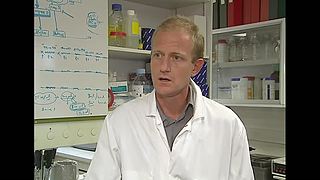
In Caen, the cancer centre François BACLESSE receives 4600 patients every year. It is a reference institution in France, especially thanks to the psychological support pole. In Lower Normandy, cancer kills nearly 4,000 people a year, and is cured in more than one out of two cases, thanks to the increasingly early detection. The BACLESSE Centre will now be part of the ANCELOT network, intended to connect all health stakeholders (from doctor to hospital) in order to offer patients the best chance of recovery.
Humanitarian organizations are mobilizing to help those affected by the earthquake that reportedly killed 55,000 people in Southeast Asia. The International Federation of the Red Cross has requested aid of 32 million euros. The French Red Cross has opened an operational centre in case of crises. It receives hundreds of calls for proposals and financial donations. Interviews with Laurent BANCAL of the French Red Cross and Antoine PEIGNEY, director of international operations French Red Cross who explains: "This money allows us first to pay for planes that are expensive and that allow us to transport our specialists...".
A team of French researchers has succeeded in manufacturing large quantities of red blood cells from stem cells grown in the laboratory. A discovery that could eventually make up for the lack of donors. The commentary on images of scientists working in the laboratory, of an operation in a hospital and blood donation, alternates with the interview of Marie-Catherine GIARRATANA, of the laboratory Hématologie CHU of Saint-Antoine, and Luc DOUAY, of the hematology department of the hospital Trousseau (Paris).
Report. Jacques CHIRAC presented today his plan for the fight against cancer. Priority is given to combating tobacco use, which accounts for 30,000 deaths a year. A National Cancer Institute will be established to coordinate information, prevention and research. Commentary on illustration images, factual images and infographics interspersed with an extract of the declaration of Jacques CHIRAC. [Source: Documentation France 3] National Cancer Week. Jacques Chirac has today opened the third and last major work of his five-year term, the struggle against cancer, prioritizing the "war on tobacco," responsible for 30,000 deaths a year. The national plan, the 70 measures of which will be detailed by Jean François Mattei, Minister of Health, will mobilize half a billion euros over five years. A National Cancer Institute will be established to coordinate Prevention Information and Research. - SONORE Jacques CHIRAC: 'Cancer is both a health and social problem. We will only make progress if we know how to put at the service of this cause the whole of public policies: Research, Health, Education or even social protection."
Gwenaël Robin, a mother living near Brest, is volunteering to test the preventive AIDS vaccine. She answered a call from the ANRS (National Agency for Research on AIDS). For the past year, she has been visiting Tenon Hospital in Paris, where she has been injected with a product to study the behaviour of her immune defences. She does this to help the sick, research: she is not paid and is not surrounded by AIDS patients... she only wants to fight against this disease "which does not give up".
A house for the parents of hospitalized children. The structure, inaugurated yesterday, will be operational from Monday: 17 rooms, not far from the children’s pavilion, at the Hautepierre hospital in Strasbourg. The Ronald MAC DONALD Foundation financed this parents' house, for two million Euros. Interview Mehdi BAALA, 1500m world champion.
Report. In France, 32,000 people die of heart failure. A European study has just been published on the initiative of cardiologists to better inform about this disease, whose warning signs are unknown to the population. Images of tests of efforts and rehabilitation of patients through elliptical bikes, alternating with interviews with Professor Alain COHEN SOLAL, Head of Cardiology Department of the Beaujon Hospital, Catherine ROBYNS, nurse and a patient.
Most Chinese do not have toilets at home. Mao Tse Toung imposed public toilets. And the locals have to go outside for their needs... In Beijing, Zhang YING, director of urban cleanliness, recalls that in the old city of Beijing there were toilets in the yards of houses but that public toilets were built in the 1960s. In the old quarters, there is a foul smell from these toilets, which are simple trenches. One resident says that there is no solution: "We are only small people, but summer smells very bad"...
A vaccine testing protocol for AIDS is currently being tested. Meeting with Philippe, 49, AIDS patient and volunteer for the test. Commentary on images shot at the hospital Georges Pompidou and interviews with Philippe CASTIER, Centre d'investigation clinique European Hospital Georges Pompidou (Paris).
A vaccine for everyone. For the 8th consecutive year, the municipality of Amnéville decided to have its inhabitants vaccinated for free against the flu. A unique operation in France. Even the mayor of the city, Jean Kiffer, a retired doctor, put her hand to the paw by vaccinating her own people.
Update on the Personal Medical Record project, planned for 2007, to streamline care. Interviews with the president of the Association for the Development of Virtual Medical Exchanges, a patient, a psychiatrist.
Portrait of Professor Etienne-Emile Beaulieu who has just been appointed President of the Académie des Sciences. Born Blum and became Beaulieu during the war, he took the maquis against the Nazis. He then fights alongside women and develops the abortion pill RU 486. Also known for discovering the anti-aging hormone DHEA, he is now fighting for research budgets. Claudine Lévy, his secretary, highlights her jubilant and sparkling side, Joëlle Brunerie Kaufman, gynecologist, recalls her commitment against anti-abortion movements, and Florence Broué, PhD student at INSERM, salutes her life force.
The bioethics act now allows the importation of human embryonic stem cells. Explanations of the technique used by researchers on infographics and interviews of René FRYDMAN, in vitro fertilization unit Antoine Béclère Hospital (Clamart), and Philippe DOUSTE BLAZY Minister of Health and Social Protection. Comments on scientists working in a Clamart laboratory and microscopes views.
Historical and scientific explanations concerning rabies. Alternating commentary on illustration images, explanatory infographics (distribution of animal and human contamination in the world), archive images (contaminated human) and an interview with a veterinarian at the Institut Pasteur, Dr Hervé BOURHY.
Jacques Chirac visited this morning the protontherapy center of the Curie Institute in Orsay, Essonne, specialized in the treatment of tumors of the eyes. On this occasion, the Head of State recalled the importance of the fight against cancer, "national cause".
A room of the Hypocrate Private Institute of Medicine was named after the Lyon inventor of penicillin: Ernest Duchesne. This military doctor discovered the virtues of penicillin thirty years before Alexander Fleming. The Surgeon General Inspector FLECHAIRE, Commander of the Ecole de Santé des Armées, explains that Ernest Duchesne has provided experimental evidence that certain moulds can oppose bacterial growth. Caroline GY, little niece of Ernest Duchesne, regrets that this precursor of antibiotic therapy did not come out of the shadows. Illustration by pictures and engravings.
Fourteen cases of euthanasia were confirmed at the Besançon hospital. Commentary on illustration images interspersed by interviews with Vincent MAUBERT, CFDT-CHU de Besançon, and Paulette GUINCHARD-KUNSTLER, PS deputy of Doubs. The medical examination that was requested by the courts has just been rendered. This is mainly end-of-life support, but also active euthanasia, with injection of product. So the case could be prosecuted. Vincent MAUBERT, from the CFDT of the CHU de Besaçon, explains that these are injections of products. It is unclear whether the families were involved in the decision. Only one filed a complaint. Paulette GUINCHARD-KUNSTLER, MP (PS) of Doubs, spoke on the subject. Through this affair the social debate on the end of life is revived, with on the one hand the non-intervention for the maintenance of life at all costs, on the other the active intervention by lethal injection. After a plateau return, the document is dedicated to a hospital resuscitation service. The commentary recalls the articles of law relating to the end of life. Dr François Lemaire, professor of medical resuscitation at the Henri Mondor (Créteil) hospital, clarifies the difference between non-intervention and euthanasia. The comment is conspicuous on the vagueness of the law which nowhere mentions the term euthanasia.
76 toxic chemicals, notably in consumer goods, have been found in the blood of 39 MEPs. The research covered 101 substances from five groups: organochlorine pesticides (including DDT, banned in 1978), PCBs (polychlorinated biphenyls, banned progressively from 1979 onwards), brominated flame retardants (present in computers, TVs, sofas...), phthalates (plastics, cosmetics, toys...) and perfluorinated compounds (some textiles, teflon coatings...). For toxicologist Jean-François NARBONNE (director of a laboratory of the CNRS), the authorities could have been the first to address this public health issue.
The association "Alcool assistance", in Alsace, offers its members a medical follow-up, but especially a place to talk. Its speech pods help alcoholics a lot to choose abstinence. Commentary on illustration images, with the testimony of Michel, a former alcoholic turned abstinent, and Dr Marc Litzenberger.
An update on the grumbling of emergency physicians who denounce the conditions for the application of the reduction of working time in hospital and demand job creation and a budget extension, Pointing the risk of deterioration in the quality of care. Factual images at the hospital in Tarbes, where the emergency doctor strike has been going on for ten days; interviews with Jean Manuel PIERNA, emergency pathologist, and Patrick PELLOUX, President of the Association des médecins urgentistes hospitaliers de France.


 The INA Galaxy