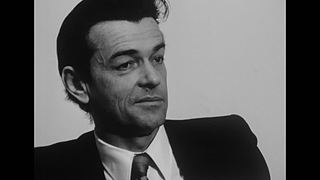
Dr Jacqueline KAHN NATHAN, a gynaecologist at Necker Hospital in Paris, explains how to use the diaphragm and its limits if the diaphragm is incorrectly positioned. Testimony of a 49-year-old woman, four children, who uses the diaphragm and is satisfied with it, because she was able to choose the time of her pregnancies.
Reportage presenting the operation of a young child carrying congenital heart disease: a breach between two ventricles. The latter is first covered with ice in order to lower his body temperature then his blood is redirected to an artificial heart-for-my. Once the heart has stopped, the surgeon drops off a plastic prosthesis.
Interviewed, a doctor talks about syphilis, the number of cases in the Toulouse region. It calls into question the liberalization of sexuality and indicates: "the increase in venereal diseases goes in parallel with the increase in sexuality, period".
Report on the development of a male pill. With the interview of Professor BEAULIEU on its safety on virility and its importance for men in new relationships of the couple. Interview of a laughing woman, retirees, a very young woman, an old couple, and a haberdashery: you can have sex without pills, I have only two children, me, sir.
Dialogue in a Parisian hospital between Jacqueline Manicom, a midwife, one of the founders of the Choisir movement and activist for the freedom of contraception and abortion with a young mother whom she has just helped to give birth to and then with one of her colleagues on her job.
The gynecologist Jean-Henri SOUTOUL exchanges off with Jacqueline MANICOM, midwife, on the status of the latter, and the responsibilities of this profession. Jacqueline MANICOM denounces the paternalism of doctors and the lack of recognition weighing on her profession: "The midwife is not an adult... I’m tired of being protected!" Illustration images.
Dr. Rozenbaum of Necker Hospital presents the characteristics of the copper wire IUD. He explains the advantages and specifies that with the pill, the means of contraception evolve to suit the different metabolisms of women.
Professor Henri PUJOL answers questions from a journalist about the fight against cancer and the objectives of the meeting of oncologists in Florence. It stresses the importance of early cancer screening to improve the chances of recovery.
Report on Doctor MARTINEZ, anesthesiologist resuscitator in the emergency department of Necker Hospital in Paris. Interview of Doctor MARTINEZ on his job, the distress and death he meets more easily thanks to the support of his family, the essential need to develop a structure of resuscitation in hospitals.
Explanations of what is commonly known as hay fever, which is an allergy caused by tree pollen and grasses in the spring and fall. Evocation of ambrosia, a plant that causes allergy in millions of Americans and that arrives in France. A doctor defines what an allergic individual is. The excerpt is illustrated with images of nature and a man sneezing.
In this show, Etienne Lalou talks to the psychiatrist René Angelergues who defines mental illness as a disease of mental organization rather than an organic disease.
Following an epidemic of foot-and-mouth disease in the department, some 60 municipalities were quarantined. The village of Plumaugat is one of them, the lives of the inhabitants are changed. Herds of whole animals are slaughtered, the carcases of bovine animals are piled up in holes provided for this purpose, or the carcases are covered with quicklime. The army and gendarmerie are mobilized, patrolling the deserted streets. People are hiding in their homes, always fearing that a relative or neighbour will pass the virus on to them.
Interview about epilepsy by Professor Joseph ROGERS of the Saint-Paul Centre in Marseille. He approaches the presentation of this disease from different angles: the care by drugs, the danger of their interractions, the importance of the psychological aspect of patients in the evolution of their disease. The interview is punctuated by the views of children in a classroom, some of whom wear electrodes, of a patient treated in an examination room.
In Lyon, study on respiratory diseases with investigators visiting individuals to ask them questions and conduct a basic medical examination. Images of a visit and explanations of a city health officer.
What is a morose Frenchman? The question is asked to men and women in the street. Among them, Mr KOUPERNIK, psychiatrist: "I see a lot of them in my job", people "have a kind of fear in them now, perhaps partly the fear of the progress they generate themselves".
Testimony of a nurse on her difficult job but "more useful than being behind the pots". Although in daily contact with suffering and death, she hopes never to become insensitive.


 The INA Galaxy