Meeting at the Press Club in Rennes with Michael MEEROPOL, eldest son of the married couple ROSENBERG, who has just written with his brother Robert a book entitled "We are your sons". He explains that he would like to show the letters written by his parents in order to prove their innocence. It does not want to attack the Americans but the kind of society they represent.
On stage, in front of Juliette BOISRIVEAUD, Serge GAINSBOUG, after having interpreted his title "Nazi Rock", briefly evokes the wearing of the yellow star that he lived in his childhood: "I had a sheriff’s star on my heart"...
Recorded in September 1972, the journalist and founder of the newspaper An Nahar, Ghassan Tuéni divides Lebanon into two categories: Lebanon of the refusal and that of the request. The first is an "intellectual" Lebanon, a "maritime Beirut" Lebanon, "universities", "fairs and clubs" while the second is a poorer, more authentic Lebanon, "it is a Lebanon that lacks water, electricity, roads".
Registered in 1972, the hotelier Prosper GAY-PARA, pioneer of modern Beirut, evokes the unfailing optimism of the Lebanese towards the future and the particularity of the Lebanese liberal system.
Recorded in September 1972, Jacqueline MASSABKI, lawyer and the first woman to be elected to the council of the Lebanese Bar Association, talks about the evolution of the mentality of the Lebanese regarding the conditions of women and mixed marriages.
Report on Israeli raids on Palestinian camps in southern Lebanon, which included a military barracks. Four Lebanese officers were killed. Until now, Israelis seemed to avoid military objectives in order to focus on the bases of Palestinian resistance. This bombing indicates that Israeli troops will no longer spare the Lebanese army. The Palestinian refugees, however, paid the highest price. Commentary on images of ruined camps in southern Lebanon and women mourning the dead soldiers.
Report on the climate of insecurity in Beirut over the past month and a half, due to clashes between the Christian right-wing phalanges and the Palestinian resistance, which have caused many victims. In the absence of a solution, certain categories of the population, who until then were not involved, choose their camp and withdraw from it. Beirut is a juxtaposition of neighborhoods that are defined by their denominational affiliation or the ethnic origin of their inhabitants, to which were added refugee camps, strong places of Palestinian resistance. Pierre Gemayel, leader of Christian phalanges, sees these camps as an attack on the sovereignty of his country. Comments on images of the city, its religious buildings, fighters and press articles.
Report to Saigon when it just fell into the hands of the Vietnamese North Army. Comment on images of soldiers entering the city while waving the red and blue flag of the Vietnam Liberation Front, tanks and trucks in the streets of Saigon, en route to the presidential palace.
In December 1974, Jean Paul SARTRE visited Andreas Baader in his cell in Germany, while he began his hunger strike. The writer supports the ideas of the movement but does not approve of its methods.
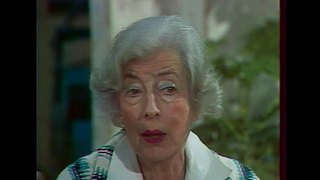
Madeleine Braun insists on the importance of introducing children to reading at school, with trained teachers who are large enough not to have overcrowded classes. She calls for providing students with attractive books and textbooks that nourish their desire to read. She deplores the lack of recognition and the difficulties of authors and all professions in the book. Madeleine Braun insists on the importance of introducing children to reading at school, with trained teachers and adapted books. She deplores the lack of investment in this fundamental educational mission.
Reporting in Thailand, where refugees from the French embassy in Phnom Penh continue to arrive following the invasion of the Cambodian capital by the Khmer Rouge. The images of the border post between Thailand and Cambodia and refugees alternate with the testimony of a Frenchman who recounts the departure of his convoy.
After the fall of Saigon and the evacuation of the city by the Americans, report on the Vietnam War. The commentary lists the figures of the war (human, financial and material cost) on archival images: a soldier returning wounded from the war, a plane dropping bombs, villages in ruins and soldiers advancing into the rubble.
In Vietnam, Saigon has just fallen: the Americans must evacuate the city. Commentary on footage of lineups in front of the American embassy in Saigon, helicopters taking the refugees, refugees boarding a plane, Gerald Ford and Harold Wilson leaving the White House, then Ford with Henry Kissinger in a living room.
Questioned by Roger LUC, Maurice HERZOG (deputy mayor of Chamonix) is in charge of an information mission to the public on the subject of nuclear power plants. Interview.
After the Cambodian army debacle, Jacques ABOUCHAR reviews the situation between Cambodia and Thailand. Seated in front of the border, he’s trying to get intelligence from young Khmer Rouge. The commentary on images of the soldiers and the population on either side of the bridge alternates with the plateau in Jacques ABOUCHAR’s situation.
Following the presentation of a tie by the Ugandan rugby club, General Idi AMIN DADA gave a speech in English (French subtitles) in which he praised his athletic qualities (he was Ugandan boxing champion in the heavyweight-medium category). He says: "I wanted to tell the boxers that the only way to defeat his personal opponent or against the country is to win by KO" and provokes the laughter of the audience.
While Phnom Penh has just fallen into the hands of the Khmer Rouge, Henry KISSINGER reads before the Senate a letter written by Lon Nol and transmitted by the American ambassador to Cambodia. Comment on images of the KISSINGER declaration (with a translation off).
After the fall of Phnom Penh taken by the Khmer Rouge, press conference in Paris of CHAU SENG, special envoy of Sihanouk. He explains that "Phnom Penh’s clique diet has lived." The Khmer Rouge call for reconciliation, except for seven leaders of the failed regime, quoted as traitors, including Lon Nol, Sirik Matak, Long Boret and Sosthène Fernandez.
Report on the situation in the Lebanese capital, which has just had three nights of nightmares. Explosions and shots are multiplying and no neighborhood is safe from violence. Some Palestinian camps are besieged by Christian phalanges. Only Red Cross ambulances are on the streets, which are also the target of fire. Comments on images of the city and destruction, inhabitants reading the press, ambulances and snipers.
In Vietnam there is the last major battle between the South and the North: the Vietcong offensive is directed at the small town of Xuan Loc. Commentary on images of a helicopter evacuating wounded soldiers and civilians, the camp of South Vietnamese soldiers, in a plantation located near Xuan Loc, and the city ravaged by the fighting.


 The INA Galaxy