As Phnom Penh prepares to fall into the hands of the Khmer Rouge, a return to images of Prince Sihanouk’s struggle against the Communists. Commentary on archival images of the prince when he reigned, in exile after March 1970 then in the Cambodian maquis, and archives of Lon Nol, who took power in his place.
Report illustrating the exodus of the French from Phnom Penh, whose fall is imminent. The comment on images of the French boarding for Paris and the road leading to the airport is followed by a plateau in Patrick CLÉMENT’s situation at the airport of Phnom Penh (Pochentong), where an airplane brings rice, ammunition and fuel.
Reporting in Cambodia, where the Khmer Rouge are now completely surrounded by Phnom Penh. The fighting rages between the communists and the government forces. The main battle takes place a few kilometers north of the capital, next to the airport of Pochentong. Commentary on images of a helicopter, government soldiers in action and carrying a wounded man on a stretcher, care on a wounded man and distribution of guns to the civilian population.
In Cambodia, the Khmer Rouge encircle Phnom Penh and have established a Mekong blockade. The capital is supplied only by the American airlift and the famine is raging. Commentary on images from a market where refugees are looking for food and in Phnom Penh Pediatric Hospital, where skeletal children are dying of hunger.
Reporting in Cambodia, where the Khmer Rouge encircle Phnom Penh. The fall of the capital is near. Commentary on the images of a helicopter, soldiers of the government army assisted by women, women armed with guns, soldiers firing cannon, a wounded man transported on a stretcher to the hospital and a man squatting in rubble.
Interview with Germaine Tillion on the Ameriolation of the status and living conditions of immigrant women: "the handicaps of immigrant women are overwhelming"
South Vietnam, Tay Ninh. If the North Vietnamese army and the GRP have been established in this region for a year and a half, they have not yet managed to take Tay Ninh as their capital. Commentary on an aerial view of the Black Virgin Mountain, images of a helicopter with a soldier firing on the ground with a machine gun, tanks in action, artillery fire and soldiers advancing on the ground.
Despite the signing of the Paris Peace Agreements, the war continues in Vietnam. The fighting resumed in the south of the country at the initiative of Vietcong, which is gaining ground. The provincial capital of Phuoc Binh has fallen, as has the radar station of Tay Ninh. Comment on images of Vietnamese soldiers on the front, a village after the Vietcong offensive and villagers in the middle of the rubble.
Interviewed, philosopher Raymond ARON, refers to his book "The Algerian Tragedy", written in 1957 and its misuse by American Senator John-Fitzgerald Kennedy. He explained that he had spoken with Kennedy on this subject: "...I had been angry because I found that I, as a French citizen, had the right to express my opinion in favour of Algerian independence, but that he had only to meddle in his affairs...".
They fought alongside the French during the Algerian war. The Harkis, these "forgotten in history" make the hunger strike and claim a free access between France and Algeria, a less hard life, to leave the camps in which they were put and to be conisidered as French.
The People’s Republic of China celebrated the 25th anniversary of its founding yesterday. On this occasion, Mr GISCARD D'ESTAING stressed the importance he attaches to the bonds of friendship between France and China by going to the reception offered by Ambassador TSENG TAO. He is interviewed at the embassy about his presence at this event.
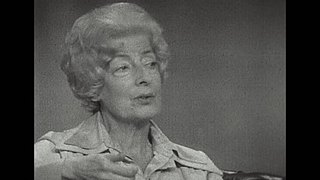
Madeleine Braun, reviews the beginnings of the resistance newspapers. These newspapers were first re-catalogued using machines that were often of poor quality before going to the press. She explains the difficulties in obtaining the paper, ink and material necessary for the production of newspapers like L'Humanité, which nevertheless had 374 clandestine issues. She specifies that these resources had to be obtained through indirect means, notably on the black market. Words illustrated by images of the days of the resistance.
Interviewed, Germaine TILLION talks about the Algerian War, when, in 1957, she was sent on a mission by the French Government. She goes back to the thought that inspired her meeting with FLN leader Yacef Saâdi, in the middle of the Battle of Algiers, in July 1957. She explains: "...I left with the thought that it was necessary to make a deceleration of the violence (...), at that time, we lowered the level of tensions and we could negotiate, we could talk...".
Germaine TILLION had to work in Algeria when the war broke out and ensure the safety of the civilian population. She goes back on her commitment and the fight against torture, which had reasoned in her since the Nazi occupation.
During his detention at the Ravensbrück camp, the ethnologist Germaine Tillion reconstructed the concentrationist economic mechanics: "I wanted to understand how it works".
Madeleine RIFFAUD, a former FTPF resistance fighter, recounts her release from Fresnes prison in August 1944 after her escape from the last convoy from Pantin to the death camps.
Madeleine Braun, former member of the National Front and director of the newspaper Patriote, talks about the birth of the National Front in 1941 following a call from the Communist Party to unite. She describes the diversity of the personalities involved, the links with the maquis and the FTP (Francs Tireurs et Partisans) and recalls that even if their ideas might differ, the union was made on a single objective: the liberation of France


 The INA Galaxy