In Stuttgart, the court sentenced the three surviving members of the extreme left group "Baader-Meinhof" to life imprisonment. Commentary on archival images related to the anarchist group.
First images of Cambodia since the Khmer Rouge took power, shot by an American cameraman under the control of the Khmer Rouge leaders. Commentary on images of Khmer Rouge circulating in military trucks, Cambodians clearing land to build a dam or activating in various work in the country and blue workers working in front of a factory.
Two years after the Cambodian Khmer Rouge came to power, retrospective on the fall of Phnom Penh. Commentary on archival images of the capital under the bombings of the Khmer Rouge, the wounded, the exodus of the population, the ambassador of the United States, J.G. Dean, evacuated by helicopter, the entrance of the Khmer Rouge into the capital and Prince Sihanouk embracing the Khmer leader Khieu Samphan.
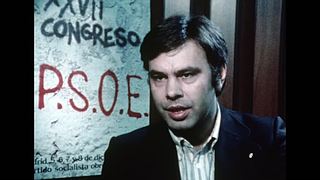
In Spain, interview with a Republican and a member of the PSOE (Partido Socialiste Obrero Espanol) on the feelings felt at the death of General Franco and the hopes they place in establishing democracy with his successor, King Juan Carlos.
Summary of the First World War Armistice Commemoration Ceremony: comment on images of President Valéry Giscard d'Estaing arriving on foot at the Arc de triomphe and laying a wreath on the tomb of the unknown soldier before taking a moment.
Jean-Marie DOMENACH questions the quest for happiness in a society where consumerism is king: "We expect people to make this happiness for us ... Consumer society is defined by the artificial production of goods that people do not really want but are taught to want. '
Suzanne BARDECHE, interviewed at home alongside her husband, explains that she has long been unable to forgive for the death of her brother, Robert BRASILLACH, sentenced to death and executed at the Liberation in 1945 for intelligence with the enemy. According to her, her brother, who "became like a saint" during his detention, was able to forgive before his execution, but she points out that she still has hatred towards General DE GAULLE who refused the presidential pardon. She adds that the events of the cleansing had a certain influence on the education given to her own children, raised according to her as "perfect fascists".
The historian Pierre NORA evokes the way in which history textbooks are written by historians and how they take up the current national ideology. He returns to the national soul and the national memorial ideology forged under the 3rd republic in particular the resistance of public opinion to the independence of the colonies, symbolized by a history manual "Le Petit Lavisse". Pierre NORA reads a passage from this textbook about the colonies.
In response to Jean CHESNEAUX’s comments on history and around his book "From the Past, Clean Slate", historian Pierre NORA looks back on the different types of history: a political history, a university history, a militant story or Alexandre Dumas romanesque story just like the writer Claude MANCERON, author of a romanesque cycle on the French Revolution and in both genres there are good or bad history books.
Interviews with Mélinée MANOUCHIAN, widow of the resistance fighter Missak MANOUCHIAN and Arsène TCHAKARIAN, former member of the FTP-MOI network. Mélinée MANOUCHIAN evokes the different nationalities of these resisters and paints a portrait of Missak MANOUCHIAN: "C" was a very calm man... He was not brutal even in giving orders, he loved his comrades who respected him." Arsene TCHAKARIAN, stresses the fact that the military command was given to an Armenian. They had no weapons, had to fight with kitchen knives and carry out direct actions against the German occupiers.
Interviews with Mélinée MANOUCHIAN and Arsène TCHAKARIAN, lieutenant of the 2nd Manouchian Group on the arrest of the Manouchian Group resistance fighters and on the action of the still free resistance fighters who had to flee Paris for their safety.
Interviews with Mélinée MANOUCHIAN, widow of the resistance fighter Missak MANOUCHIAN and Arsène TCHAKARIAN, former member of the FTP-MOI network. Mélinée MANOUCHIAN evokes the different nationalities of these resisters and paints a portrait of Missak MANOUCHIAN: "C" was a very calm man... He was not brutal even in giving orders, he loved his comrades who respected him." Arsene TCHAKARIAN, stresses the fact that the military command was given to an Armenian. They had no weapons, had to fight with kitchen knives and carry out direct actions against the German occupiers.
Simone VEIL evokes the nauseating smells that emanated in the concentration camp of Auschwitz, due to the appalling living conditions and the incessant smoke of the burned bodies.
Jacques Chaban Delmas recounts the organization of their saboteurs teams. It evokes an action at Le Creusot; Instead of a costly second bombing, they would blow up the plant’s facilities, and neutralize it for a long time.
Madeleine Braun tells how the poem 'Liberté' by Paul Eluard was able to appear officially in the magazine Fontaine by Max Pol Fouchet before it became clandestine: the Vichy censor having not read it until the end, thought that it was a love poem. The poem having appeared under the title 'A single thought' and not yet under its current title 'Freedom'.
Testimony of Silvia MONFORT about the wearing of the yellow star in 1942: "What struck me a lot was the connivance of those who did not have it against those who had it ... It was a marked race... It was a very important trauma to see this selection in the heart of the French ... It is the most unbearable thing in the world humiliation..."
Exclusive report on the surrender of Palestinian refugees from the Tel al Zaatar camp in Beirut on 12 August. They were evacuated by the army to the village of Dekouane. The camp was besieged by the Phalangists who massacred many civilians. Comments on images of the departure of civilians, weeping women, an injured amputee and Jean Hoefliger, Swiss representative of the Red Cross who had negotiated for the evacuation of the wounded. Interview with Amine GEMAYEL, head of phalangist on the spot recognizing certain atrocities.
Interviews with Pierre Henri TEITGEN, Companion of the Liberation, on the organization of the first resistance fighters and the first propaganda network.


 The INA Galaxy