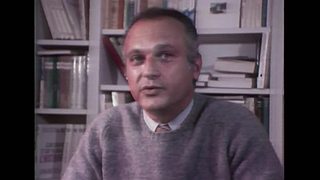
Pierre NORA and Daniel PENNAC are invited to celebrate the 100th anniversary of the Gallimard publishing house. Historian and publisher Pierre NORA revisits the NRF acronym drawn by Schlumberger as a Place of Memory and evokes on this occasion the first time he discovered Gallimard while he was at Lycée Carnot and had been 16 years old. He had attended a Garden party bringing together all the great writers: "where to live and die"
Historian and publisher Pierre NORA evokes on the occasion of the centenary of the Gallimard publishing house, his beginnings with Gallimard: Claude GALLIMARD wanted him to create for his publishing house a collection of historical and scientific works outside literature like the one he had created at Julliard.
Historians denounce the fact that the French state legislates on the past and mobilizes against memorial laws. The debate on legislation on history was revived more than 3 years ago when the law imposed a positive historical reading of French colonization. The book by Pierre Nora and Françoise Chandernagor "Freedom for History" revives the controversy. Is it up to the law to write history or to historians to embody our memory? According to historians, this calls into question their profession and their freedom of creation, it is unacceptable to be judged on the use of certain words and values. Interview with Marc FERRO, historian, Pierre NORA, historian, and Georges PAU-LANGEVIN, MP PS, Paris XXth.
On the set of his show, Michel FIELD talks with historian and publisher Pierre NORA, about the collective work "Lieux de Mémoires" that he directed, a question about how the French identity was constituted. The historian explains that he initially envisaged to study general phenomena on the national feeling and the anchors of this national memory, he also returns to the origin of the title "Places of memories".
Bernard PIVOT talks with historian Pierre NORA about the philosophy of the intellectual magazine of ideas "The debate" which he founded and directs as well as the situation of libraries in France which is the subject of a dossier in the last issue of the journal.
On the occasion of the upcoming transfer of the ashes of René CASSIN to the Pantheon, historian Pierre NORA returns to the history of the Pantheon or "the normal school of the dead" and the notion of Great Man, that is to say the anti hero, the man of reason, the one embodying the virtues of the society of the Third Republic.
The historian Pierre NORA is asked by Philippe LABRO about the occultation of the memory of the Algerian War and the French responsibilities towards the French of Algeria and Algeria by the political power in France from his independence, the economic impact of the return to France of the French of Algeria and the place of black feet in French society. He also evokes the question of the restitution of the archives brought back to France in 1962 to Algeria.
The historian Pierre NORA gives his opinion on the role played by the mass media on current events that they transform either into a historical event or a banal fact. He takes for example the moon landing via Interlsat, May 1968 with the radio and during the Second World War, the press for the Dreyfus Affair and more recently the death of FRANCO and the case of the kidnapping of Françoise CLAUSTRE.
The historian Pierre NORA reacts to the words of the historian Jean CHESNEAUX, author of the book "Du passé, font, table rase" on the end of history, "the need for stories among the people" and evokes the figure of Robespierre made by Claude MANCERON in his historical series romanesque "The men of freedom" dedicated to the French Revolution. He explains the differences between historical and romantic history.
The historian Pierre NORA evokes the way in which history textbooks are written by historians and how they take up the current national ideology. He returns to the national soul and the national memorial ideology forged under the 3rd republic in particular the resistance of public opinion to the independence of the colonies, symbolized by a history manual "Le Petit Lavisse". Pierre NORA reads a passage from this textbook about the colonies.
In response to Jean CHESNEAUX’s comments on history and around his book "From the Past, Clean Slate", historian Pierre NORA looks back on the different types of history: a political history, a university history, a militant story or Alexandre Dumas romanesque story just like the writer Claude MANCERON, author of a romanesque cycle on the French Revolution and in both genres there are good or bad history books.
Gilles LAPOUGE questions Pierre NORA about the three volumes of a collective work published under the direction of Pierre NORA and Jacques LE GOFF entitled "Faire de l'histoire": Nouveaux problèmes, Nouvelles approches, Nouveaux objets" at NRF editions. Pierre NORA presents the theme of these works and the situation of the so-called "new" history. In the first volume, "new problems" called into question the story itself; in the second volume "new approaches" have enriched and modified the traditional sectors of history by the contribution of ancillary sciences such as the history of science, politics and finally in the third volume "new objects", a sampling of objects, have appeared in the fields of history research such as myth, cooking, body, opinion polls or cinematic image.
Historian and editor Pierre NORA presents the "Journal du septennat" and "Mémoires de Vincent Auriol" which he edited and which he describes as "really obsessed" archives because the politician, First President of the Socialist Republic after the Liberation kept everything in a pedagogical concern, it is a type of democratic hero model. In this regard he wonders about the faithful character of the reconstruction.
Interviewed in the bookshop "Le Furet du Nord" in Lille, historian Pierre NORA explains the interest of directly offering readers the text or the historical source -often unpublished-used for the analysis of the historian: this is what the new pocket collection proposes "Collection Archives" of the Julliard publishing house: he takes as an example the Procès des Communards, work of this new collection including the trial of the painter Courbet and that of Léo Ferré’s father among them exhumed from the archives of the military court of Vincennes.
Historian Pierre NORA explains the concept and purpose of the new pocket collection entitled "Collection Archives" of the publisher Julliard: to make available to the average reader the original archival documents and the great unpublished sources used by historians. He takes for example the unpublished Journal written by the anarchist Ravacho -testimony on the misery of the late 19th century- or the Letters of the traffickers to the captain of the ship in charge of the triangular trade.


 The INA Galaxy