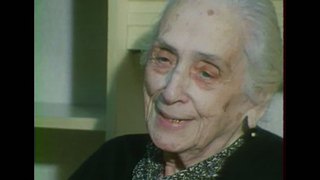
Several contemporaries of the Dreyfus case testify about the latter, the debates it provoked as well as the climate of anti-Semitism in pre-war France. Among them is interrogated Robert Debré.
A delegation of the company that bought the liner "France" visited it yesterday to take stock of the technical problems posed by the future use of the ship. The project is to become a floating dockside town. Work could begin before the end of the year. Archive images of the liner at the dock.
Alain Decaux recounts the genesis of the march on Rome on October 27, 1922, following which Benito Mussolini will take power in Italy and impose his dictatorship.
The port of Beirut has always been a strategic place and often attacked. For decades the port was the target of bombs and explosions during the civil war.
Work is underway on the French liner, still moored in Le Havre, to transform it into a hotel and cultural centre, so that it becomes a showcase of French culture. His new buyer wants it anchored off Beirut. Archive images of the liner at sea and at dock.
Rehearsal at Salon-de-Provence of the aerial exhibition that the Patrouille de France will give tomorrow to celebrate its 25th anniversary. Images of Fouga Magister in flight, and interview with Commander Berthonneau, Technical Director of the Patrouille de France, and Captain Marc Amberg, Chief of the Patrouille. Set in position (in a cockpit) Georges LECLERE.
Interview with Dolores IBARRURI, member of the Communist Party, known under her pseudonym 'La Pasionaria'. Exiled since the victory of Francoism in 1939, she shares her joy at being back in Spain and her work for the party. She is happy with the progress made since Franco’s death and the end of the dictatorship, even if she aspires to even more democracy. It recognizes that the monarchy in power is not a reactionary monarchy.
Geneviève de Gaulle Anthonioz, president of the Association of Deportees and Internees of the Resistance, discusses the reasons for her entry into the Resistance.
The number of single mothers has risen sharply in recent years. Interviews with two single mothers who talk about their stories and the difficulties they face.
Mr SANSEN, fire chief during the Battle of Dunkirk in 1940, recounts the violence of German air strikes and the lack of preparation of the city’s fire departments.
Mr. LANGLART, a former soldier who lived through the Battle of Dunkirk in 1940, tells of the waiting under German shelling and artillery fire, then the crossing and the welcome in England.
A woman recounts the difficulties of daily life during the Battle of Dunkirk in 1940: "We lived in the cellars [...] without water, without electricity, without gas".
On the occasion of a debate on the Dreyfus case, the historian Madeleine REBERIOUX, president of the Ligue des droits de l'homme, member of the Maurice Audin Committee, evokes the case of the arrest by the French army -during the Algerian War- of this young university assistant, June 11, 1957, in Algiers, died under torture on June 21, 1957, but her death, her murder is outraged, was transformed into an attempt to escape, despite the documents and evidence, a series of forgeries was committed both under the responsibility of the French army in Algeria covered by the French government of the time and those who followed, the truth about this case never had the opportunity to erupt, the amnesty covered the acts of the torturers and the lieutenant responsible for this assassination became a captain. Michel DEBRE, present on the set of the show reacted on the responsibility of the government in 1958.
Bob WOODWARD, questioned by Jean Marie CAVADA about the Watergate affair, tells how the media and especially the newspaper for which he worked at the time, the Washington Post, have shown themselves to be reluctant in the face of the magnitude of the scandal and the involvement of the President of the United States, Richard NIXON, in this affair of political espionage.
Jean Marie CAVADA interviews the American journalist behind the Watergate scandal, Bob WOODWARD. The latter explains that this affair, which began as a commonplace burglary, quickly turned out to be a political scandal involving the Republican Party.
Sitting next to her husband, Lucia PINOCHET describes a devoted husband of great human quality and a wonderful father, who helped him with household chores and raise their children before being taken over by his duties. She concedes that he is a little domineering, but that he has no real vices.
Interviewed in her office, Lucia PINOCHET, talks about the social works she chairs, and more particularly about the institution for the education of mothers. Regarding the birth policy, it reaffirms that abortion is prohibited and will remain so. Forbidden by the Catholic religion, it is not acceptable, according to her, by "the soul of the Chilean woman".
ITW General PINOCHET justifying curfew, exceptional measures and repression: "I repress a tiny minority (sic) of the Chilean population but thanks to me, the vast majority lives in calm".


 The INA Galaxy