The Georges Pompidou Hospital in Paris has opened a pilot support care unit. These supportive care are treatments for cancer patients. Interviews with patients, by Florian Scotte, from the support care department, who details the different types of treatments in question and Marie-Laure Allouis, bio-aesthetic nurse.
A new study confirms the phenomenon of early puberty in the United States, affecting one in six girls, often as young as 7 years. France and Europe are also concerned. The problem is the presence of certain pollutants in our environment, such as bisphenol A in plastics, paraben in cosmetics and pesticides. Example with a girl with the silhouette of a teenager, Charline MORISOT. His body began to change at the age of seven. She testifies: "I thought it must be normal, but when I saw Doctor Puel, I thought it must still be a bit disturbing". The doctor who follows her, Doctor Olivier PUEL (pediatric endocrinologist), talks about early puberty and the case of Charline MORISOT.
Report on a practice that has been ongoing for several months in some Parisian hospitals: patients had to bring their own sheets before receiving care. The PA-HP decided to open an internal investigation. Patient testimony and interview with Jean Charles GRUPELI, Head of the Central Service of the AP-HP Laundries on possible difficulties of communication and distribution of linen in hospitals.
Charly VALENZA, president of the association "Asexybilité", wants to legalize in France sexual assistance to people with disabilities, as is already the case in Switzerland or the Netherlands. He testifies.
Created in 1994 under the aegis of the Fondation de France by McDonald’s restaurants, the Ronald McDonald Foundation acts for the well-being of children and their families. Its priority action is the construction and management of Ronald McDonald Parents Houses. These houses allow hospitalized children to be surrounded by their loved ones. Children thus maintain an emotional balance that determines the quality of their healing. A house has just opened 2 steps from the hospital couple children of Grenoble La Tronche. Cost of the night: 10 euros.
The chikungunya virus that struck Reunion Island in 2005, did not remain confined to tropical regions. The mosquito that transmits this virus has also adapted to the Mediterranean climate. It already proliferates in Languedoc-Roussillon, and particularly in Hérault. It did not happen because of global warming, but by globalization via international trade in tyres exactly. Eggs were lodged in small water tanks inside the tires. The mosquito arrived in Italy in 1990, then recovered in oil stain and entered France through the border. 15 cases of Chikungunya were reported in 2011 in the PACA region. A team of researchers based in Montpellier is currently monitoring its development. At the same time, entomologists inspect the vicinity of the case, destroy mosquito roosts, and spray insecticides against larval and adult stages. They inform the inhabitants of the area on how to empty the water tanks to limit the densities of the tiger mosquito and the appearance of secondary cases (or outbreaks). The good thing is to drain the small water containers collected at home very regularly (winter and summer). The tiger mosquito has already been spotted in all departments of the region and especially in Herault. To protect yourself, you should know that the female Albopictus stings especially at the beginning and end of the day.
Report in Lyon to the P4 laboratory, the largest secure facility in Europe. It contains the most dangerous viruses on the planet. Scientists are equipped with a wi fi headset that allows them to stay connected to the outside via a military frequency. They work dressed in hypersecure suits. The building, armored, is constantly monitored by French anti-terrorism agents. A commentary on factual images (the security devices) alternates with the interviews of Hervé RAOUL, director of the P4 laboratory and those of two laboratory workers in a work situation.
Luc MONTAGNIER is in favour of better monitoring of patients' histories before vaccinating them, in order to avoid isolated cases of adverse side effects.
Explosives or drug detector dogs were already known but some bloodhounds have been trained in the United States to detect bed bugs. Three of them arrived in France. Among them, Ficelle, who is invited to the largest hotels in Nice. She has an infallible flair for finding these small insects that are only 5 millimeters...
On the occasion of the month and the operation "October rose" against breast cancer, presentation of a new technique of breast reconstruction that arrives in France. Images of an operation carried out in the operating room of the Henri Mondor hospital in Créteil (Val-de-Marne). Interviews with Professor LANTIERI and Christine DEGLAND, a patient who benefited from this innovative technique.
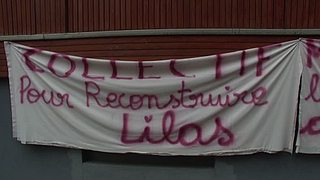
Mobilization to save the maternity of Lilas, in Seine-Saint-Denis, emblematic place of women’s rights, known since the 1960s. The Ile-de-France Regional Health Agency (ARS) has suspended the reconstruction project. Its manager, Claude EVIN, discusses the option of a merger with another institution. Testimony of protesters and Marie-Laure BRIVAL, head of the gynecologic and obstetric department and spokesperson for the support group.
A team from the hospital Saint-Antoine in Paris managed to create and manufacture human blood from stem cells and even transfused it, a world first. It took six years of efforts by French researchers to produce some human blood. They took a donor of bone marrow stem cells and cultured them for three weeks to get a hundred billion red blood cells and put them back into the donor’s body: a successful experiment. Professor Luc DOUAY, researcher at the Inserm: "these red blood cells, once injected into humans, behave in the same way as the red blood cells injected during a conventional transfusion. So this is a formal demonstration that these red blood cells are functional. ' This is a breakthrough. Until now, all attempts at artificial blood transfusion have been unsuccessful. There are other steps that have to be taken. The experiment has been successful in self-transfusion. You now have to get a transfusion with two separate people. You don’t know how to make blood in large quantities. Marie Catherine GIARRATANA, research engineer at the Pierre and Marie Curie University: "It will take another 5 to 10 years, if only for the development of new technological tools. We’re working on it, so meet in 7-10 for the first massive productions." A hope. But in the meantime, blood donation will remain the only resource for transfusions. 500,000 people are transfused every year in France. We need 9000 blood bags a day.
In addition to traditional treatments, at the Victor Dupouy maternity ward in Argenteuil, osteopathy complements pediatrics to treat infants. Michèle BARROT, osteopath, treats a three-day-old baby suffering from torticollis under the loving eye of the mother. Osteopathy is however not recognized as a hospital discipline and the practitioner had to make her place within this maternity. Sylvianne Schillingford, midwife executive, attests to the benefits of her interventions that truly soothe newborns.
Arrival at Pointe à Pitre, competitors of the solo race of the Route du Rhum. On this occasion, interview on his boat "Des pieds et des mains" of the handicapped skipper Damien Seguin, -with only one hand-, child of the country, ranking in the 10th place of this sailing competition for valid in Class 40 out of 44 competitors for his first participation.
Interview with Damien Seguin, skipper with a disability, without a left hand, after his arrival in 10th place on the Route du Rhum: At the age of 31, he realized a childhood dream after seeing the feat of navigator Florence ARTHAUD at the age of 10 and evoking the difficulties of this solo race without confrontation with other skipper to make strategic choices, the difficulties of maintaining a continuous physical effort for 20 days and the last miles of his race before his arrival.
Meet at Hossegor on the occasion of the World Surf League with the young American surfer Béthany HAMILTON, famous for having her arm ripped off by a shark while surfing at the age of 13 when she was already a surfing champion. After two surgeries and near death, she quickly returned to competition before winning the junior world championship at the age of 19. At the age of 21, she continued her professional career. Interview with Béthany Hamilton during a training session on the beach in Hossegor and with Pauline ADO, 2009 Junior World Champion, admiring this champion.
Report devoted to the mode of consumption of sprouted seeds. Explanation of their mode of production and health risks. Interview with Dr François Xavier WEILL about the proliferation of bacteria found in germinated seeds.
Report on the investigation into the origin of the ECEH bacteria. It is believed to come from germinated seeds from the organic farm Der Gartnerhof. On the markets, worried sellers are reassured again after learning the origin of this epidemi as well as buyers who no longer dared to buy anything.


 The INA Galaxy