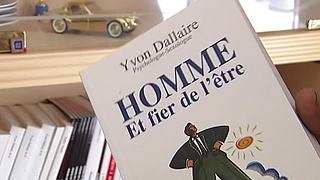
In her column, Anne Cécile MAILFERT, president of the women’s foundation, explains that masculinists belong to a movement that claims to defend men against the ravages of feminism. They are opposed to women’s social advances, such as the right to abortion, and denounce laws against domestic violence. Spread through social networks, this ideology is at the origin of several deadly attacks around the world. Among these masculinists, there are those called 'the incels', men who accuse women of being the cause of their celibacy. At the beginning of November in Paris, 4 men attacked women who were participating in an exclusively female evening at La Villette with mortars and fireworks.
In the sphere of masculinists, Manon MARIANI makes a point about 'passport bros'. These are single Western men, often Americans, who go on trips to poor countries, in Asia or in South America, to find women "more submissive", less resistant to patriarchy and not questioning their fantasy of domination. Their sexist and racist ideas circulate on social networks. They claim without complex that if men are single in the United States, it’s because American women have learned to hate men.
The Garrick is a private London club founded in the 19th century and reserved for men belonging to the British elite. This outdated rule is considered "scandalous" by the British, as proven by a vox pop made in the English capital.
To understand the movement of masculinists, the journalists interviewed Mathieu ESNEE-BENAUWT, an influencer known as 'Azurr', who fully admits having posted violently sexist remarks on social networks. He justifies himself by saying that this provocation was intended to provoke the attention of Tik Tok users and 'make views'. It is mainly aimed at men between 16 and 30 years old. One of these targets, Guillaume anonymously testifies. It seems that his love failures are at the origin of his contempt, even his hatred of women, whom they accuse of being responsible for his celibacy. Women have become the scapegoats of the frustrations felt. Despite psychological help, the masculinist admits still having violent impulses towards women.
In his column, Cyril LACARRIERE returns to the origin of the word "masculinism", according to the research of the Québécois Francis DUPUIS DERI. Appeared in 1931, it replaces the word 'masculisme'. He quotes a reference to a novel from 1899 where the 'masculists' dream of reducing women into slavery. The concept of masculinism, on the other hand, is due to the feminist philosopher Michèle Le DOEUFF. At the end of the 1980s, this word became a synonym for patriarchy, before becoming what it is today: an anti-feminism constructed in the fantasy of the disappearance of men and a fight against equal rights for women and the LGBT community.
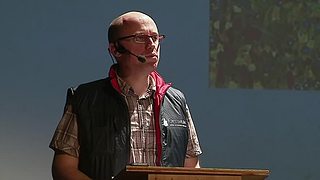
Gabriel MORIN is the co-organizer of "Camp optimum" in Isère. Reserved only for men, of Catholic obedience, this internship offers in a few days to collectively reflect on the notion of masculinity. He gives conferences to redefine the place of man and woman in society and in the family. He affirms, for example, that "the skin of a man is thicker, the skin of a woman is thinner... as if the body of a man prepared him to face the outside and the tougher work" or "in almost all societies, it is expected of the man that he is this role of guide". The patriarchal and traditionalist ideology of roles and genders seems to resonate strongly with the participants. A father sums up what he remembered: "My wife brings a lot of gentleness, affection to the children. I never stop taking the children out of the house and teaching them everything one can teach young children.
A masculinity workshop is organized in Autrans, Isère for 4 days. They only address men, fervent Catholics questioning their masculinity. The organizer offers reflection workshops and physical activities highlighting their virility. He says that "man likes to measure his strength" Participants testify to their doubts and questions about what it means to be a man today. Some do not recognize themselves in the statement 'being a man is being strong, it’s asserting oneself', or confide not knowing how to behave by being 'virile but gentle... without being macho'. The testimonies alternate with sequences of physical activities highlighting physical strength, such as pushing a car.
Jean-Claude BOUCHER, president of the association "l'après rupture" is a fierce anti-feminist. Leader of masculinism in Quebec, he accuses women of having made Canada a Misandr country and of being guilty of systematic affronts to the male condition. To explain the relationship between men and women in Quebec, he draws his arguments from a questionable and partisan version of the history of the country’s colonization.
André PANZA, world champion of kickboxing, evokes the notion of virility through his experience as a professional fighter. He also mentions the relationship of men to fighting. For him, manhood in combat sports is also being loyal and respectful of the rules of competition.


 The INA Galaxy