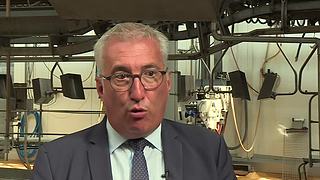
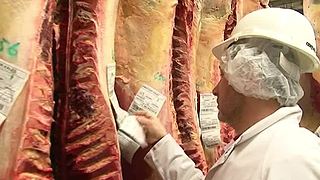
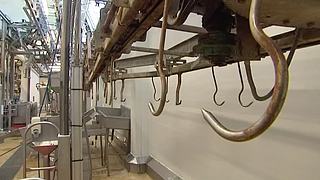
In Alès, the future of municipal slaughterhouses is uncertain. Significant work to bring standards must be carried out. Moreover, the search for funding to maintain the site’s activity remains more complicated than ever. Interviews: Pascal Duplan, cattle breeder/ Christophe Rivenq, President of Alès Agglomération
Two months after the distribution of the shocking images from the association L214 on acts of animal abuse, the slaughterhouse in Alès partially reopens. L214 denounces a reopening "behind closed doors" without guarantee of change, while the farmers finally see a costly crisis for the sector eased. A judicial investigation is ongoing and veterinary checks are carried out before the complete resumption of slaughtering.
Created in 1963, renovated for the first time in 1992 and then in 2010 following a report from the regional chamber of accounts, the slaughterhouse of Alès has remained a municipal structure. In 2009, 50% of the animals came from local producers, 70% were killed according to the "hallal" rite. Structurally deficient, the accounts chamber estimated the cost at 347,000 euros per year for the city of Alès. To save it from closure, the city had invested in 2010 to bring it up to European standards. Today, the slaughterhouse kills 66,000 animals each year. Its failures to comply with hygiene rules with considerable health risks and the European texts on animal slaughter have been noted. Faults that shake a new faith in the animal sector of the entire region.
Unusual attendance in Alès for the open day at the slaughterhouse. Threatened to close, it has just been modernized. An extension celebrated today in the presence of staff (about thirty employees), elected officials and professionals from the "meat" sector.
Is the slaughterhouse in Alès 'Alès Viande' going to close? The future of the only slaughterhouse in Gard is well compromised. Debts are accumulating, and work to bring standards is necessary. The breeders are very worried...
Faced with a steady decline in activity since 1997, the slaughterhouse of Alès is playing its survival role. Installations at a standstill, losses that accumulate, sector weakened by the 'mad cow' crisis... The city is now looking for solutions to save this essential tool for the territory.
At the heart of a Sévenole day dedicated to the economy and regional development, the inauguration of the new inter-communal slaughterhouse in Bruège marks a decisive moment for the Upper Country.


 The INA Galaxy