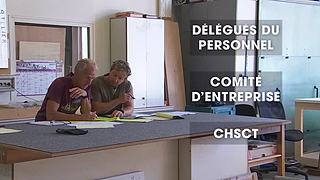
Explanation of the draft reform of the Labor Code aimed at merging into a single body the current employee representative bodies, which are the staff delegates (DP), the works council (CE) and the health, safety and working conditions committee (CHSCT). Example in a carpentry company near Caen (Calvados). Interviews with Vivien Garal, carpenter, Erwan Croixmarie, president of the carpentry shop "Croixmarie" and Pascal Sudre, secretary general of the local union CGT Orléans (Loiret).
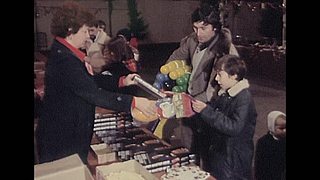
On the occasion of the 60th anniversary of the creation of Works Councils, journalists look back at the evolution of their roles. If at the end of the war, the priority was for the "potato" committees to alleviate the shortage of housing and food, today’s actions are rather oriented towards offers of cultural and leisure activities. It remains that the economic aspect is always real, companies have an obligation to consult them before any important decision. However, employees seem more interested in leisure activities than in taking care of economic issues. Only present in companies with more than 50 employees, one worker in two does not benefit from these services. Comment on archival images and illustration alternating with interviews of employees, by Rose-Marie BERTHOLET, head of CE travel and leisure and Christian DUFOUR, Institute for economic and social research.
Report on the functioning of the works council of a bank in Caen. The EC defends employees and is concerned about their well-being. He takes care of obtaining discounts on leisure activities, outings and travel and advances the expenses for employees. Its annual budget is set based on the amount paid by the company in salaries, which is 1% of the total amount. The journalist gathers the words of employees, Marie Pierre BRIARD and Bertrand OUIN, respectively secretary and treasurer of the works council.
Works councils (CE) celebrate their 50th anniversary. Established by the ordinance of 22 February 1945 under the provisional government of General de Gaulle, the EC offer employees and their representatives collective means of expression. 50 years later, these committees still have a social role in the company. Examples with the CE of Peugeot, with a budget of 40 million francs per year, and that of L'Épée, a small watchmaking company. Interviews with Nicole Schoeller, Secretary of the Peugeot CE and Noëlle Grimme, Secretary of the L'Épée CE, which recall the essential role, even if it is simply advisory, of works councils during legal adjustments, bankruptcy filings and layoffs of employees.
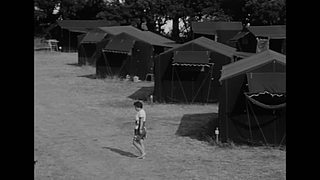
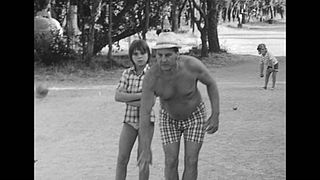
Hubert Michot, train conductor in the Paris metro goes on vacation every year with his six children through the works council, like 12,300 of his colleagues out of a total of 38,000 employees. Out of 100 companies with more than 2000 employees, 60 offer holiday stays. For a family with two children, the stay of one month costs about 500 francs. The rate is decreasing for large families. The canvas village managed by the RATP works council in Noirmoutier is reserved for employees of the Régie and their families. The financing of works councils comes from contributions paid by employers. At RATP, the contribution is set at 2.71% of the fees paid. One in 8 French people goes on vacation via their works council, which is 3 million people. Interview of R. Levach from the works council
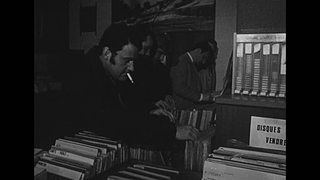
Presentation of the cultural activities proposed by the works council of the company SNPA (Société nationale des pétroles d'Aquitaine) in Lacq, including a disco, shows, a library, a travel section and another dedicated to photography. Interviews of Mr. Bodreau from the works council.
Following the presentation of cultural activities proposed by the works council (CE) of the company SNPA (Société nationale des pétroles d'Aquitaine) in Lacq, notably the section dedicated to photography. Interviews with Mr. Bodreau from the works council, by Jean-Christian Michel, musician and organist invited by the SNPA’s works council.
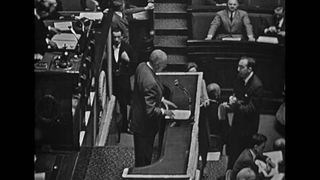
In the National Assembly, during the examination of the project extending the power of works councils, deputies succeed one another on the platform: Gilbert Grandval, minister of labour, René Caille, deputy UNR UDT. The text, which is in favor of the majority of elected officials, provides for more extensive economic information, consultation in case of workforce reduction, and expertise in vocational training.
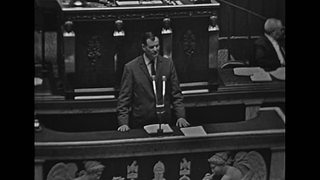
At the National Assembly, during the examination of the project extending the power of works councils, the deputies succeed one another on the platform: André Lathière, deputy UNR; Louis Dupont, communist deputy; Marie Madeleine Dienesch, Centre démocratique; René Cassagne, UNR UDT deputy. The Minister of Labour Gilbert Grandval: "The employee must be involved in the examination of company problems...". The text, which is in favor of the majority of elected officials, provides for more extensive economic information, consultation in case of workforce reduction, and expertise in vocational training.


 The INA Galaxy