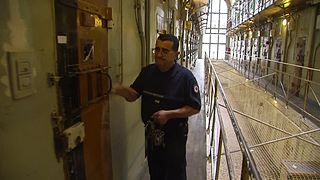
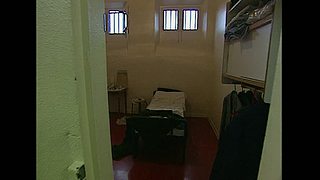
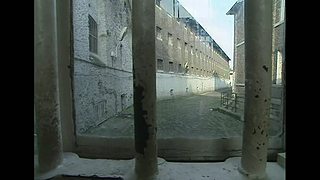
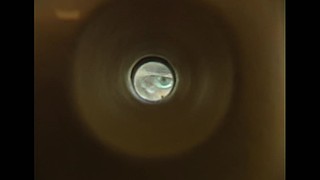
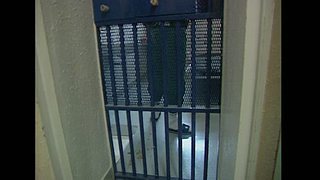
In Paris, after four years of work, the Health Prison is gradually reopening. In principle intended to accommodate 850 people, nearly 1,200 inmates are expected to end up. Images of the building and interviews with Marie-Jeanne Dumont, resident, Christelle Rotach, director of the prison establishment, and Erwan Saoudi, FO Pénitentiaire Paris delegate.
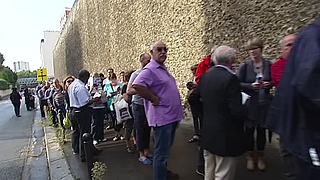
On the occasion of the Heritage Days, visit to Paris of the health prison, currently under construction until 2019, open to the public for the first time. Interviews and reactions of visitors.
On the occasion of Heritage Days, citizens visit the Health Prison in the 14th arrondissement of Paris. Overview of the Cour d'honneur, place of guillotine executions, then of the VIP section reserved for detainees considered as private individuals, and interviews with Robert Morio, chief overseer, and reactions from visitors.
In Paris, the Health Prison has been emptied of its last inmates ahead of several years of renovation work. In this prison dating back almost 150 years, some prisoners have stayed in the section reserved for private inmates, often called VIP section. Visit of the premises, insertion of archive images and interviews with Rachid Bellatig, first supervisor, Jean-Marie Akera, head of detention, Philippe Ohayon, lawyer, and Sylvie Manaud-Bénazeraf, director of the health prison.
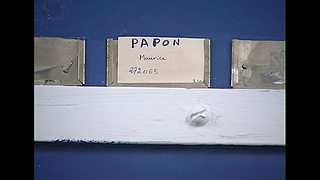
On the occasion of the trial of the Elf Aquitaine case, presentation of the VIP area of the Health Prison where Alfred Obama is currently incarcerated. Visit to the private prisoners' sector, which has eleven cells, and interviews with Yves Feuillerat, deputy director of the Health Prison, who presents the premises, and Dominique, a prisoner who takes care of certain co-inmates, in this case Maurice Papon and Jacques Crozemarie.
In Paris, the Prison de la Santé has a section reserved for detainees considered as private individuals. Among them, political figures, the business world, sometimes even police officers. Site visit and interviews with Pierre Botton, incarcerated in 1996-97, and Bernard Tapie, incarcerated in 1997, former inmates of this neighborhood who denounce the conditions of detention more generally in prisons, but also the inequalities between rich and poor inmates, and Alain Jego, director of the Health Prison.
In Paris, the Prison de la Santé has a section reserved for detainees considered as private individuals. Among them, political figures, the business world, sometimes even police officers. Following and end of the site visit and interviews with Bernard Tapie, incarcerated in 1997, Loïk Le Floch-Prigent incarcerated in 1996, Jean-Jacques Prompsy incarcerated in 1997, former inmates of this neighborhood who denounce the conditions of detention more generally in prisons, but also the inequalities between rich and poor inmates.
Following the publication of the book by Véronique VASSEUR, head doctor at the Prison de la Santé, which relates her professional daily life in the Parisian penitentiary establishment and the dysfunctions observed, the reactions are numerous. Interviews with Gérard VILLEMINEY, former detainee: "It was and is always an horror... (ironically) there was no beating (for the doctors of the time)... I have known guards, who had the acronym of the FN (National Front), who were unspeakable bullies. Their favorite pastime was smashing in the hole. Everyone knew it. Doctors including ; by Patrick MAREST, from the International Prison Observatory: "It is obvious that prison institutions are becoming open, transparent houses, so that we know what is happening inside. Behind the walls, there are lives that concern us, those people are deprived of freedom. One day, they will come back to us in the community. They must return in a better state than they had returned.
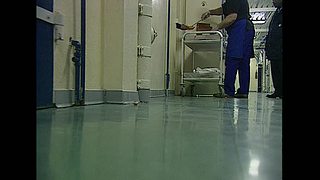
The publication of the book by Véronique Vasseur, chief doctor of the Health Prison in Paris, raises a controversy that led the prison administration to exceptionally open the doors of the prison to the press. The prison management rejects the statements made by the doctor about the conditions of detention. Visit to the Health Prison and interviews with Olivier Zak dit Zbar, deputy head doctor at the Health Prison, Constance Tridon, nurse, and Gérard Villeminey, former prisoner of the prison.
Press journalists were invited to visit the Health Prison in response to a book written by the chief doctor of the prison, Véronique VASSEUR, who draws up an unappealable report on the conditions of detention. Images of cells, toilets and interviews with Alain JEGO, director of the prison, a prisoner with a masked face, a supervisor, Nicole MARTIN, nurse and Dr. Véronique VASSEUR.


 The INA Galaxy