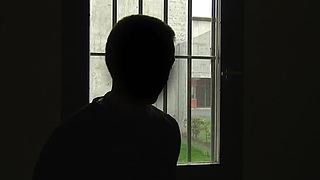
Orvault hosts one of the 6 Prisons for Minors in France. Since its creation 10 years ago, 1,800 minors, aged 13 to 18, have been detained there. Their daily life is punctuated between confinement, walks, sports activities and classes. 90% of incarcerated youth are out of school, hence the importance of their educational support to prepare for their outing and avoid recidivism. The journalists interview an incarcerated teenager, the Deputy Director of the Prison Institution for Minors of Orvault, Cassandre SCHMUTZ and David BESSON, Educational Officer Judicial Protection of Youth.
To combat the recidivism of young offenders, the state created in 2007 Prisons for Minors. This type of penal centre does not accommodate more than 40 minors and offers each teenager a specialized follow-up. The activities are supervised by a prison supervisor and an educator. The youngest are 13 years old. Girls remain a minority in these institutions. The journalists interviewed some young prisoners about their feelings and the reasons that led them to prison, including a 14-year-old child.
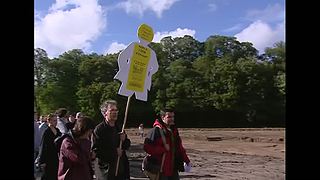
By the end of 2006, seven juvenile prisons will be established in France. One of them will be located in Orvault, in the Nantes agglomeration. It is on this site, where the work began, that a demonstration was organized at the call of a collective opposed to the project. Fabrice DROUELLE, spokesman for the collective against prison for minors, explains that 80% of incarcerated minors reoffend. The focus is on education, social monitoring and prevention. But the political sphere favors security issues in the fight against crime, the construction of prisons is more popular than prevention actions. Jacques FLOCH, PS deputy of Loire Atlantique, regrets that the means are not given to the training of educators, which the country sorely lacks.
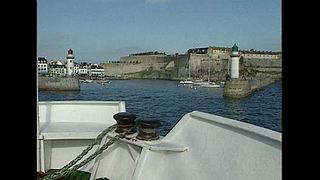
A national symposium on child abuse will be held in Belle Ile for four days. Belle Ile is a symbolic place because during the 2nd World War, there was a prison for children. It was the ordinance of 2 February 1945 that put an end to this system of sentences, and allowed the creation of Public Institutes of Supervised Education. Between the ages of 12 and 21, children and youth were subjected to ruthless discipline and brutal punishment. The center of Belle Ile welcomed petty thieves, some murderers but also children in family break-up or victim of abuse. This story inspired Prévert to write a poem "la chasse à l'enfant". The images of the ruined prison and views of the fort are punctuated by interviews with Pascal VIVET, head of the association Rights of the child, Gilles HERVE, former resident of the center and Christiane MARTI, former employee of the IPES.
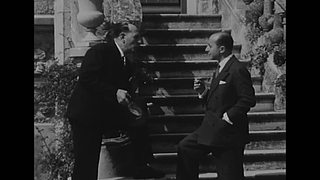
The Logis is a center that welcomes in Seine et Marne so-called "unsuitable boys. The director describes the profile of adolescents over the age of 15 and explains the educational project of the center where the emphasis is on social and professional integration. After a period of adaptation, adolescents are allowed either to follow a technical training within the centre, or a measure of semifreedom with a placement in a school, a technical training centre, or an apprenticeship with a professional in the area.
Report on the abandonment of the penal system and the creation of rehabilitation centres to reintegrate juvenile offenders into society through teaching and manual work.


 The INA Galaxy