From intangible heritage to classified sites, this selection traces the action of UNESCO: construction of the Parisian headquarters, Mont Saint-Michel, French gastronomic meal
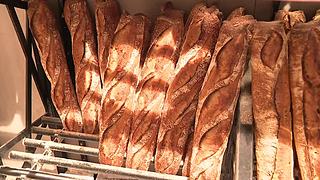
Symbol throughout the world of French gastronomy, the baguette has entered, today, the intangible cultural heritage of humanity. The decision of UNESCO (United Nations Educational, Scientific and Cultural Organization) enshrines the heritage dimension of craftsmanship. The commentary alternates images of bread baguettes, interviews with Julien FROEHLICH, Vice-President of the Fédération des boulangers de Moselle and Michel DUDOT, baker in Metz.
It has been 50 years since the UNESCO (United Nations Educational, Scientific and Cultural Organization) world cultural and natural heritage label has existed. France has 49 sites classified out of 1154 in the world. The update on the eligibility criteria for the label. The commentary alternates with images of the Basilica of Vézelay, 1st site classified in the Hexagone in 1979, interview with Brother MATTEO, monk at the Basilica of Sainte-Marie-Madeleine de Vézelay (Yonne); of visitors, from Lorent HECQUET, bookseller and guide-lecturer, First Deputy (SE) at the town hall of Vézelay; of Lazare ELOUNDOU ASSOMO, director of the UNESCO World Heritage Centre and the organization’s archives.
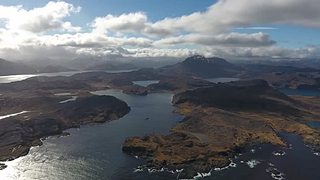
Report devoted to the French Southern Lands, listed as a natural site by UNESCO (United Nations Educational, Scientific and Cultural Organization). These lands located in the south of the Indian Ocean include the archipelagoes of Kerguelen and Crozet, the islands Saint-Paul and Amsterdam. These islands are home to the highest concentration of seabirds and the greatest diversity of marine mammals in the world. The commentary alternates images from the site and an interview with Sébastien MOUROT, director of the private office of the prefect of the French Southern and Antarctic Lands (TAAF).
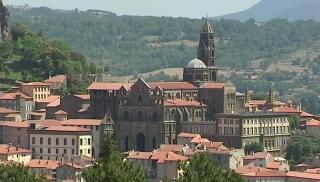
The Auvergne-Rhône-Alpes region now has six UNESCO (United Nations Educational, Scientific and Cultural Organization) World Heritage sites. The commentary alternates factual images of these properties: the Chauvet cave, prehistoric pile dwelling sites around the Alps, the Notre-Dame du Puy-en-Velay cathedral, a building on the paths of Saint-Jacques de Compostelle, the neighborhoods of Old Lyon, the Fourvière hill, that of the Croix-Rousse and the city center, the Presqu'île, the architectural work of Le Corbusier in Firminy and the convent of La Tourette in Eveux, the chain of Puys.
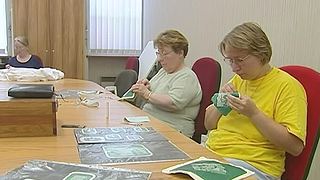
Report on the intangible cultural heritage of UNESCO (United Nations Educational, Scientific and Cultural Organization). This notion appeared in the 1990s. The commentary alternates images of these know-how and traditions in France as well as around the world with an infographic map.
UNESCO (United Nations Educational, Scientific and Cultural Organization) has inscribed the "Gastronomic Meal of the French" on the intangible cultural heritage of humanity. Many specialists welcome this distinction attributed to the French culinary art. They see it as a fight against globalization and the valorization of savoir-vivre. The comment on factual images alternates with the interviews of Alain DUCASSE, Head of "Plaza Athenée"; by Philippe RISPAL, Institut Paul Bocuse and the testimony of a student from the Institute.
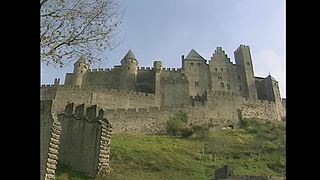
Report on Carcassonne, in the Aude, listed as a UNESCO (United Nations Educational, Scientific and Cultural Organization) World Heritage site, with a historical background. The commentary alternates images of the classified site, a guided tour, tourists and interviews with Raymond CHESA, Mayor of Carcassonne; of Marie-Geneviève COLIN, curator at the National Fund for Historical Monuments and a merchant.
Report on the site of the Abbey of Mont Saint-Michel and its bay, listed as a World Cultural and Natural Heritage by UNESCO (United Nations Educational, Scientific and Cultural Organization), on the occasion of its inauguration. In turn, images of the event, interviews with Jack LANG, Minister of Culture, on the "heritage classes" and then with Paul QUILES, Minister of Urban Planning and Housing, about the slowing down of the phenomenon of silting up of Mont Saint-Michel
On the occasion of the year of childhood, UNESCO (United Nations Educational, Scientific and Cultural Organization) proposed to a group of children from different nationalities, aged 5 to 12 years, to create a tree of life. Successive interviews with Sean MAC BRIDE, Nobel Peace Prize winner and then with Lord Philip NOEL-BAKER, Nobel Peace Prize winner.
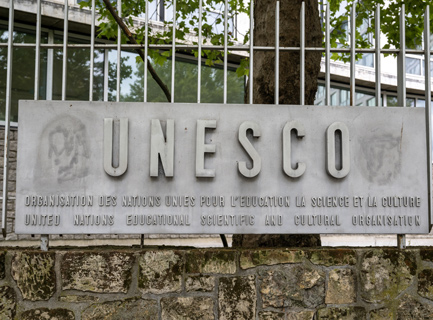
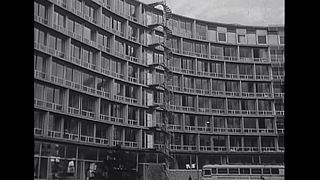
On 3 November 1958, President René Coty inaugurated the headquarters of UNESCO (United Nations Educational, Scientific and Cultural Organization) in Paris. He was led to the Assembly Hall and joined the delegates of the 81 UN nations, to listen to the inaugural speech of Dag HAMMARSKJOLD, UN Secretary-General. The commentary alternates images of the event, the translators' booth, the recording room for recording speeches on records, the offices, the printing press, the library and finally, the exterior of the Palace.
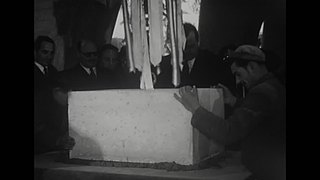
This report reports on the official ceremony of laying the foundation stone for the future UNESCO House in Paris. Images of the event and speech by Jean Chamand, Secretary of State for Foreign Affairs of the government Edgar Faure (silent).