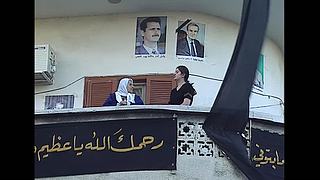
Report in Damascus, Syria in the so-called "86" Alawite neighborhood, a community from a Shiite branch of Islam. The army is omnipresent, as are references to martyrs and figures of power, for many decades in the hands of the Assad clan whose origins are Alawite. Paradoxically, this rather devoted population is disadvantaged and will remain in the front line if the regime falls.
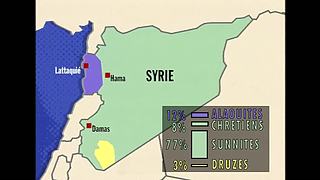
Report in Tartous explaining the conflict situation in Syria related to the Alawite origin of the Assad clan on the grounds of community and religious conflicts. In front of the camera, people of Alawite origin claim to be Syrians like others despite the historical tensions and social privileges that some have enjoyed since Hafez Al-Assad took power in the early 1970s.
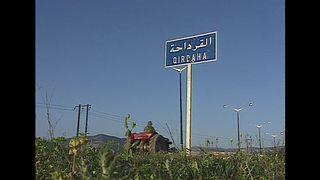
Report in Kardaha, the native village of Hafez Al-Assad where there is an apparent prosperity that can enjoy the local population from the Alawite religious minority. The regime is likely to benefit the region from its foundation on the country as evidenced by the inhabitants met. It seems that many sensitive positions, especially in the army, are assigned to alawites.
Report in the Alawite region of Syria where the Baath party organized the funeral of Hafez Al-Assad with large reinforcements of military, omnipresent in the framing of the procession and the population mobilized en masse by the regime led by Bashar, the son of the deceased. Highlighting the local Alawite particularism is not a good thing in the official communication of the dictatorship, due to the conflicts between religious communities in the country that the power tries to contain.
Report in Syria, in Qardaha, the home town of the Assad family, who come from the Alawite religious minority and whose authoritarian power causes tensions with the largely majority Sunni community in the country. Despite the reassuring façade and the day after the death of Hafez al-Assad’s designated successor, the risk of instability is growing.
Topic devoted to the authoritarian power set up in Syria by Hafez Al-Assad, based on corruption and criminality at the service of a bourgeoisie close to power, creating at the same time a state in the state composed of Alawites, a religious minority from which the Assads come, igniting conflicts with the Sunni majority.


 The INA Galaxy