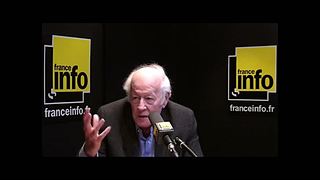
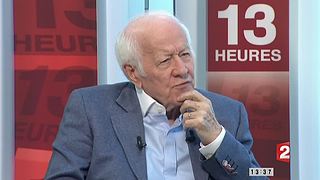
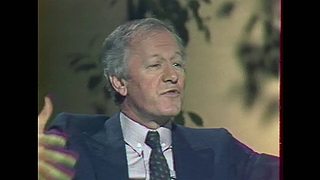
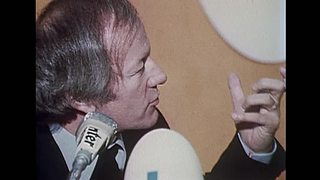
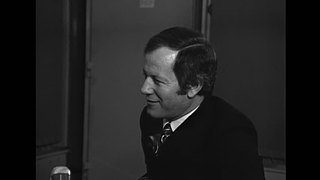
Jacques Chancel recalls the tragedy he suffered with the Foreign Legion in Asia, where he was the only survivor of an explosion. After ten months of blindness and a long recovery, he says that this ordeal has transformed his life. He sees in it a 'school of combat and serenity', which allowed him to recognize himself and to seek the absolute.
Jacques Chancel, a television man and writer, talks about his book 'N'oublie pas de vivre' (Don’t forget to live) and his doctrine, transmitted by his father upon returning from his stay in Asia, which consists of appreciating the present moment and the ephemeral. He returns to the intention of his cult show "Le grand échiquier" which was to show and hear people who are not expected.
The journalist and television man Jacques Chancel evokes his stay in Asia as a need to go "see elsewhere" in order to better nourish his love for France. Regarding the famous phrase 'and God in all this', he begins by saying that he never uttered it before suggesting that it is not impossible over time but that it should be found again. This will be done in 2013 thanks to the documentalists of the Ina.
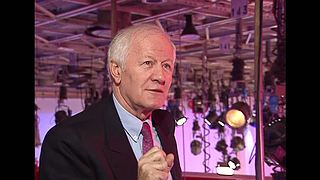
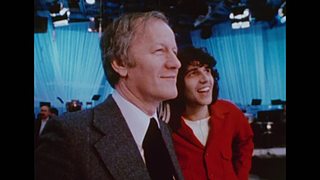
Accompanied by Pierre Tchernia, Jacques Chancel goes to the studios of Buttes Chaumont where for more than ten years he recorded the famous variety show "Le Grand Echiquier". The journalist remembers this place, synonymous with a bygone era of television and which he affectionately calls 'our house', and where some great names of the ORTF officiated such as Bluwal, Lorenzi or even the Carpentier.
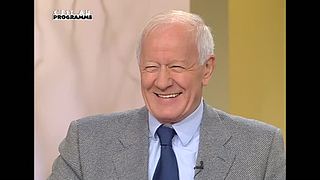
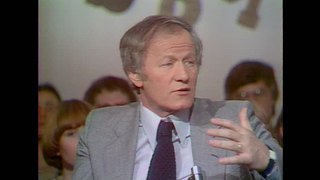
Asked by Anne Sinclair about the manner and tone used by Jacques Chancel in his interviews, the journalist replies that it is especially necessary to avoid perfidy and prioritize impertinence. He believes that observers are too quick to judge, he prefers those who like him are in action.
Questioned by Jacqueline Alexandre, Jacques Chancel explains his intention behind his cultural programs that give to discover artists and personalities to the viewers, without worrying about the notoriety of the guests. He does not see himself as a presenter but as a journalist who wishes to share what he loves above all.
Jacques Chancel retraces his career and explains what attracted him to journalism. His long stay in Asia helped him to shape his approach and interest in men more than systems. Just as there are newspapers, according to him there are 'televisions'. For him, it is about offering a television that is both interesting and unexpected for the viewer.
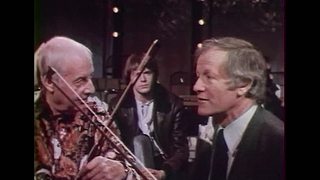
Behind the scenes of the "Grand échiquier", Jacques CHANCEL takes care of the final preparations for his show with his guest, the violinist, Stéphane GRAPPELLI.
The journalist and television man Jacques Chancel explains to Bernard Pivot the intention behind his book "Le temps d'un regard", a collection of highlights and impressions left by his encounters and experiences. The book will remain as the first volume of a series that the author will later describe as a diary, started at the age of 14.
Jacques Chancel, honored with a 7 of gold for his 2000th Radioscopy, delivers his approach: listen and understand above all. He talks about what these interviews brought him in his quest for meaning and his questions. He highlights the pleasure of the varied encounters that punctuate the program and mentions some of these personalities.
Speaking to Jacques Locquin, Jacques Chancel looks back at his beginnings while he was a reporter in Asia for Paris Match and RTF He mentions his journalistic fibre and his preference for radio.


 The INA Galaxy