Acquisition of the Socpresse, which includes more than 70 titles, including "l'Express", by Serge DASSAUT, who makes the industrialist the biggest press boss in France. Alternately, commentary on factual images and interviews of Serge DASSAUT, François BOISSARIE and Jean-Marie CHARRON of the CNRS.
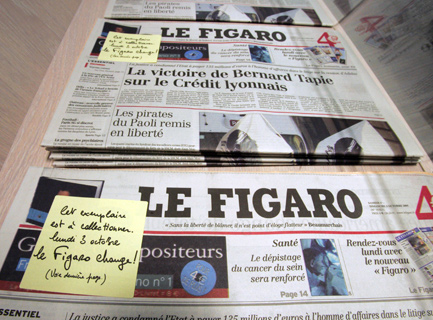
"More colors, more modernity, more movement and more rhythms in the newspaper" the words of Yves Thréard, advisor to the editorial board of Le Figaro to define the new formula of the newspaper. Interviews with Michel Schiffres, managing editor on the reasons for this new formula, and with President Yves de Chaisemartin who defines the editorial line: "Great conservative and liberal newspaper of the right".
Businessman Serge Dassault is interested in buying the newspaper Le Figaro. He explains his desire to have a press group: "the press is essential to political and economic life...it is an investment of future for the Figaro which defends liberal ideas can continue to live".
The national daily Le Figaro is 120 years old. Interview with Philippe VILLIN, Director General of Le Figaro, who talks about the development of the newspaper, then visits the newsroom among the journalists.
Creation of a new weekly, le figaro magazine. Interview with the director of the new magazine: Louis PAUWELS. It gives the specifics of this supplement.
Press boss Philippe Hersant buys the newspaper Le Figaro. He wants to give the newspaper "more brutal and popular content" to the dismay of the unions.
Presentation of the editor-in-chief of Le Figaro, Jean Griot of the differences of the newspaper with the last decade. The version is more refined, with a political bias.
Journalists Denis Périer Daville and Bernard Pivot explain the reasons for the Figaro strike. They no longer enjoy legal guarantees of their independence, through the change of status. .


 The INA Galaxy