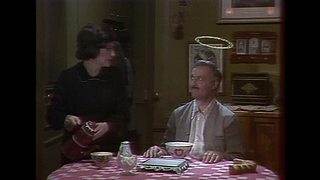
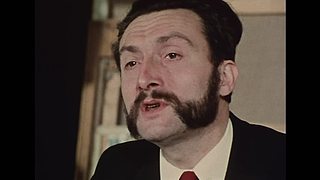
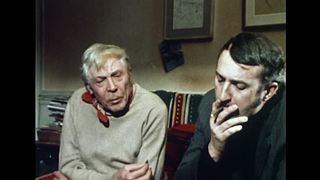
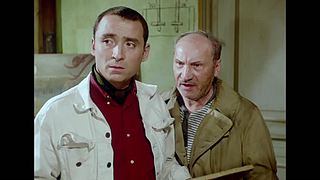
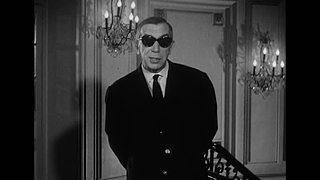
Television adaptation of a short story by Marcel Aymé from the collection "Le vin de Paris". Henri Duperrier, played by Michel Serrault, a pious, just and charitable man, wakes up one morning with a halo on his head to the great displeasure of his wife, Thérèse, played by Rosy Varte. Voice-over comments by the narrator, Pierre Tchernia.
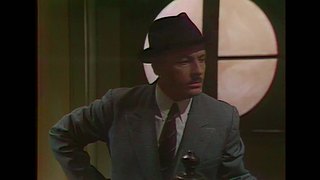
Excerpt from the television adaptation of Marcel Aymé’s short story "Le Passe-muraille", with Michel Serrault as Dutilleul and Jean Obé as the doctor. Off comments by Pierre Tchenia. During a power outage, Dutilleul finds himself at the door of his house and discovers a strange power; he goes again to see a doctor and performs various tests.
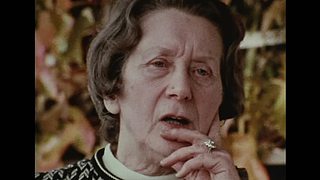
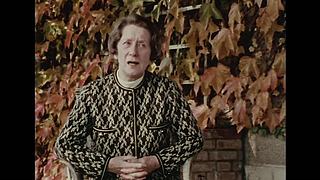
The sister of Marcel Aymé evokes "the secret sadness" of his youngest brother, orphaned at two years old, when she herself was four years old, they were then taken in and raised in Villers Robert in the Jura by his grandparents and aunt before continuing their studies in Dole.
Marcel Aymé’s sister, Madame Müller, looks back at the conditions of publication of Marcel Aymé’s first book, "Brûlebois," then a student at a high school in Dole: their eldest sister, a literature teacher and herself a writer, is thus the first to have discovered Marcel Aymé’s talents as a writer. his first text, "Brûlebois", the story of a drunk was published in the Cahiers de France edited in Poitiers by Jacques Reboul before being taken up and published by Gallimard editions, it is inspired by a real character likened to Dole by the future writer.
L'écrivain Jean Cathelin, auteur d'une biographie sur Marcel Aymé, évoque la vie à Montmartre de Marcel Aymé et l'impact de ses origines provinciales jurassiennes et campagnardes et, de son déracinement, sur ses romans comme "Maison basse" et le décalage de ses personnages romanesques vis à vis de la réalité.
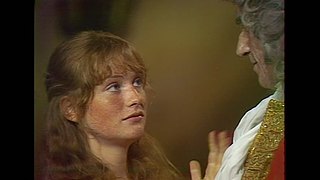
Excerpt from the television adaptation by Raymond Rouleau of Marcel Aymé’s play "Vogue la galère", the young Clothilde played by Isabelle Huppert, taken on a galley after a shipwreck, recognizes among the convicts, a young noble Huguenot named Lazare de Barrais, sentenced to penal servitude for refusing to renounce her Protestant faith, she protests this situation to the captain of the galley played by Claude Dauphin.
The writer Jacques Laurent returns to the notion of freedom in the writer Marcel Aymé, the freedom of his novel characters not to respect the dictates of society and the pessimism of his characters, the influence of the author’s Jansenism on them; some have grace and others, no, just like Marcel Aymé.
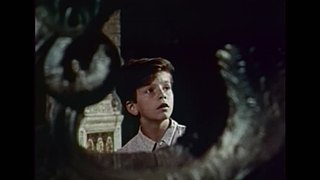
Television adaptation by François Martin of the eponymous short story by Marcel Aymé, published in the newspaper Candide in 1940 and reprinted in 1943 in "Le Passe-muraille", the author’s fourth collection of short stories. In Paris, under the German occupation, a group of children dream in front of the window of an antique store where the famous pair of seven-league boots is displayed. Courageous, Antoine Buge, played by Pascal Sellier, dedicates himself to enter the shop of the dealer played by Jean Bouise where he attends an enigmatic exchange between the latter and a mysterious stuffed heron.
The painter Gen Paul tells with his Parisian titi slang an anecdote about his friend Marcel Aymé, with the aristocratic physique and his multiple professions: pawn, extra and actor for cinema, life insurance salesman.
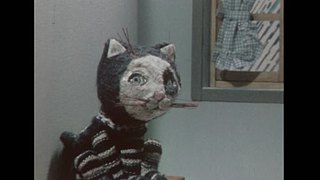
Excerpt from the adaptation of one of Marcel Aymé’s "Contes du chat perché" by Arlen Papazian. Alphonse the cat tells one of his own adventures with Delphine and Marinette. During a chase around the dining room between the two sisters, they break a plate -in the family for a hundred years-, their parents punish them by forcing them to visit their awful aunt Mélina with her beard prickly, provided that it doesn’t rain the next day. The girls then ask Alphonse to use his power and put his paw behind his ear so that it will rain all day the next day.
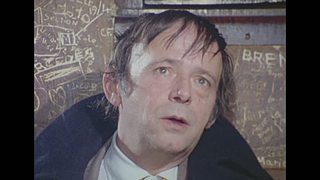
In Montmartre, in his studio, the painter Lafleur, a prolific but unknown artist, is about to sign an exclusive contract with the art dealer Hermèce. They are interrupted by the impromptu arrival of Etienne Moudru, a penniless and hungry tramp, who discovered by chance the secrets of Lafleur’s paintings: a true "feast" for the eyes, his painting fills his admirers with satiety and literally feeds the stomachs with delight.
Jean Nohain talks with Marcel Aymé about television. The author of "Tales of the Perched Cat" says he watches television as little as possible. He is wary of it because he fears the temptation to turn the knob and look at it too often at the expense of his work and his discipline as a writer.
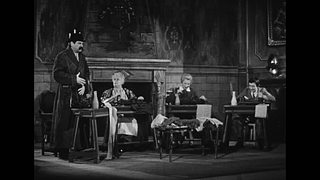
Extract from the reprise of the play "Clérambard" by Marcel Aymé at the Théâtre des Champs-Elysées with Jacques Dumesnil in the role of Clérambard and Huguette Duflos in the role of his wife. In the scene depicted, Clérambard, a penniless nobleman forced to work to live and maintain his castle, knits with his whole family and brings back some cat for dinner.
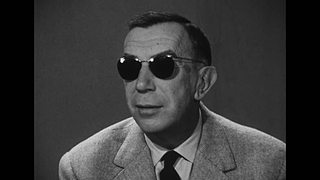
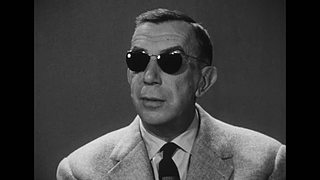
On the occasion of the revival of the play "Clérambard" at the Théâtre des Champs Elysées in Paris, Max Favalelli met with the writer and playwright Marcel Aymé. In accordance with his reputation, the writer answers in a laconic and very down-to-earth manner to the journalist’s questions about his way of writing with a "pointe Bic" "so many hours a day" and about the reception of his play considered anticlerical by François Mauriac.
On the occasion of the revival of the play "Clérambard" at the Théâtre des Champs Elysées in Paris, Max Favalelli speaks with the writer and playwright Marcel Aymé about the anticlericalism of his family and his grandfather.father in particular to the point that he was secretly baptized by his grandmother at the age of seven.
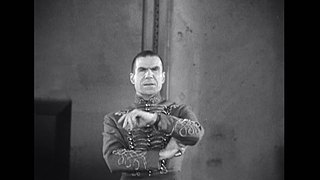
Excerpt from the play by Marcel Aymé "Les maxibules" performed for the first time at the Théâtre des Bouffes Parisiens in a staging by André Barsacq with the actor Jacques Dufilho, who plays several roles including the role -in an abyss- of a hussar in uniform, he retraces alone on stage, breaking the fourth wall, the reasons for his presence in the play after a memorable anger from the director.


 The INA Galaxy