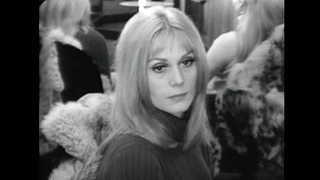
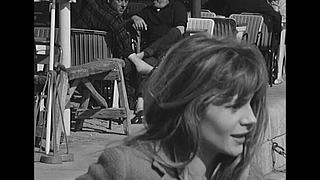
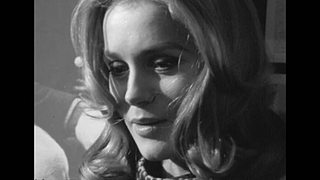
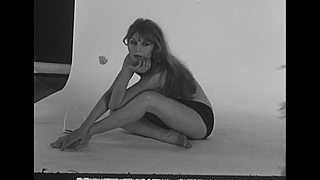
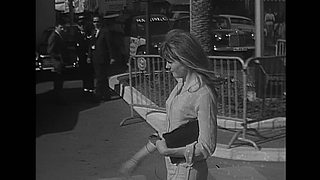
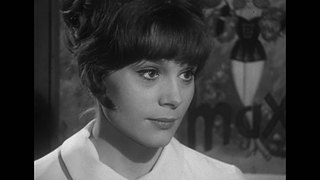
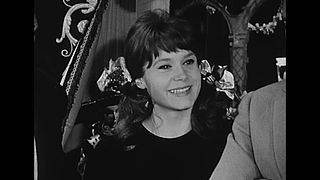
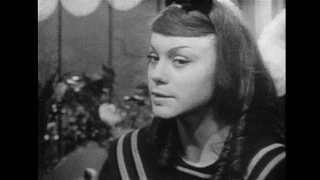
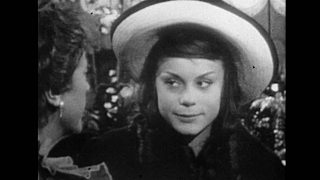
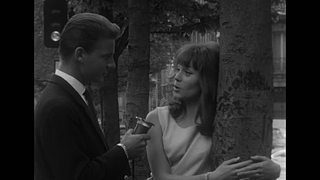
Catherine DENEUVE tells how she became an actress, talks about her shyness, her relationship with acting, the memory and influence of her sister Françoise Dorléac.
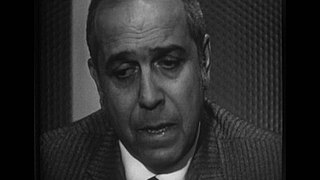
After the accidental death of Françoise Dorléac in a car accident, the actor and director Robert Manuel, professor at the Conservatoire national supérieur d'art dramatique, remembers his student Françoise Dorléac, whom he chose to play the role of "Gigi" in the eponymous play adapted from Colette and pays tribute to her talents as a theatre and film actress.
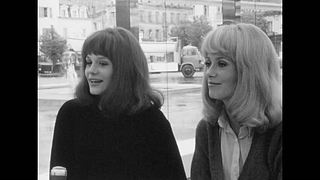
Interviewed by Christophe Izard, the actresses Françoise Dorléac and Catherine Deneuve discuss their sororal and friendship relationships, their jobs, their similarities and differences, their solidarity and unconditional support in the face of critics, after the filming of the musical "Les demoiselles de Rochefort".
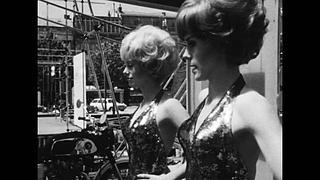
During the filming of the musical "Les demoiselles de Rochefort", Françoise Dorléac and her sister Catherine Deneuve do their makeup, put on their wig before shooting a scene choreographed in a long sequined dress.
On the set of "Les Demoiselles de Rochefort" by Jacques Demy, Françoise Dorléac, alongside her sister, with the same haircut, evokes her relationship with her younger sister Catherine Deneuve and the beginnings of the latter in cinema, well, against her will, during school holidays, in the movie "Doors Slam," to play the role of her sister in the cinema.
At a café terrace in the port of Cassis, Françoise Dorléac looks back on the last film she shot, "Gengis Khan" by Henry Levin, presented at Cannes: there she plays the role of Genghis Khan’s wife shared between two men, performed by Omar Sharif and Stephen Boyd and obtained the recognition of "an actress with international status"
In Paris, near the "Napoleon" cinema, actress Françoise Dorléac looks back on her experience filming with Polish director Roman Polanski and on her choice of two Dorléac sisters in the main roles of these last films: "Repulsion" with Catherine Deneuve and "Cul de sac" with herself, her desire to film in France and abroad, cinema being an international art.
In the streets of Cannes, as part of the International Film Festival, actress Françoise Dorléac, who came to present François Truffaut’s film "La peau douce", in which she plays the role of Nicole, talks about it with the screenwriter of the film, Jean-Louis Richard, the reception of the film among viewers. In voice-over, she expresses her wonder at having been able to shoot this film with a director she admires.
During the filming of Edouard Molinaro’s film, "Arsène Lupin contre Arsène Lupin," Françoise Dorléac looks back on the influence of her previous film "La Gamberge" on her career, her projects, her new look and the role she is currently playing alongside Jean-Pierre Cassel and Jean Claude Brialy, that of a young journalist adoring thieves and helping the two main protagonists, putative sons of Arsène Lupin, in their search for a fabulous treasure.
In the sets of the film "La Gamberge" shot in the studios of Boulogne Billancourt, the actress Françoise Dorléac, in her first major role in cinema, plays alongside Jean Pierre Cassel, her lover on screen and in the city, a young girl looking for her Prince Charming. She answers the journalist’s questions in the company of director Norbert Carbonnaux, co-author of the film and Jean-Pierre Cassel.
In this excerpt from the play adapted from Colette’s short story, "Gigi," Françoise Dorléac, in the title role, performs a scene where she visits her great-aunt Alicia, a former Parisian courtesan, to learn the manners of the demi-mondaines and the games of seduction. She thus tells her great aunt Alicia that Gaston Lachaille, whom she calls "Tonton", is in the middle of a separation.
Interview with the young actress Françoise DORLÉAC, in a street of Paris, on the shooting of her new film "La Gamberge" by Norbert Carbonnaux. She lists her previous roles and admits to having always dreamed of doing theater and interpreting Musset. In the cinema, she would like to play fictional roles in costume in historical films such as the heroines of "Gone with the Wind" or "Queen Chirstine".


 The INA Galaxy