Probl�me technique rencontr�e lors de la traduction
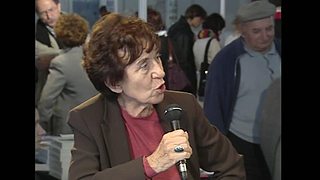
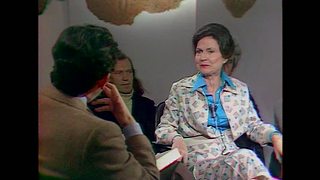
The historian, a specialist in the image of women, is invited to the stage for the "Rendez-vous de l'histoire" in Blois. Interviewed, she evokes George Sand, a female personality that fascinates her: "...she was a great creative woman, a free woman...". She then talks about the struggles that women still have to fight.
Probl�me technique rencontr�e lors de la traduction
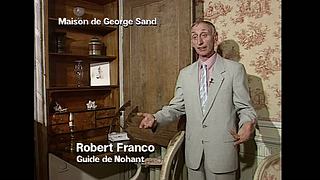
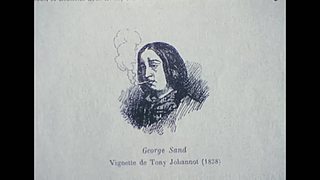
How did George Sand, whose real name was Aurore Dupin, come to writing and take the pseudonym of George Sand? The guide of his house in Nohant, Robert Franco, recounts with enthusiasm the decisive meeting that took place between Aurore Dupin, then married, and the young journalist Jules Sandeau. Having become lovers, they write together the novel "Rose and Blanche" signed "J. Sand"; it is only with her own first book "Indiana" that she will sign under her pseudonym "George Sand".
Probl�me technique rencontr�e lors de la traduction
Huguette Bouchardeau, a politician, is the author of "George Sand, la lune et les sabots". To the question from Pierre-André Boutang about an act of provocation by the writer who was then wearing trousers at a time when women were forbidden, Huguette Bouchardeau replies that at first, George Sand only dressed as a man on rare occasions and for practical reasons.
Probl�me technique rencontr�e lors de la traduction
Christiane Sand, wife of the great-grandson of the writer George Sand, is invited to the program "Apostrophes" for her book "A la table de George Sand". She composed it from recipes found in her family and evokes the daily and domestic life of the writer, in her family home in Nohant.
Probl�me technique rencontr�e lors de la traduction
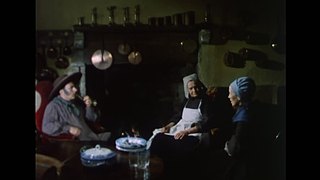
Meeting with Eugénie and Marie, two twin Berry sisters who worked together as lacemakers in Nohant. Aged 87 years, they evoke with amusement the memory of the writer George Sand whom their grandmother knew, and deliver some anecdotes, describing her as a woman with free morals, generous, social.
Probl�me technique rencontr�e lors de la traduction
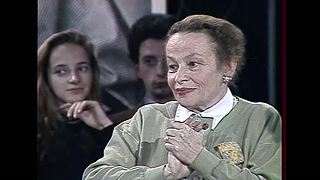
During her first appearance on television, Laure ADLER is interviewed about her book "At the dawn of feminism: the first women journalists", in which she traces the history of journalism and female activism. It evokes the feminist world between 1830 and 1850, which had little regard for Georges SAND: he was criticized for his lack of militancy and his refusal to run in the elections that followed the revolution of 1848.
Probl�me technique rencontr�e lors de la traduction
On the theme "Emancipation of women?", Bernard Pivot invited Francine Mallet for her biography on George Sand. She explains the role of George Sand in this matter, her determination to find her financial independence and her commitment to creation.
Probl�me technique rencontr�e lors de la traduction
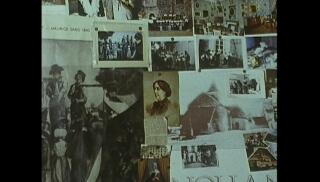
On the occasion of the centenary of the death of the writer George Sand, the journalist Michel Denisot proposes a subject fed by interviews with Christiane Sand, wife of the great grandson of the writer, for whom George Sand showed above all maternal affection for her young lovers, then of Françoise Giroud, journalist, writer and politician, according to whom, George Sand did not have an "attitude of militant feminist". We discover the images of the writer’s house and her property in Nohant as well as many portraits.
Probl�me technique rencontr�e lors de la traduction
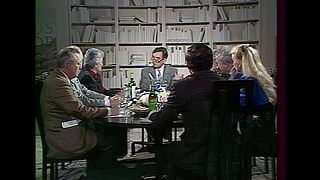
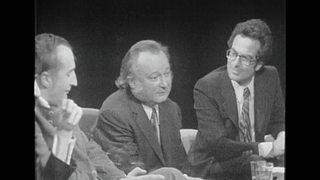
In the program "Italiques" which he co-presents, Max Pol Fouchet, poet, writer and art critic, launches the polemic around the heroine figure of the feminism of the writer George Sand: "the way she passed from one man to another..." According to him, today she would never have joined the MLF!
Probl�me technique rencontr�e lors de la traduction
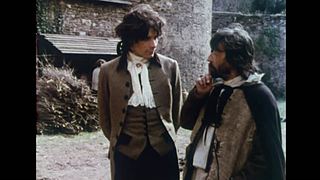
Excerpt from the television film "La Mare au diable" adapted from the eponymous novel by George Sand, published in 1846. The novel highlights the customs of the 19th century, against a backdrop of rural Berrichonne traditions, work in the fieldss, and a love story: having remained widowed with three young children, Germain, the farmer, will marry Marie, the young and gentle shepherdess whose modest condition had compelled her to place herself on a farm.
Probl�me technique rencontr�e lors de la traduction
Excerpt from the television film "Mauprat" adapted from the eponymous novel by George Sand, published in 1837: Bernard de Mauprat, a true savage, meets Edmée, her cousin, an intelligent and cultured young girl... The excerpt proposes a reflection on the question of "absolute fatality" and the means to remedy it.
Probl�me technique rencontr�e lors de la traduction
In this issue of the collection "Les bonnes adresses du passé", the address of the day presented by historian Alain Decaux is located in Nohant where the writer George Sand lived. From the cemetery, near the tomb of the latter, he evokes his genealogy: his great-grandfather Maurice de Saxe, his grandmother Marie Aurore de Saxe and his father Maurice Dupin.
Probl�me technique rencontr�e lors de la traduction
In this excerpt from a report on the life and work of the romantic painter Eugène Delacroix, the subject discusses his friendship with George Sand and the pianist Frédéric Chopin, who were all meeting at the house of the Sand family, in Nohant, in the Berry. The portraits of Sand and Chopin, made then by the painter, complete the device.
Probl�me technique rencontr�e lors de la traduction
Jacques Chazot presents the show for which he composed the program, taking inspiration from the great artistic names of the past century and matching them with artists no less famous today. Thus, he receives the writer Françoise Sagan, with whom he argues a game of cards evoking the writer George Sand...
Probl�me technique rencontr�e lors de la traduction
Meeting in Gargilesse with the woman of letters and painter Aurore Sand, granddaughter of George Sand. She evokes her famous grandmother of which she has very precise memories: her "calm" character, her illustrious friends who visited her at the family home in Nohant, and finally her avant-garde spirit, especially when it comes to the status of women. The interview is interspersed with images of Nohant’s house.


 The INA Galaxy