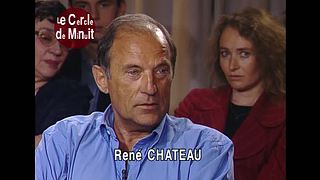
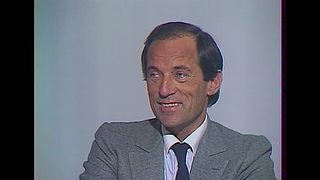
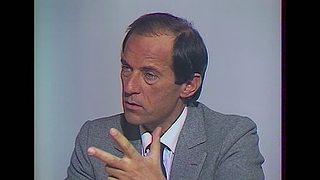
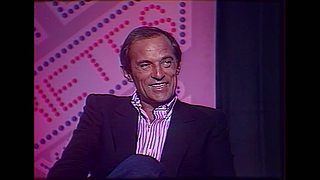
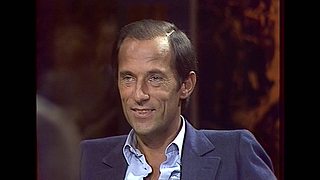
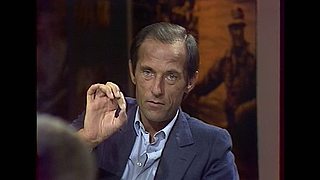
Laure Adler gathered guests around the themes: cinema, memory, history, resistance and rock and roll. René Chateau presents his book "Le Cinéma français sous l'Occupation", a very well documented book that took him twenty years to make and which is richly illustrated. He looks at the relationship between cinema people and Germany during the 1930s (the best studios were in Berlin) and during the Occupation. Those who had toured for La Continental (in Germany) were considered "collaborators".
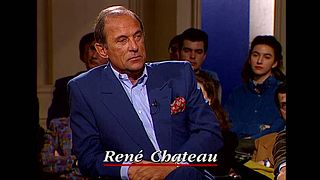
The publisher René Chateau is invited to the show "Bouillon de culture" that Bernard Pivot dedicates to the politician Philippe Seguin. On this occasion, he came to present his book "Les plus belles affiches du cinéma français des années 5O", an album of photographs of posters. In this first excerpt, René Chateau mentions his passion for French cinema and his important collection of photographs, posters, press books and film prints: "I have a house, it’s a bit like a mini cinematheque!"
The publisher René Chateau is invited to the show "Bouillon de culture" that Bernard Pivot dedicates to the politician Philippe Seguin. On this occasion, he came to present his book "Les plus belles affiches du cinéma français des années 5O", an album of photographs of posters. In this second excerpt, René Chateau evokes the extent of his collection of posters ranging from films like those of filmmakers René Clair or Jean Renoir, but also from "nanars".
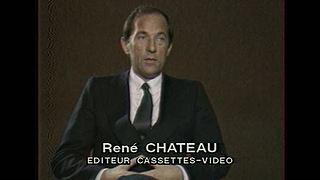
A vast network of video piracy has just been dismantled by the gendarmerie in the Paris region: a group of friends who were lent movies, copied on videocasettes, and then reaped profits. Interview with the video editor René Chateau who explains that it is important to act quickly against pirates, to close and severely condemn the videos in question.
The producer, distributor and publisher René Chateau is interviewed about the Lang law limiting the release of a videocassette to one year after its exploitation in cinema. He was indicted for selling the film "Le Marginal" after nine weeks of theatrical release. In this excerpt, he discusses the success of the film starring Jean Paul Belmondo, and explains why the law is unsuited to "in-depth cinematographic exploitation" and the defense of the cinema profession.
The producer, distributor and publisher René Chateau is interviewed about the Lang law limiting the release of a videocassette to one year after its exploitation in cinema. He was indicted for selling the film "Le Marginal" after nine weeks of theatrical release. In this excerpt, he quotes François Mitterrand: "When a law violates freedom, it is the duty of every citizen to disobey it."
The producer, distributor and publisher René Chateau is interviewed about the Lang law limiting the release of a videocassette to one year after its exploitation in cinema. He was indicted for selling the film "Le Marginal" after nine weeks of theatrical release. He regrets that the professional film industry did not believe in videotapes, and blames himself for having acted against the owners of small cinemas who themselves operate three theatres.
The producer, distributor and publisher René Chateau is invited to the show "3ème rang de face" on the occasion of the release of the film "Le Marginal" by Jacques Deray with the main actor Jean Paul Belmondo, a film for which he is the distributor. Here he talks about the reasons for the actor’s success and the idea that in cinema there is no recipe to achieve it: "It’s the audience who will decide."
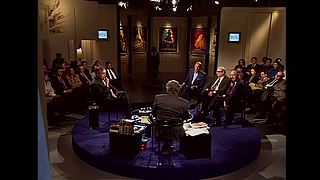
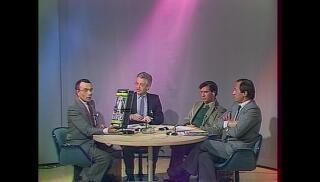
Pierre-André Boutang and Pierre Billard brought together on their "Champ contrechamp" set representatives of the various professions in charge of promoting, programming and distributing films, including René Chateau, film producer, distributor and publisher. In this first excerpt, presentation of the cinema owner who also manages collections of books on cinema and is the associate of the actor Jean Paul Belmondo in the production company of the latter "Cerito Films", and with whom he created the distribution company "Cerito-René Chateau Distribution".
Pierre-André Boutang and Pierre Billard brought together on their "Champ contrechamp" set representatives of the various professions in charge of promoting, programming and distributing films, including René Chateau, film producer, distributor and publisher. In this second excerpt, he explains how important the work of launching a film and the choice of the trailer are: "Everyone chooses their films according to their opinions, desires and personal loves."
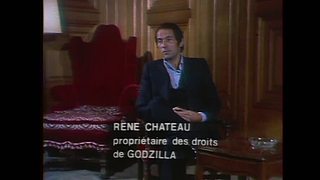
Interview with René Chateau, distributor of the Japanese film "Godzilla", about the theme of this current version. The first film dates from 1954 with a destructive monster awakened by the atomic bombs of Hiroshima. This new "kind" Godzilla saves Japan.


 The INA Galaxy