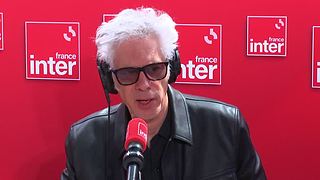
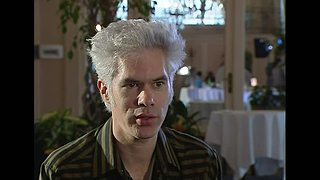
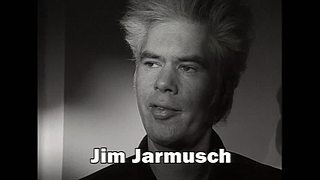
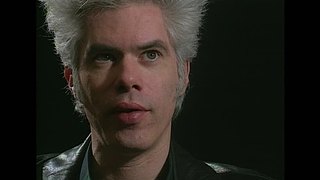
Invité à l'occasion d'une déambulation photographique dans Paris, Jim Jarmusch est convié à s'exprimer sur les résultats de l'élection présidentielle américaine et à l'élection du candidat républicain Donald Trump. Pour lui, Donald Trump trompe l'électorat ouvrier dans ses discours contrairement à Bernie Sanders, il joue sur les peurs comme tout candidat autoritariste, à l'instar de Le Pen en France, il espère obtenir la nationalité française, Paris est son deuxième amour et adresse sa supplique au président Emmanuel Macron ; la France qui, par ailleurs, ne vend pas en libre service des armes à feu à n'importe qui comme aux Etats Unis.
Invité dans le cadre d'une exposition de photographies, Jim Jarmusch évoque son amour de la diversité de la société américaine, notamment à New York où l'on entend parler espagnol, portoricain, chinois, allemand, français, il n'aime pas d'ailleurs les étiquettes, la sexualité binaire, les évaluations psychiatriques ; pour lui, la beauté dans l'univers repose sur la diversité, il ne critique pas l'Amérique mais le système politique et économique. Il a imaginé dans Paris une promenade photographique inspiré du surréalisme dont il est passionné. Pour lui, le surréalisme est un mélange de réalité et de rêves, une juxtaposition de quotidien et de faits fantastiques.
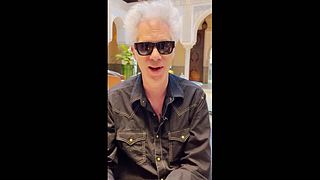
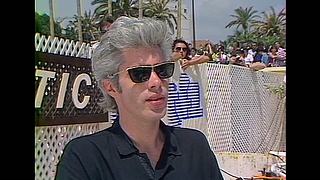
At the Cannes Film Festival, director Jim Jarmisch, filmed in a vertical format for social networks and speaking in his native language without subtitles, looks back on his journey and his collaborations with the actors, Johnny Depp, Tilda Swinton, Adam Driver, Cate Blanchett or Bill Murray, in his films. It evokes their personality and singularity, their artistic commitment and their humanity. He particularly admires Tilda Swinton, whom he imagines as a world leader, and sees in Cate Blanchett an artist capable of embodying all the facets of the human soul. For him, Adam Driver represents the very essence of humans, while Bill Murray is a very protective comic actor with him and Johnny Depp is an actor, musician, and writer.
Meeting in Cannes with the American filmmaker Jim Jarmusch, director of the film 'Broken Flowers', about the melancholic road-movie led by a confirmed bachelor, played by Bill Murray, in search of the mother of his child.
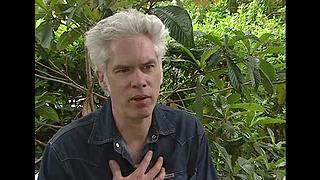
Director Jim JARMURSCH talks about the multiculturalism of American society: "We are in a culture that is a mix of cultures from elsewhere... This is the positive side of America... There is always something to take in the difference...
Interview with the American director Jim Jarmusch about the atmosphere of his latest film "Dead Man" recreating the dreamlike universe of dreams and hallucinations.
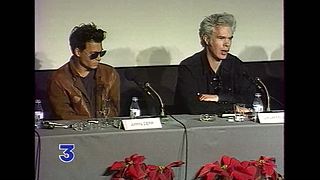
In a press conference at Cannes, alongside Johnny Depp, the main character of his new film 'Dead Man', filmmaker Jim Jarmusch talks about the theme of the film: life, 'a brief journey'.
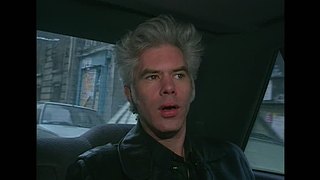
On the occasion of a stay in Paris, interview in a Parisian taxi with the American director Jim Jarmusch about the influence of his own personal experiences in taxis in large American cities and especially in New York for the writing of his new film 'Night on earth': "we are alone in a taxi with a stranger to whom we can say anything", it is a "fleeting freedom in an intimate relationship".
Passing through Paris, director Jim Jarmusch evokes the colour and atmosphere of each of the three European cities among the five major metropolises where his latest film 'Night on Earth' takes place. For him, Rome is a dark city with warm colors in ochre tones while Helsinki is a very illuminated city in cold tones and that Paris is characterized by its blue color at night.
From Cannes, director Jim Jarmusch, in competition with his film 'Down by law', evokes the influence of Buster Keaton’s comedies and noir films on this film shot in black and white.
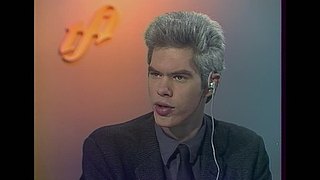
On the occasion of the theatrical release of his film 'Stranger than paradise', the American filmmaker Jim Jarmusch is the guest of TF1’s news. Nicknamed by the film critics as 'American Godard', he proudly claims the influence of Jean Luc Godard for this film, both very American and very European, shot in black and white, made up of long sequence shots separated by the use of blacks, in a minimalist and original desire to tell the story of the characters.
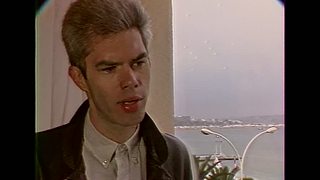
Live from Cannes, where the Cannes International Film Festival is taking place, the young American director Jim Jarmush discusses the characteristics of his film 'Stranger Than Paradise' shot with black and white film telling the story of young outsiders living outside society.


 The INA Galaxy