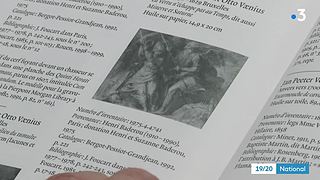
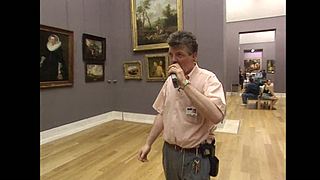
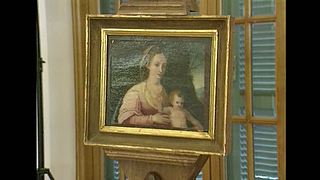
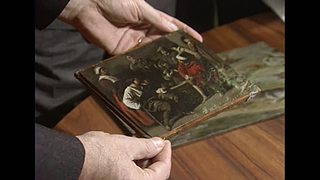
Every year, 20 to 30 works of art are mutefully stolen by thieves within the very walls of museums in France, which does not prevent the subject from remaining largely taboo due to security issues and untriggered alarms. The theft of a painting by a 16th century Flemish painter Otto Van Veen from the Museum of Fine Arts in Rouen, was thus not revealed by the museum’s management and discovered by the regional media Le Poulpe. Interviews with Manuel Sanson, editor-in-chief of the media outlet Le Poulpe, about the mystery surrounding the theft of a painting by the Flemish painter Otto Van Veen at the Rouen Museum of Fine Arts, by Didier Rykner, art historian, about the omerta that reigns in the art world about thefts of paintings, by Colonel Didier Berger from the Central Office for Combating Trafficking in Cultural Property in Nanterre, about his work.
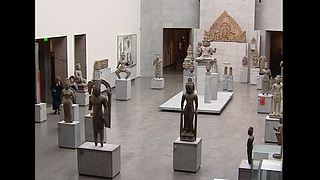
Report devoted to the security system intended to ensure the works of the Guimet museum in Paris (search, Vigipirate plan, camera, alarm, etc). The report consists of a commentary on factual images alternating with interviews with Marcel Charodin, head of the reception and surveillance service, and Jean-François Jarrige, president of the Guimet museum.
Report. Announcement of the opening today in Bulle, Switzerland, of the trial of Stéphane Breitweser, accused of stealing some 70 paintings and objets d'art from the medieval era from museums and galleries for the pleasure of watching them at home, at his mother’s house in Eschentzwiller, near Mulhouse. His mother had tried to get rid of them after the arrest of her son by throwing them into the Canal Rhin Rhône, requiring the excavation of the canal to recover them. Comment on illustration images, alternating with the interview of Jean Lorentz, from the Museum "Unterlinden" in Colmar. [Source: France 2 Prompter] In Bulle, in Switzerland, the trial of a burglar with unusual motivations... In a few years, Stéphane Breitwieser, 31 years old, has stolen some 70 paintings or objets d'art from museums and galleries, not to resell them but for the pleasure of watching them... He had established himself at home, a museum for personal use... Paul DEGENEVE
Report devoted to the transport and surveillance of diamonds currently displayed at the Natural History Museum in Paris, which hosts a collection of four hundred unique pieces, tracing a thousand years of jewelry. Description of the security system in place. A commentary on the images alternates with interviews with Daniel Landuren, international director of Brink’s, André Valade, security Brinks and Hubert Bari, curator of the exhibition.
In Paris, at the Louvre, last Sunday, despite the video surveillance system and the rounds of security agents, a painting by the painter Corot was stolen in broad daylight from the museum. Review of the way in which the police officers of the Office for the Repression of Theft of Works of Art investigate and list stolen works of art in its databases. Explanations by André Crespo, head of the documentation group: "The data will be accessible to the police and gendarmerie services and Interpol," from Commissioner Mimra, head of the central office for cultural goods: "It is quite rare for well-known works to be stolen because negotiation is difficult except in case of theft on command" and Robert Schmit, art merchant expert: for him, "In South America or in Japan, anyone can acquire it." Previously at the Museum of Semur-en-Auxois, other stolen paintings of Corot were found as Sandrine Balan, head of the museum tells: "They were found in 1987 in Japan among collectors and a gallerist. They were in good faith. They had bought them and agreed to receive them".
In Italy, the police have returned to the Vatican a series of fifteen paintings from the 16th century stolen on 16 October last. Comment on images of stolen paintings alternating with the interview of General Aielli, commander of the organized crime department of the financial brigade (off-press): "The work of art becomes a means of substitution for money, for example to acquire a shipment of drugs. It is a new phenomenon" and by Captain Risino in charge of the investigation into the theft of the Vatican museum: "These works should have been part of some collection in the bunkers of Colombia"
Report on the return of four paintings stolen between 1979 and 1982, returned today to the Louvre Museum by the police officers of the Central Office for the Repression of Thefts of Works and Objects of Art. These are the "Card Players" by the Le Nain brothers, "Animated Landscape" by Adrien Brouwer, "Amphibious Animals" by Jan Van Kessel and "Saint Christopher" attributed to Jérôme Bosch. Factual images and interviews with Pierre Rosenberg, curator of the Louvre museum, and Mireille Ballestrazzi, head of the Central Office for the Repression of Stolen Works of Art.
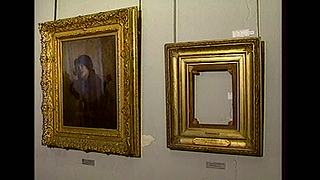
In Paris, yesterday, in broad daylight, two paintings were stolen at the same time from the Louvre museum and the Hébert Museum. This is the painting by Renoir 'Portrait of a woman' stolen yesterday from the Louvre and the painting 'Mona Lucia', by the painter Ernest Hébert, stolen from the Hébert museum. The two canvases were carefully cut with a cutter. Comment on images of museums alternating with interviews by Alain Brandeburg, deputy director of the museums of France, in front of the empty frame explaining how the thieves proceeded and by Michel Laclotte, director of the Louvre, explaining that the thieves used a too-thin cutter to trigger the alarm system.
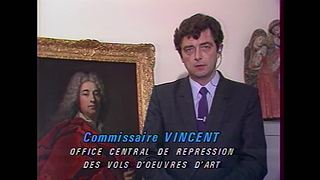
Following the theft of paintings yesterday at the Marmottan museum, Noël Mamere questions Commissioner Vincent from the central office for the repression of thefts of works of art, in duplex form from his office, about the particular method used in this case-there: an armed robbery carried out in broad daylight in the presence of the public. He makes the history of the last thefts in France, painting by Cézanne in 1961, thefts in the form of burglary often at night in deserted museums without an audience. About Marmottan "the investigation is conducted by another commissioner" (from the group for the repression of banditry), the borders are already under police surveillance. Regarding the profile of the thieves, a theft at the request of a collector has never taken place for the moment in France and it will be difficult for the thieves to negotiate these pieces, far too well-known.
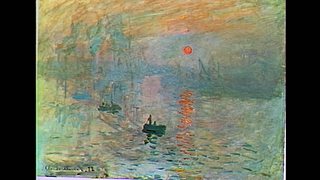
This morning, in Paris, at the Marmottan Monet museum, specialized in impressionism, nine masterpieces by Renoir, two by Renoir and five by Monet including the famous painting by Claude Monet "Impression of the rising sun"-, were stolen in broad daylight by several burglars after breaking in while paying their entrance ticket to the museum: armed, they then sequestered the museum guards and deactivated the alarm. Comment on images of the museum and stolen works alternating with the interview of Jean Baptiste Oliviesi, chief keeper of the museum, witness to the hold-up who explains how it took place and Yves Brayer, curator of the museum: for him are connoisseurs who had accomplices in the museum.
In Nimes, the Museum of Fine Arts which displayed the collection of Braque’s jewelry -designed by Georges Braque and made by Heger de Lowenfeld- was the victim of a robbery: the burglars managed to enter the museum despite the barred windows thanks to car jacks and stole the six most beautiful jewels from the exhibition for an estimated value of 100 million francs. Interview with the museum curator on the circumstances of this flight.
Faced with the misunderstanding of the conversators in the face of the multiple thefts of works of art and even tapestries in museums, cathedrals and castles, meeting with Jacques Dupont, Inspector General of Historical Monuments, responsible for all works of art in France on the difficulties encountered in finding thieves who are also very little punished and supported by the public in the courts. He also recalls that the safety of works of art in churches and places of worship falls under the jurisdiction of mayors who care little and sometimes show negligence in this area. Even if new technological means are available such as electric photo cells or sound detectors, these are disabled by the guardians in churches, particularly due to birds.
In Le Mans, after the return by postal package, after theft, of one of the panels of the 16th century tapestry depicting the martyr of Saints Gervais and Protais of the cathedral of Le Mans, Mr. Lagrange, architect of historical monuments, describes "this flight as stupid" for an unsaleable work whose value is inalienable like all heritage works belonging to the State.
At the Pavillon Vendôme in Aix en Provence, after the night flight of six paintings by Paul Cézanne displayed as part of a temporary exhibition and lent by museums and collectors, Mario Beunat talks with the museum curator, Jacqueline Martial Salme expressing her emotion after the discovery in the morning of the disappearance of the paintings. Staying on site with her husband in an apartment located above and next to the exhibition rooms, she heard nothing during the night, she recalls the circumstances of this theft - the thieves passed through a first-floor window left open at night for the ventilation of the canvases- and expresses itself on the reinforced security of the works of art after the theft at the museum of Saint Tropez and the guards' rounds.
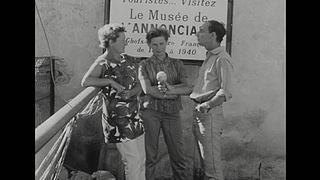
Report in Saint Tropez after the theft of 56 paintings -half of the exhibited works- at the Musée de l'Annonciade last night around 2:00 AM according to a neighbor of the museum who heard a car start in the night. Interview with the two nieces of the founder of the museum currently directed by the painter André Dunoyer de Segonzac.


 The INA Galaxy