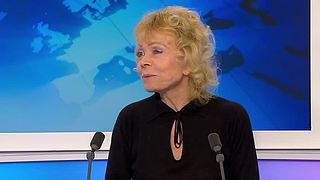
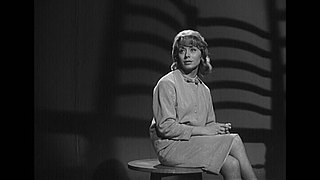
The singer Isabelle Aubret, 78 years old, talks about her new album which she presents as the last one. She announces that she is going to end her career before her voice weakens, wanting to prevent people from feeling it 'fragile'. She specifies that she will make a real farewell tour at the Sébastopol theater, in Lille, where everything began for her.
The singer Isabelle Aubret, who has just released an album in tribute to Jean Ferrat (whom she calls 'tonton') for his 50-year career, talks about the differences between her songs and those of today. To the journalist who asks her if the song can still be at the service of a cause, she speaks ardently of her faith in the force of words.
The singer Isabelle Aubret, questioned about her generosity, which resembles that of a nurse or a nun according to the journalist, is indignant at the poverty around us and does not conceive of living in luxury when others have nothing. She defends the notion of sharing for all peoples in need, assuming the utopian nature of her convictions.
The singer Isabelle Aubret evokes the authors of her songs and defends her role as a performer who "is to the song what the actor is to the theatre". She quotes Jean Ferrat who spoke of her as 'another creator of the works we write'.
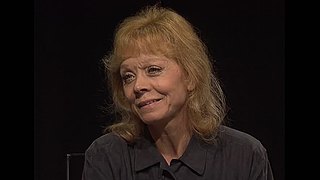
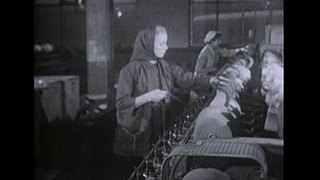
The singer Isabelle Aubret talks about her childhood in Lille in a family of eleven children, filled with joie de vivre and tenderness. The north and work in the factory, which she knew very young, have forged her character and allow her to appreciate everything she has achieved. While working as a factory worker in a textile mill, she practiced classical dance and then dramatic art but it is the song that allowed her to "leave the factory".
The singer Isabelle Aubret chose Val-de-Marne for her summer tour. In Arcueil, she tells what the suburbs mean to her. In a performance hall, during a rehearsal, questioned about her image in 1985, she replies that she represents the traditional song, outside of fashion.
The singer Isabelle Aubret tells how she managed to overcome a serious car accident. She speaks rather of a serious 'incident' which did not end her nascent career and allowed her to meet 'wonderful people' and discover the strength she had within herself.
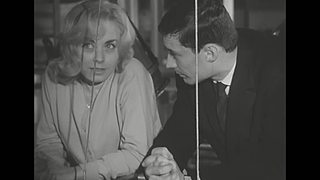
Isabelle Aubret answers Guy Salignon’s questions about the current French song. She rejoices at the end of the 'yéyé' years and considers that the success of stars who cover American titles, like Johnny Hallyday or Sylvie Vartan, is not bound to last. She finds it useless to become famous too quickly and that it is important to fight to reach her goal.
On a TV studio grill, the young singer Isabelle Aubret explains to the journalist that she is going to represent France at the Eurovision Prize, with the song "Premier amour", and expresses her pride in defending her country.
Isabelle Aubret, whose real name is Thérèse Coquerelle, returns to the spinning factory in Saint André lez Lille, in the north, where she worked as a spooler at a very young age before succeeding in the song. She reproduces the precise gestures that she used to perform as a worker in the textile industry while dreaming of a different life.
In the television studios of Lille, the young singer Isabelle Aubret, at the microphone of Guy Salignon, returns on her beginnings, when she left Lille for Paris, four years earlier. At 18 years old, she started by working as a waitress and then a singer in an orchestra before joining a class at the Théâtre des Trois Baudets under the direction of Jacques Canetti and getting noticed by the artistic director at Philips.


 The INA Galaxy