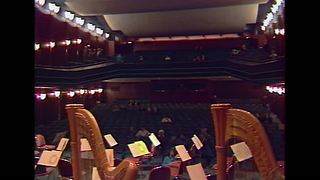
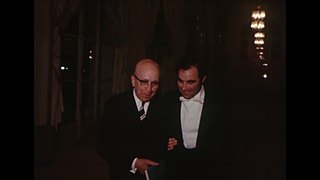
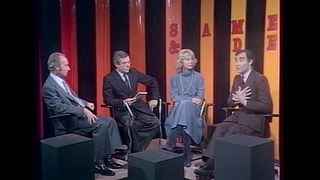
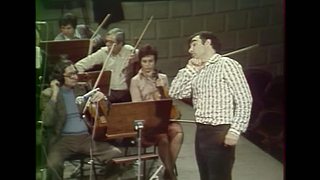
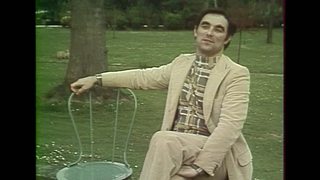
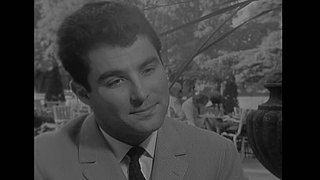
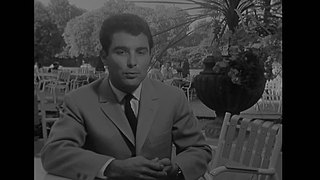
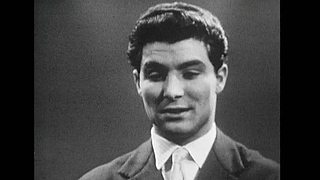
The Orchestre national de Bordeaux Aquitaine is touring in Germany and Austria. Evocation of the daily life of its musicians between the different performances. Their conductor, Roberto BENZI, explains the advantages of this tour, which "psychologically motivates the orchestra".
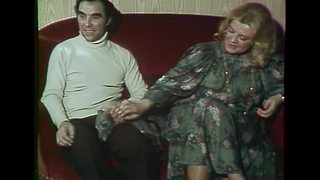
Conductor Roberto BENZI and his wife, the singer Jane RHODES, talk about their dog, a whippet. They tell how he entered their lives and explain how they organize their life as artists with him.
The conductor Roberto BENZI recounts the circumstances of his arrival at the head of the Orchestre national de Bordeaux Aquitaine and evokes the challenges for him of this mission. He also briefly discusses his international career.
Roberto BENZI expresses his conception of the work of conductor and evokes the uncertainties and sources of satisfaction: "... basically, glory for glory, I do not care about it completely". And adds: "... I think what is important, is to make a nice concert, be proud of what we delivered... And every thing is to be said each time we come down from the platform...".
Interviewed by Paul LEFEVRE, the conductor Roberto BENZI explains why he interrupted and left the direction of the orchestra of the Opéra-Comique in November 1978, during a performance of the opera "Werther" by Massenet. He criticises the musicians of this formation for their indiscipline and lack of professional conscience. He mentions several examples: absenteeism, travelling during concerts, chatting during rehearsals. He also criticizes the absence of a director in this training who is responsible for these disciplinary problems.
The conductor Roberto BENZI, who directs the Orchestre de Bordeaux Aquitaine, gives his conception of the relationship between a conductor and his musicians. He mentions in particular the importance of "playing with your orchestra": "... to be influenced by a soloist who does a very good solo, someone who seems to want to flourish in a more intense way than you imagine for your interpretation...".
The conductor Roberto BENZI talks about the rehearsal work of the conductor and his musicians before a performance. It particularly comes back on the exhilarating side of this preparation: "... when you discover in a work that you read what you will be able to do there of personnel...". It also explains what the ritual of the handshake between the conductor and the first violin at a concert represents and means.
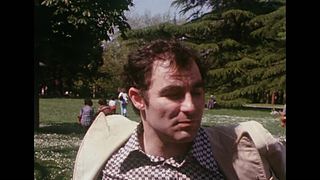
Interview with conductor Roberto BENZI, who talks about his feelings, being a child prodigy in this profession, facing success. He specifies that he has only experienced emotion from the age of man. He also explains that he trusted his teachers more than the public: "... I listened to my advisors, my teachers much more than the ovation of the public...".
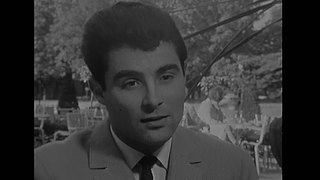
Interview with young conductor Roberto BENZI about his prodigy beginnings in this profession. He particularly recounts his impressions of his early notoriety and the role of his entourage, especially his parents, who protected him from the risks of the grisiness that this caused. He says: "... I stayed rather head on shoulders and I thought that in all this, there was a part of extraordinary sympathy for a child and that sooner or later, it would become more serious...".
Interview with conductor Roberto BENZI, who talks about his prodigal relationships with his entourage, especially the musicians of the orchestras he has conducted. He explains: "... when I was at the head of an orchestra, it was quite normal for me to be around people of 40 or 50 years old knowing what I was talking about; Out of there, I took my Mecano and my electric train...". He also talks about the influence of this status on his relationship with his comrades.
Jean DESAILLY talks to the young conductor Roberto BENZI. The latter explains in particular how he went from being a child prodigy to becoming the world-famous conductor he has become. He goes back to his studies, during which he did not stop playing concerts, explains that his innate notions needed to be consolidated and adds: "... I believe that this evolution is almost complete since I am now engaged like any other conductor in the great symphonic associations...".


 The INA Galaxy