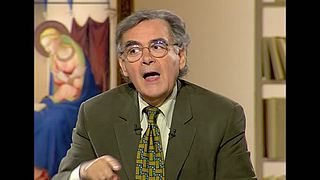
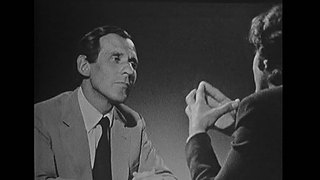
Jean d'ORMESSON speaks on the victory of Nicolas Sarkozy in the presidential elections. He is delighted with this vote result: "I recall that he defended the ideas of the right in a way that frightened his opponents and his friends (...) and it is at the same time, the only one who made the ideas of the National Front retreat".
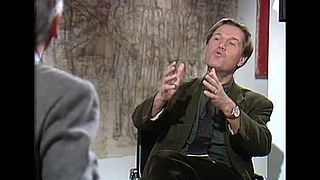
Debate on the importance of substance and form in the fables of La Fontaine. Frédéric TADDEI takes the example of the fable "The Fox and the goat" and returns to his very dark morality. When Frédéric TADDEI suggests that there is "Céline" in "La Fontaine", Fabrice LUCHINI goes into a delirium by rejecting this idea. Jean d'ORMESSON intervenes by giving reason to Fabrice Luchini for whom La Fontaine, favors above all words before morality or meaning. The two guests recite together some verses of the fable "The young widow".
Jean d'ORMESSON questions the American writer James LIPTON and Bernard PIVOT, presenter of the show "Bouillon de culture" on: "your favorite word, your hated word, your favorite drug and your favorite sound"?
Jean d'ORMESSON cultivates the secret of having a posthumous biographer. He dreams of erasing the traces: "we must burn the letters, we must burn everything".
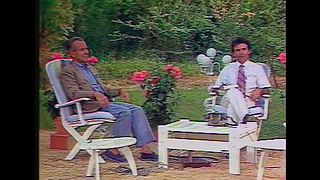
Sylvain AUGIER, new presenter of the magazine "Faut pas rêver", explains the principle of the show. He receives his two guests Jean d'ORMESSON and Françoise FABIAN, both great travelers. The actress admits to being passionate about architecture. The writer, meanwhile, confides that he loves to walk.
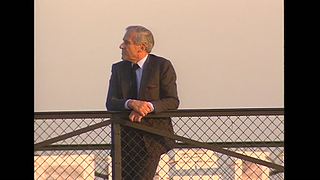
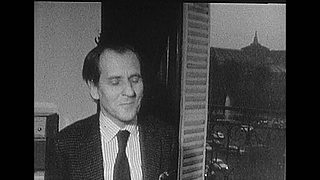
Jean Teulé draws the portrait of the academician Jean d'ORMESSON, filmed on the Pont des Arts in Paris. Images from the Louvre and the Académie française alternate with the writer’s interview: "I can promise you that no one will remember me in 10,000 years (...)".
Bernard PIVOT evokes the many awards and distinctions of Jean d'Ormesson. The writer and academician humbly explains that his only wish would now be to write "one or two good books" again.
On the set of William LEYMERGIE and Patricia CHARNELET, the academician Jean d'ORMESSON speaks of the decline of the French language in the world, whereas at one time it was the international language of diplomacy. According to him, there are reasons to remain optimistic because France is not alone in this fight to defend the Francophonie: "the French language is a common treasure, like our trees or the sea (...). In the scientific and commercial world, English currently dominates (...). But we must not despair because we are not alone the French, there is still a large part of the world that speaks French (...)".
Interview of the academician Jean d'ORMESSON about his novel "The wind of the evening", first volume of a trilogy whose saga takes place on the five continents. "It is a novel that is based on history and has as its setting, the end of the nineteenth century".
Jean d'Ormesson is invited for his first biography, "My last dream will be for you", on Chateaubriand, Roger Peyrefitte presents his latest book, "The Illustrious Writer". While the latter reminds him of a "naughty" episode that both lived in Thailand twenty years before, Jean d'Ormesson replies to Roger Peyrefitte: "It is true that perhaps at that time I did not despise you as much as today".
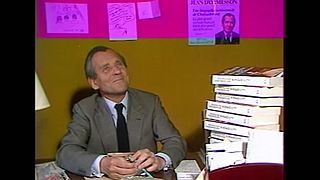
Meeting with the writer and academician Jean d'ORMESSON who quotes a friend: "d'Ormesson tries to be everywhere, so that we do not realize that it is nowhere (...)". In his office, he confesses: "the disorder is a infirmity, a great infirmity, I am afflicted with a great impossibility of tidying (...)". Strolling on the banks of the Seine where he furète books at the booksellers and finds "Le Dernier des Abencérages" of Chateaubriand.
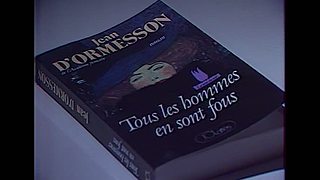
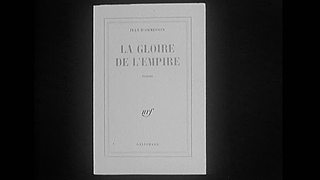
Jean d'ORMESSON was elected to the French Academy yesterday. He gives his impressions: satisfaction, gratitude, joy and friendship. He also evokes his book "The glory of the empire" which allowed him, he says, "to enter this illustrious house".
Interview with the writer Jean d'ORMESSON about his book "The glory of the Empire": "(...) one never writes only about oneself, even when one speaks of distant empires in space and time".
Jean d'ORMESSON returns to his childhood memories at the castle of Saint-Fargeau. Although this house of Puisaye no longer belongs to his family, it marked his life and probably his work, forever.


 The INA Galaxy