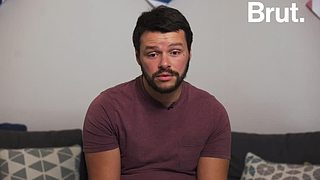
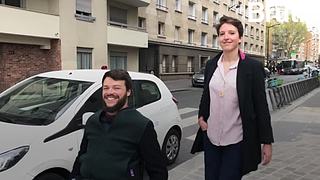
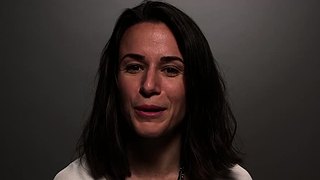
Five years after the attack of 13 November 2015 at the Bataclan, Pierre, a survivor, and his partner Myriam each testify about their experience that evening. Myriam, from her home, talks about "the longest night in history". Pierre was in the Bataclan room and evokes the noises, the panic, then the ball that hits him. He remembers a girl who, before leaving the room, takes the hand of her injured companion and places it in his: "He is the one who kept me awake until help arrived."
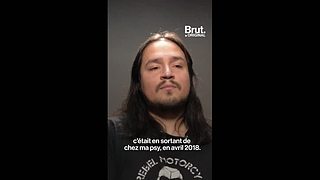
Interview with David FRITA GOEPPINGER, hostage of the Bataclan on November 13, 2015, who talks about the post-attack. He decides to leave alone for the Chilean Patagonia, "in the middle of nowhere", where the suffering from trauma catches up with him. He lives there for two weeks 'like a long corridor of suffering' which allows him to free himself. Back in Paris, he feels ready to resume his life. In April 2018, after three years of therapy, his psychologist told him at the end of the session: "Have a good trip."
Meeting with the French judoka Teddy Riner about how he experienced confinement. Supported by his wife, he finally continued his training, rediscovering in particular family life, his children and himself: "This was a remarkable period of my life, but extraordinary".
Pauline Déroulède, a French handisport tennis player, recounts her journey since her accident that tore off her leg and the conditions in which she became a high-level athlete. Following his accident it has transformed into a real "war machine".
Former footballer and coach Arsène WENGER explains the importance of analyzing his defeats in sport in order to improve. For him, the winners are those who have "objectively analyzed" their mistakes without blaming others.
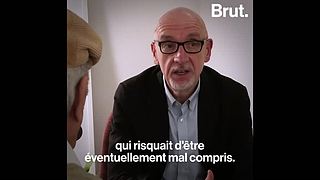
Interview with Azdyne AMIMOUR, father of one of the assailants of the Bataclan, and Georges SALINES, father of a victim, who co-wrote "We have the words left. For Georges, meeting Azdyne was difficult but fits into his process of reconstruction. He recalls that Azdyne is not responsible for the crimes. For Azdyne, this exchange was therapeutic and allowed him to dialogue and seek answers.
Meeting with Didier Deschamps, former footballer, coach and coach of the France football team. Asked about the notion of "pressure", he explains that for him it corresponds rather to "the requirement": "When it is very well you can always do better".
Director Todd Philipps and then actor Joaquin Phoenix talk about the difficulty of finding the laughter of the Joker character in the eponymous film. Interviews in English without translation.
Former footballer Bixente LIZARAZU is involved in environmental protection. He explains in this interview what is important to him, the beauty of nature and the future of our children.
The tennis player Marion Bartoli testifies to the painful experience when she was in a relationship with a narcissistic pervert. She talks about her anorexia, her immune system failing, and then the importance of tennis as a therapy. She strongly advises people in this situation to break up because "there is no love, no possible relationship".
Meeting with Pierre, who became a paraplegic after the attack at the Bataclan, and who refuses to stay locked up like many disabled people. He continues to go out and discovers that many places are accessible. Meetings help him to resume sports. In 2018, he founded Wheeled World for people with disabilities and shows that you can travel everywhere: "You only live once. I want to have a life like others and I give myself the means to.
Mélissa Plaza, international footballer and author of the book "Not for girls?" , testifies to the difficulty of being recognized as a professional player and constantly compared with its male counterparts, "you always have to prove twice as much!".
Meeting with Wendy Renard, defender of the France football team, about the place of women in this milieu. For her, "there is not really a difference... except that... in our country, we tend to play a little more ball, to lay the game, to be a bit more elegant between quotation marks". When she plays she is "in warrior mode... after outside, yes, I am a woman".
In an interview for "Brut.", the former French international football player Vikash Dhorasoo evokes racism as a direct witness and the "double culture" of footballers from popular neighborhoods, able to move between the different levels of society with ease due to their abilities and acquired skills linked to their background.


 The INA Galaxy